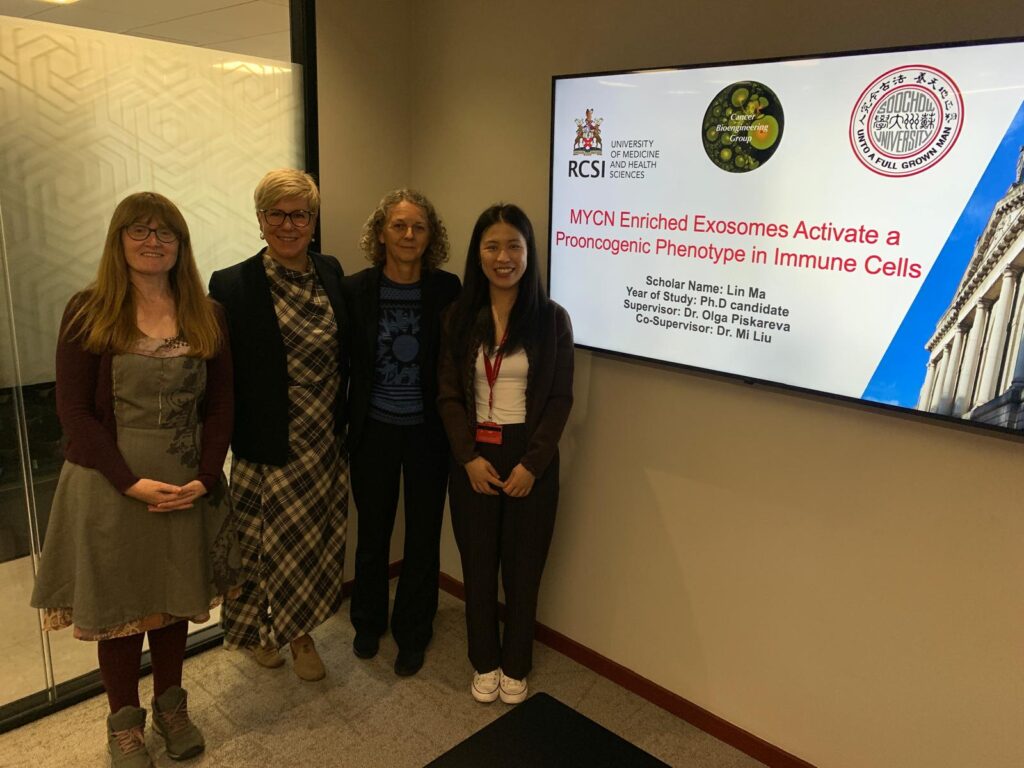
What a year – two young and talented postgraduate students have been minted with a Doctor of Philosophy Degree in September and December of 2025. They are Dr Lin Ma and Dr Ronja Struck. Hard work and dedication are the cornerstones of this challenging but rewarding journey.
They sailed through scattered showers and sunny spells, gale winds and stormy snow with sunshine developing elsewhere, turning chilly under clear skies on some days with temperatures below/above zero. The full spectrum of emotions and hard work was spiced up by the uncertainty of COVID-19 restrictions. Well done to Ronja and Lin!
Hi everyone! I’m Chunyu, and I’ve recently started my PhD journey in the field of bioengineering and neurobiology. My academic background includes an MRes in Biomedical Research from Imperial College London, where I developed a deep interest in microfluidic technologies and their applications in disease modelling.
Currently, my PhD project focuses on identifying the function of macrophages—the body’s frontline immune cells—when they first interact with neuroblastoma (NB) cells using a brain and liver organ-on-a-chip (OoC) model. By recreating these organ environments on a chip, I aim to explore how macrophages respond to NB invasion and how this early interaction might shape the progression of the disease. This research could open new doors for early intervention and treatment strategies in childhood cancers like neuroblastoma.
When I’m not in the lab, you’ll probably find me outside—going on hikes, enjoying a good swim, or finding a tasty Hotpot restaurant. I love blending my curiosity for science with a love for the outdoors, and I’m excited to share updates from both worlds as I go through this PhD journey.
Thanks for stopping by, and stay tuned for more science and a few outdoor adventures along the way!
I am excited to have joined the Cancer Bioengineering lab. I am passionate about studying the tumour microenvironment with the aim of understanding cellular interactions involved in tumour progression. My current work focuses on developing a 3D-printed model of prostate cancer. 3D models help us study cell-cell interactions, how cells interact with their environment, and respond to therapies.
I carried out my PhD and postdoc at University of Galway under the supervision of Dr. Aideen Ryan and Abhay Pandit, where the main focus of my project was on the optimal development of a multi-cellular 3D model of the colorectal cancer tumour microenvironment for screening colorectal cancer therapeutics. Throughout my experience, I have developed extensive skills in isolating and culturing primary cells, culturing cell lines, developing and maintaining spheroid cultures, working with a variety of hydrogels, carrying out flow cytometry, confocal microscopy and RT-qPCR. I really believe 3D models offer us great tools for understanding the tumour microenvironment and have previously developed a 3D collagen-based spheroid model of colorectal cancer, which allowed us to study the interactions between colorectal cancer cells and stromal and immune cells in the colorectal tumour microenvironment. I am really looking forward to transferring the skillset I obtained prior to working in RCSI to my project here.
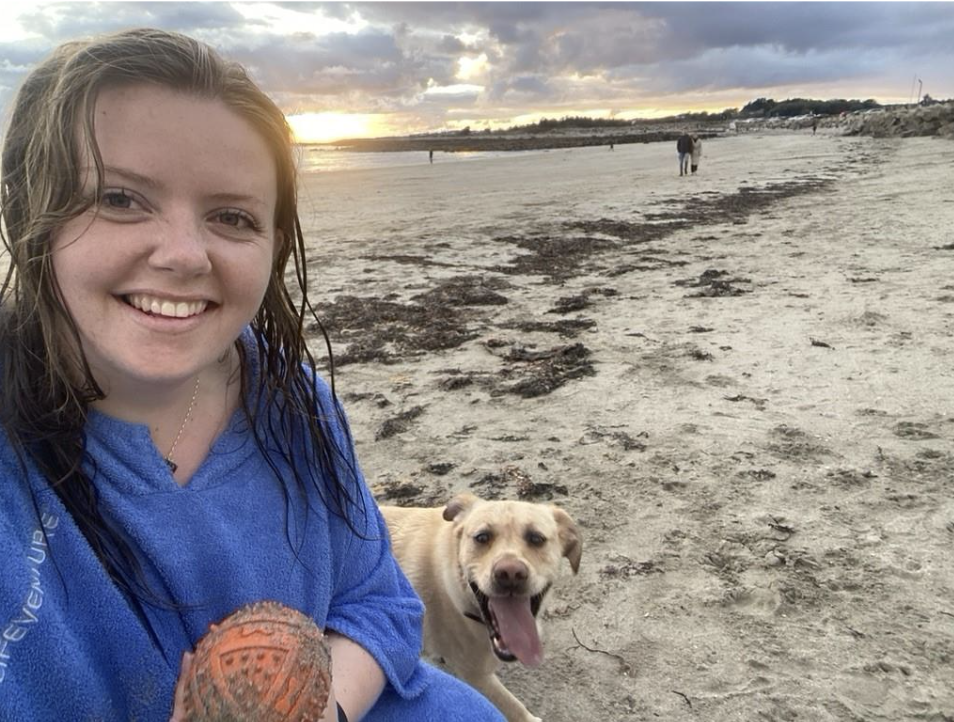
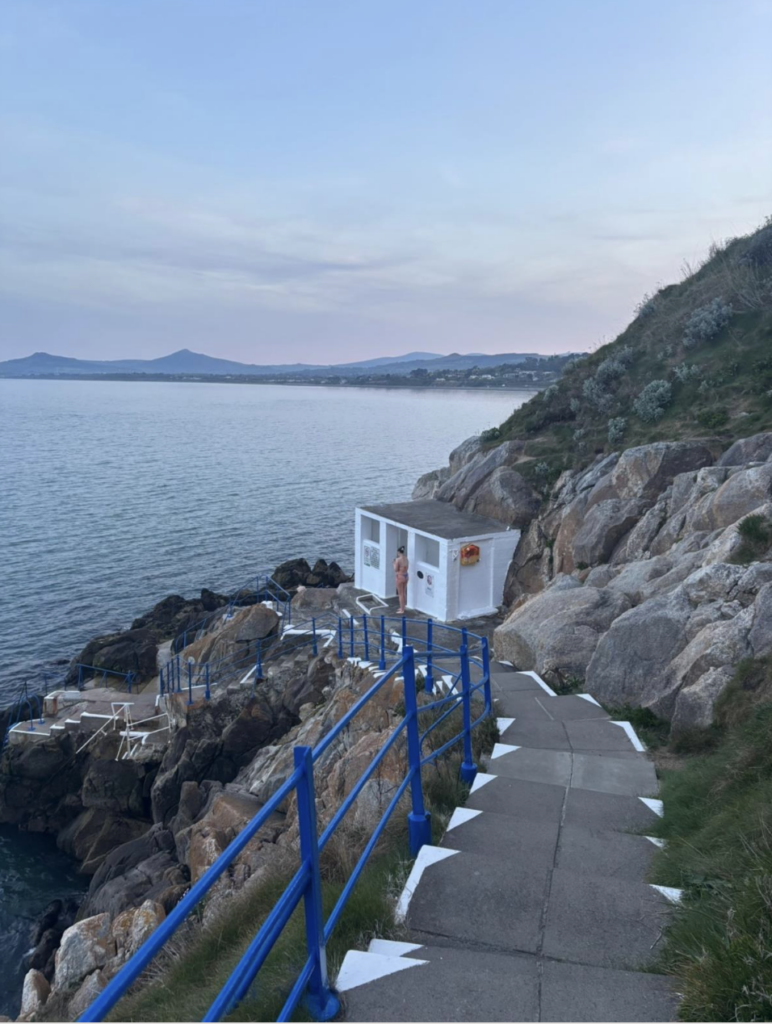
Outside of the lab, I really enjoy going for sea swims, hikes, saunas/cold plunges and going on mini road-trips around Ireland. I am looking forward to visiting all the swimming spots along the east coast of Ireland this year and am excited to contribute more to the field of cancer research.
Little did I know about hikers when I moved to Ireland in 2004. Who they are and how they get around. My knowledge was limited to Rosalind Franklin’s love of hiking. I could not even imagine that one day I’d try their shoes.
However, things have changed since then! Spiced by the COVID-19 pandemic and various fundraising activities inspired by my team, my daily walking transformed into regular one-day hiking here and there. Luckily, my spouse shares the same attitude. So, we decided to explore longer walks one day.
The first go was the Dublin Mountain Way (42 km) in a Day. We started in Glensmole-Tallagh on a dry and sunny morning and finished in Shankill in the dark and pouring rain with a short recharge at Johnny Foxes. We were delighted with ourselves and raised the bar.
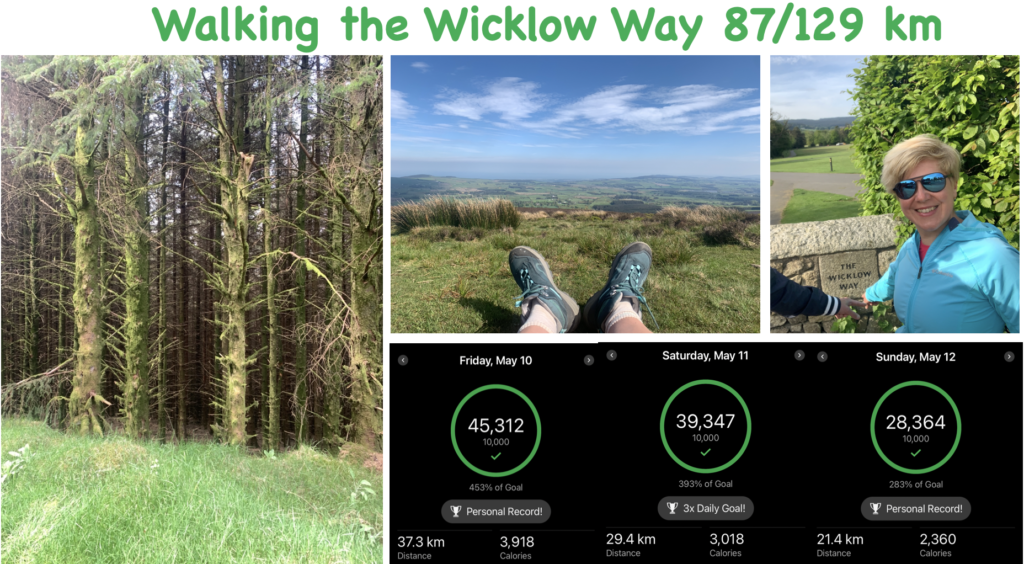
So, last week, we attempted the Wicklow Way. After studying the route, accommodation options and our fitness, we agreed on three days of walking in the north-to-south direction and 2 nights of sleep in B&Bs. We also monitored the weather forecast to make the most of this adventure. So, May 10-12 were the best. However, accommodation became a quest. Nevertheless, luck was on our side, and we found two nice places: one was near Roundwood, and the second was in Glenmalure.
Early morning of May 10th, we cheerfully started our journey in Marley Park. The day was fab; the topics for a chat were endless. We were walking away from Dublin. My fitness watch counted the steps and kilometres. During the walk, we got a confirmation that our accommodation in Glenmaluer had been upgraded to a room with a shower. Happy days!
37 km later, we arrived at our first B&B. It was actually a fancy hostel where all the guests walked in socks, parking their heavy boots in the lobby. It was the night of aurora borealis, but we did not know about it. We were tired and fell asleep before 11 pm. The next morning, none of the guests shared any pics or insights. Apparently, everyone was knocked down by the long day in Wicklow.
May 11th. Fueled with a tasty Irish breakfast, we said “Goodbye” to our hosts and headed further. While walking slowly to warm up for a long day ahead, I noticed that my calf was strained and walking downhill had become unpleasant. Where did it happen? I had no idea. We reached Glendalough around noon.
The day was warm, the car parks were full, and everyone enjoyed the beauty of Glendalough and the sunshine. We stretched our legs and backs on greens. During our light lunch, we discussed our options: 1) evacuation home or 2) continuing and hoping for the best. I did not give up. But our walking pace considerably slowed down.
We covered another ~15 km from Glendalough to Glenmalure and landed in the Glenmalure Lodge – the healing station for all hikers, cyclers, and bikers alike. People gathered outside, and strangers had cheat-chat sharing their tricks and tips for a better hike. Something adventurous was in the air.
Our friendly host picked us up at the Lodge and drove to their B&B. We stayed late and hoped to catch a glimpse of aurora borealis. The sky was cloudy. We saw nothing. While disappointed, our bodies cried for long rest, and we did not resist.
May 12 was the last leg of our journey. My calf did not improve. We took the shortest option to finish in Aughrim. I doubled the dose of painkillers. Then, we moved tirelessly, enjoying the sunshine and the forest.
This part of the Wicklow Way was mostly foresty. The forest was magical and a bit surreal. We agreed that it is perfect for various fantasy and horror movies. My fitness watch signposted that its battery was low, but it continued to count the steps and kilometres.
Overall, our hike had a fair amount of ups and downs. Some climbs and descents were quite steep before Glendalough. Then, they became more gradual, working well for my injured calf.
The luck was again on our side in Aughrim. We saw a taxi – a rarity in this area. The cheerful driver dropped us at the bus stop in Arklow. In 15 min, we were on the way to Dublin, relaxing and enjoying the peaceful countryside from the bus seat.
Our tally was 87 km in 3 days, fully recharged mind but worn body. Would I do it again? Absolutely!