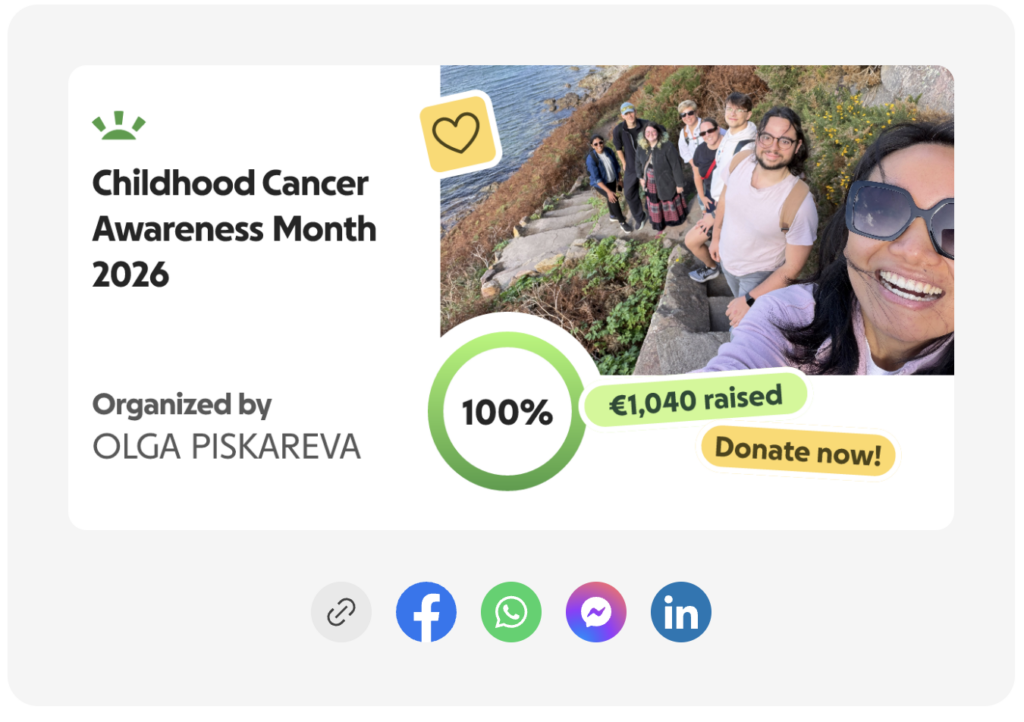
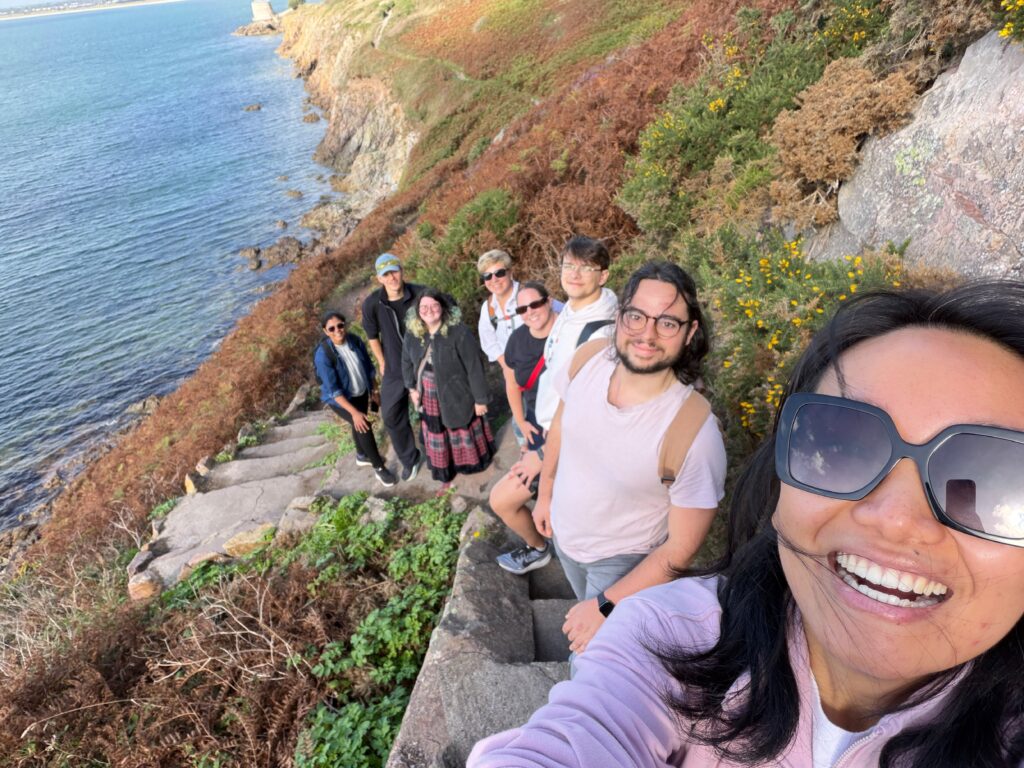
This September, our team laced up our boots for Childhood Cancer Awareness Month to join Neuroblastoma UK’s campaign. Eight of us each walked ~14 km, 112 km in all, to raise awareness of neuroblastoma. 1 km for each child diagnosed with neuroblastoma in the last 12 months in Ireland and the UK. This cancer of developing nerve cells mostly affects babies and young children, and it’s still one of the hardest childhood cancers to treat.
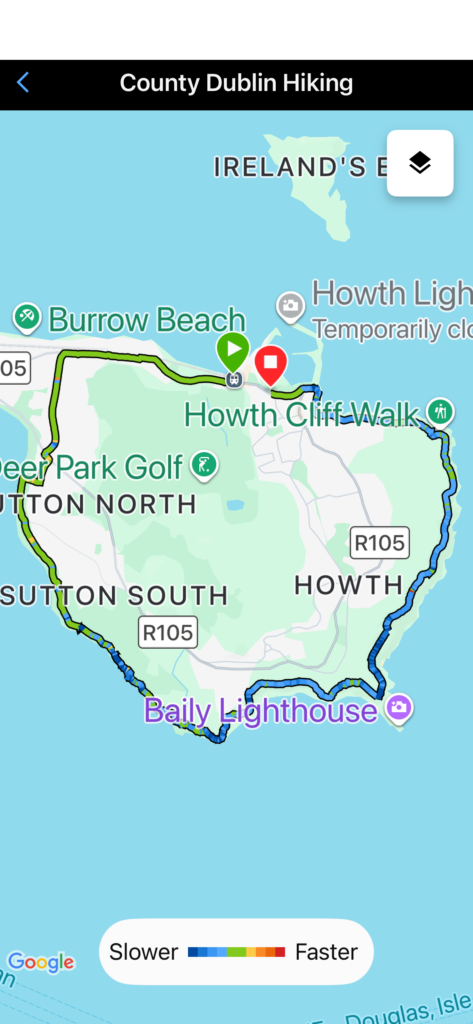
We chose Howth for our route. Starting near the harbour, we headed west along the shore towards Sutton, then followed the coast south and east around the headland. We passed the Baily Lighthouse and climbed onto the cliff path, and the last stretch took us along the Howth Cliff Walk back to where we’d started. We had sea views the whole way, and a few tired legs by the end.
Every kilometre was a chance to talk about neuroblastoma: how its early signs are easy to miss, and why research into better, kinder treatments matters. Families facing this diagnosis walk a far harder road than we did, and we walked with them in mind.
Thank you to everyone who cheered us on. If you’d like to support the Conor Foley Neuroblastoma Cancer Research Foundation and Neuroblastoma UK, you can donate to our GoFundMe page.
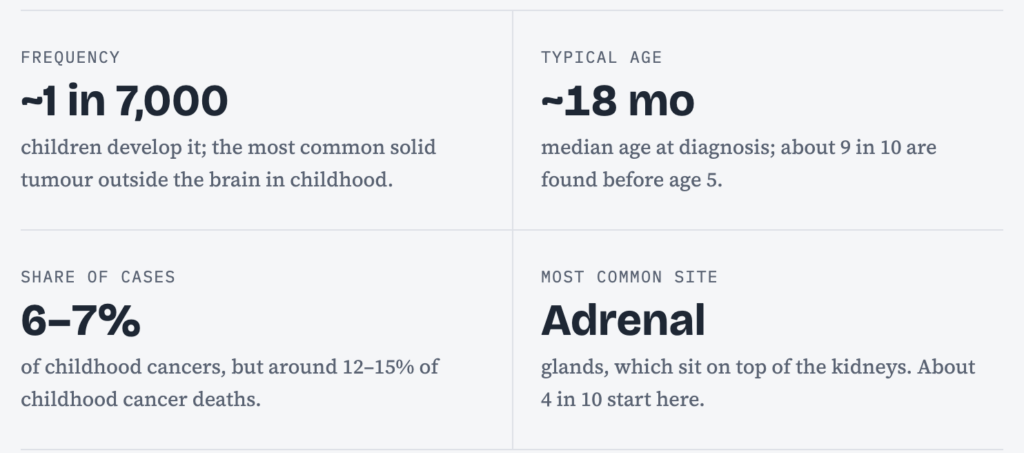
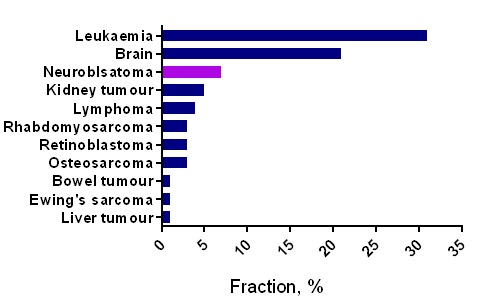
Our research is focused on neuroblastoma, a cancer of immature nerve cells that almost only affects babies and young children. It is one of the most unpredictable tumours in medicine: some vanish on their own, others are among the hardest childhood cancers to cure.
The genes that change the odds
MYCN amplification
Extra copies of the MYCN oncogene appear in about 20–25% of tumours. It drives aggressive growth, and any child with it is usually treated as high-risk regardless of stage.
ALK & PHOX2B
ALK mutations occur in roughly 10% of tumours and are the main cause of the rare inherited form (1–2% of cases). ALK can be targeted with drugs such as lorlatinib.
Chromosome changes
Losses of 1p or 11q and gains of 17q signal more aggressive disease. Whole-chromosome gains (hyperdiploidy) in infants tend to mean a better outlook.
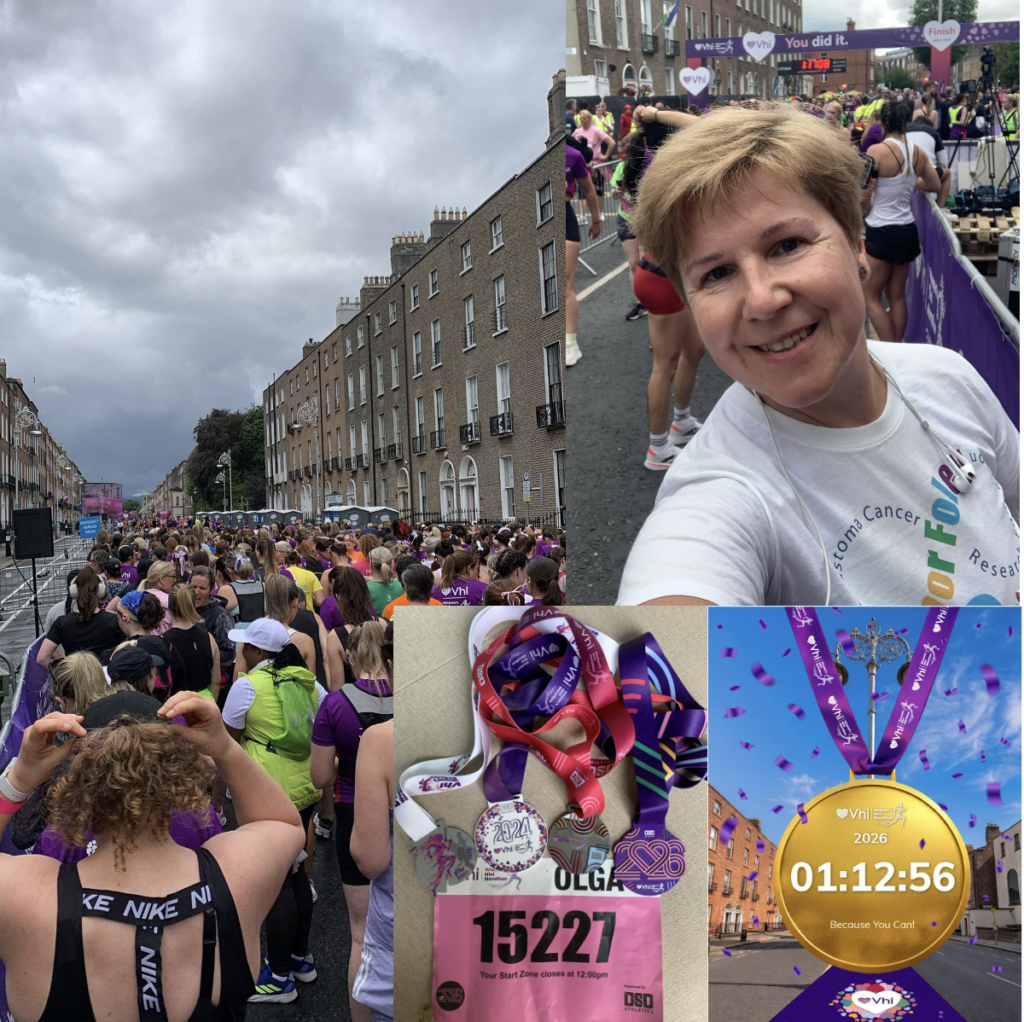
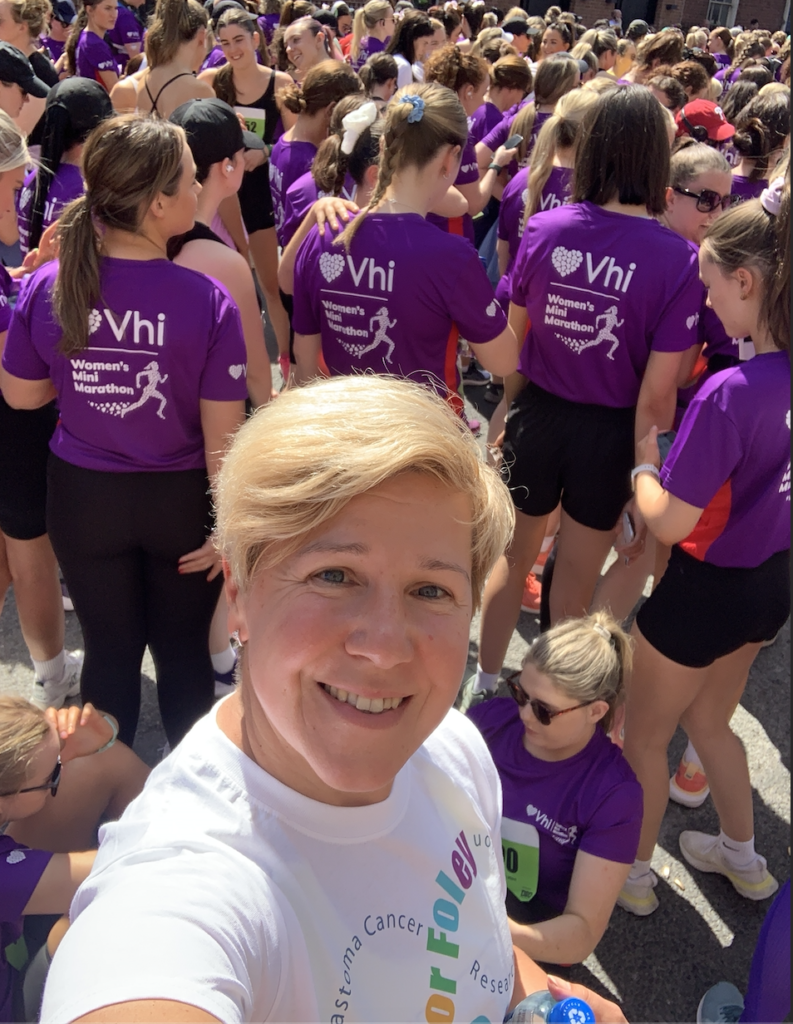
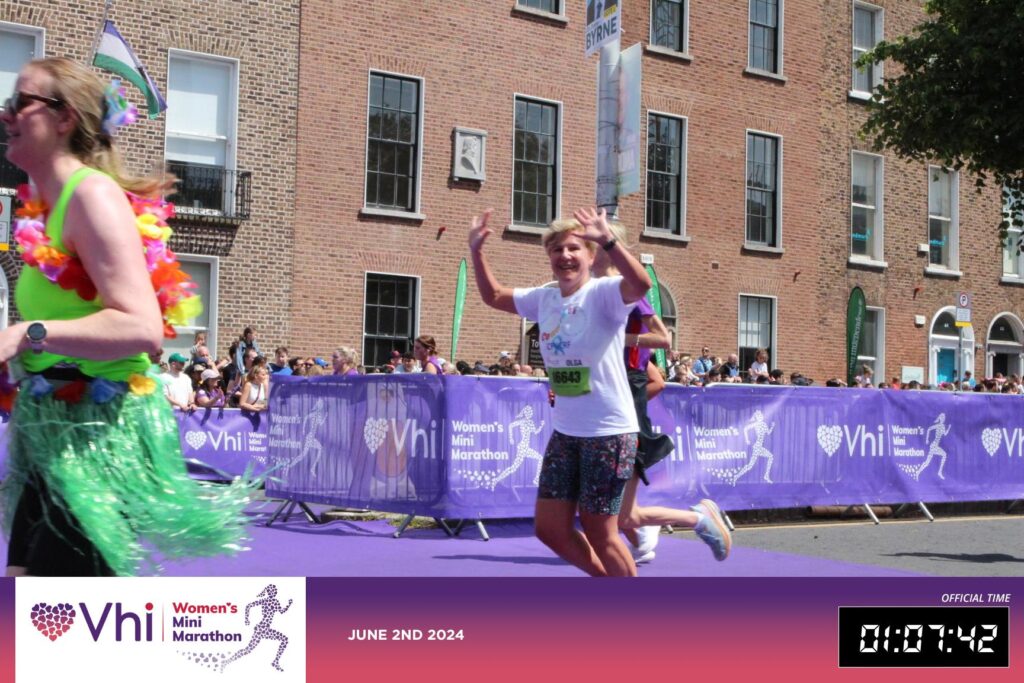
Yesterday, 30,000 runners, joggers, and walkers took part in the 44th VHI Women’s Mini Marathon. We were ages 14 to 92, from diverse cultural, educational, and fitness backgrounds. Each set their own ambition and target. It was my fourth race. My targets stayed the same: raising awareness for Childhood Cancer Research, supporting the Conor Foley Neuroblastoma Cancer Research Foundation, and finishing within 1 hour and 15 minutes with a smile.
The atmosphere was cheering and empowering, and the weather was very kind to us. I was in a pink wave, and we started about 12:30ish. Running in a big company with your allies is enjoyable and empowering. I was sinking into the diversity and variety of running women and supporters along the road, enjoying every minute. Some took over me, and I took over some. Somewhere after 5K, I was tapped by my TERG colleagues, so the race became even more enjoyable.
Childhood cancer is an umbrella term for many other types of this disease. Cancer is the 2nd most common cause of death among children after accidents.
Every September, many charities, researchers and parents of children with cancer work hard to raise awareness of this cancer. You may learn more about kids with cancer, their loving families, the doctors and caregivers who look after them and treat them, the young survivors of cancer and those kids and teens who lost their battle, and the scientists who work hard to find a way to stop childhood cancer.
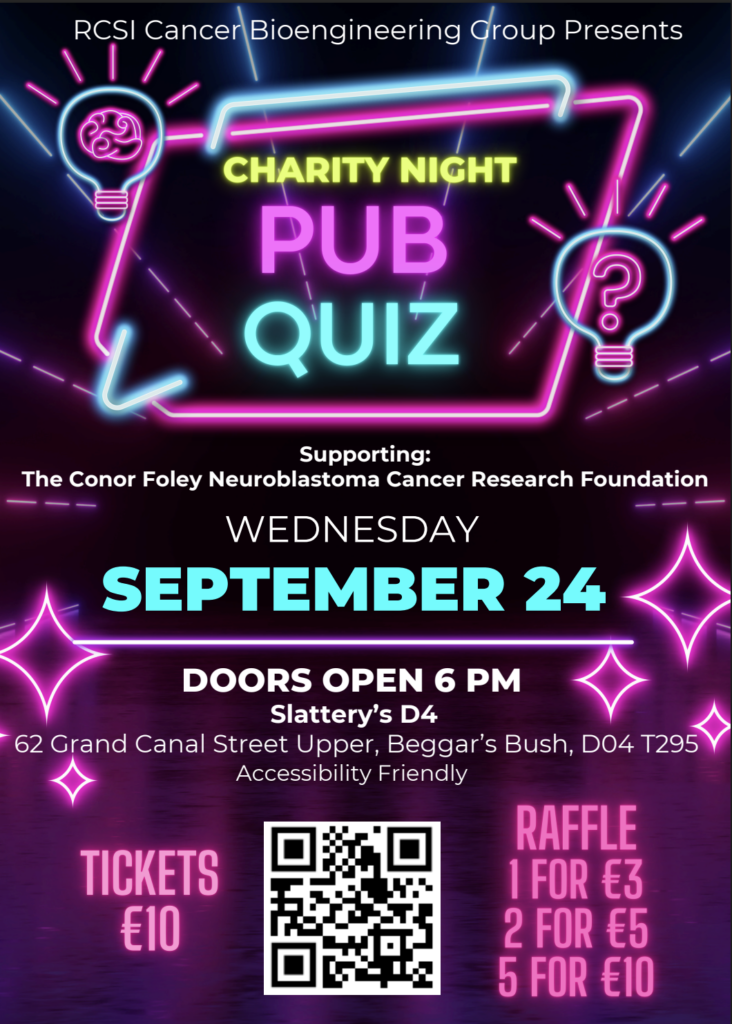
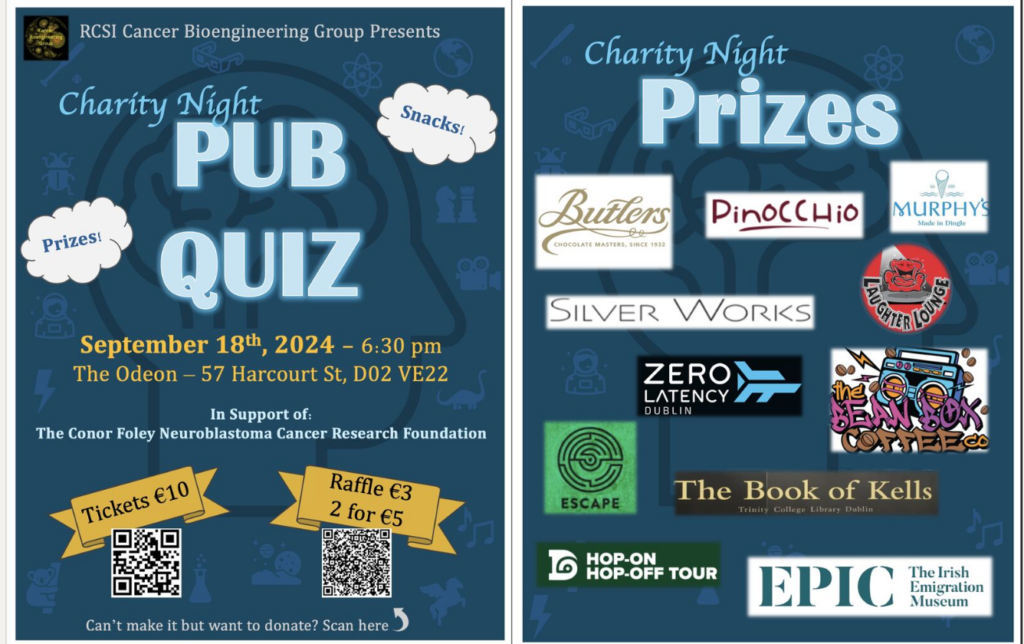
The RCSI Cancer Bioengineering group is excited to announce our upcoming fundraising event! Join us for a Charity Night Pub Quiz on September 24th at 6:00 pm in Slattery’s D4 pub., in honour of Childhood Cancer Awareness Month. All donations will go to the Conor Foley Neuroblastoma Cancer Research Foundation (CFNCRF).
Test your trivia knowledge, win great raffle prizes, and make a difference together! Our pub quiz is open to everyone, with friends and family encouraged to attend. We can’t wait to see you there!
If you’re unable to make it but still want to support our fundraising efforts, we would greatly appreciate your donation. Please either buy the Raffle tickets or donate directly via the CFNCRF.
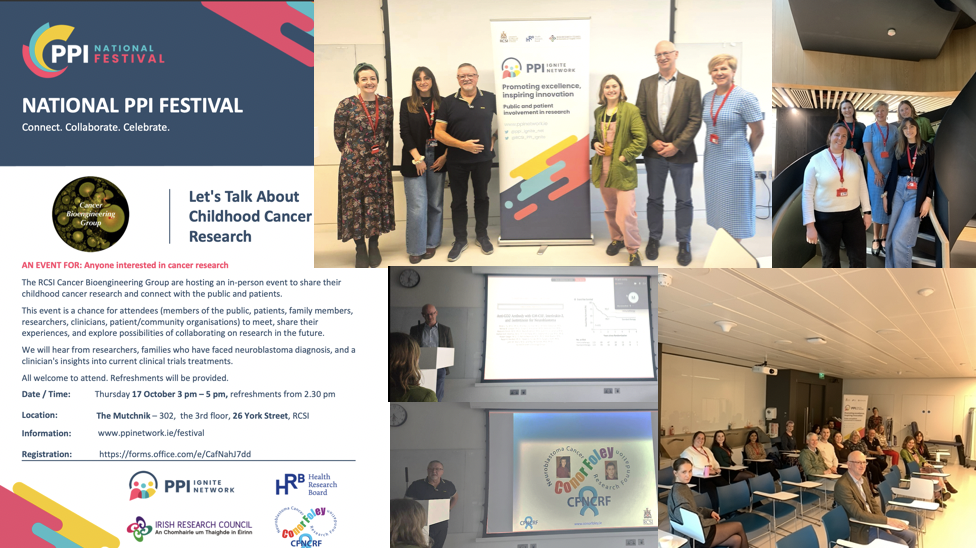
The RCSI Cancer Bioengineering Group hosted an in-person event during the National PPI Festival 2024 to share their childhood cancer research and connect with the public and patients.
We welcomed members of the public, family members of children with cancer, researchers, clinicians, and patient/community organisations on October 17th. Our past lab members and students paid a visit, too! Our group shared ongoing research on neuroblastoma biology and finding new treatments. Prof Cormac Owens from CHI brought us through the journey of clinical trials in neuroblastoma patients. We heard the heartbreaking story of the brave young man who lost his life to neuroblastoma and his parents who never gave up. This truly inspirational family founded a charity – the Conor Foley Neuroblastoma Cancer Research Foundation, to support curiosity-driven and translationally-focused research. The Foleys know very well how important it is to return happy days to kids and their families.
Cancer is the 2nd most common cause of death among children after accidents.
Childhood cancer is an umbrella term for many other types of this disease. Every September, many charities, researchers and parents of children with cancer work hard to raise awareness of this cancer. You may learn more about kids with cancer, their loving families, the doctors and caregivers who look after them and treat them, the young survivors of cancer and those kids and teens who lost their battle, and the scientists who work hard to find a way to stop childhood cancer.
This year, our research team will run the Pub Quiz on September 18th, 2024, in honour of Childhood Cancer Awareness Month. All donations will go to the Conor Foley Neuroblastoma Research Foundation (CFNRF).
If you would like to get involved in this amazing challenge and help us raise vital funds for childhood cancers, you can contribute to our fundraising page:
I have never been a runner. In my head, the word ‘marathon’ was linked to professional athletes and the Olympics or Athletics competitions. I could not imagine anyone doing a race as long as one gets guts. However, once I found the courage and motivation to explore my body’s limits. It was probably our team fundraising ‘Hell&Back’ challenge in 2019 that ignited that courage. We did many! Virtual VHI MiniMarathon, the Dublin Mountain Way in a Day, Cyclothone, to name a few.
Eventually, I decided to do it on my own in 2024. I booked the VHI Mini Marathon 2024 entry and started my training. Having many fitness apps at my disposal let me pick the right training plan. 10K sounded manageable. The fitness watch kept all my training records, so I got a very good understanding of my body potential and limits to do 10K.
On that sunny day, hundreds and hundreds of women were getting to the starting line. Each set their own ambition and target. I had three: 1) jogging from start to finish, 2) finishing within 1hr and 20 min, and 3) supporting the Conor Foley Neuroblastoma Cancer Research Foundation.
So, June 2nd was fast approaching, and I injured my calf during the Wicklow hike. However, giving up was not an option, but healing was required. So, I decided to stop running for a week and gradually get back on track.
The atmosphere was cheering and empowering, and the sun was bright and hot. The green ‘wave’ began their race at about 12:45. Running in a big company was easy. It is less doubtful if you are in a group of allies. Distance and time flew. I was sinking into the diversity and variety of running women and supporters along the road, enjoying every minute. Some took over me, and I took over some. I stuck to my training pace to ensure my power and energy were not draining quickly under the sun. My fitness watch counted the distance, heart bit and steps, showing that I was slightly slower on average than during my training. I decided not to break the limits and kept running, listening to my body. Somewhere at the back of my head, I hoped to speed up at the end, if any. Unfortunately for me, the final 1-2 km were up the hill, so the slop ate my efforts.
Being a researcher puts every experience in perspective. We tend to analyse the flow of any information, sometimes unconsciously, by asking questions and reflecting. One of the running advantages is that you see an accomplishment right now at the finish line. Your fitness watch provides all the data to plan and complete a given challenge with very good accuracy. It is not about luck. It is about your trust in your body and mind. You are in the driving seat! Delighted with my accomplishment!
So, what is next on my to-do list? Definitely another race, very likely Run in the Dark.
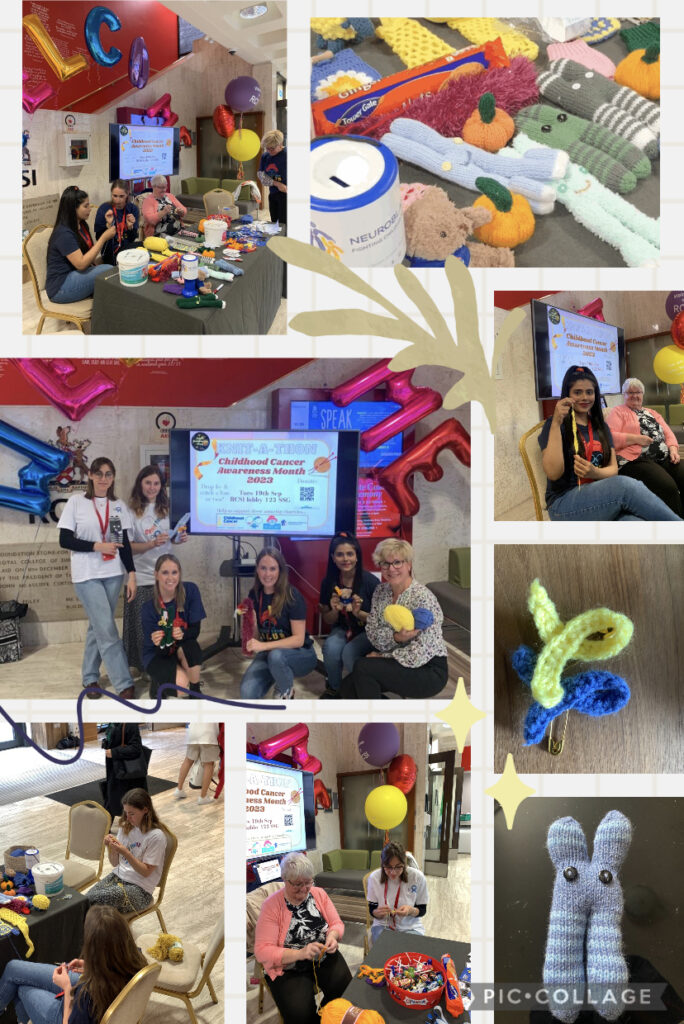
A wonderful day of knitting – Knit-A-Thon-2023 raised 913 euros. A massive thank you to everyone who stopped by and donated on the day and beyond. Every cent counts! The money was split evenly between our four chosen charities: The Conor Foley Neuroblastoma Research Foundation (CFNRF), Neuroblastoma UK (NBUK), Oscars Kids and Childhood Cancer Ireland (CCI). These charities were established and are run by parents, some of whom lost their children to cancer. They continue their children’s legacy, doing an amazing job of advocating for children with cancer and better funding for research and aftercare.
Knit-A-Thon 2023
And a special thank you to Ciara’s mam Aggie for the amazing handmade raffle prizes (chromosomes, antibodies, cup holders and many more) and a Master class on the day! We thank Jenny Duffy (RCSI Events and Communications Coordinator) for her time crocheting with us and for us! Thanks to Anggie’s and Jenny’s skills, there were lots of mascots to win – and many of them collected already. We much appreciate the support from the RCSI Estates and Porters who looked after us on the day.