First Research Meeting For A Medical Student

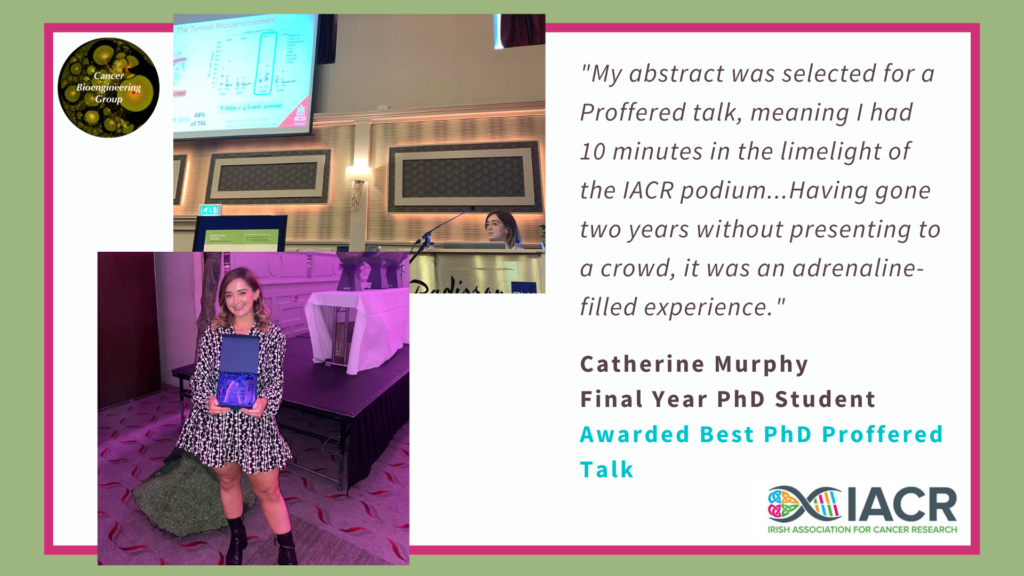
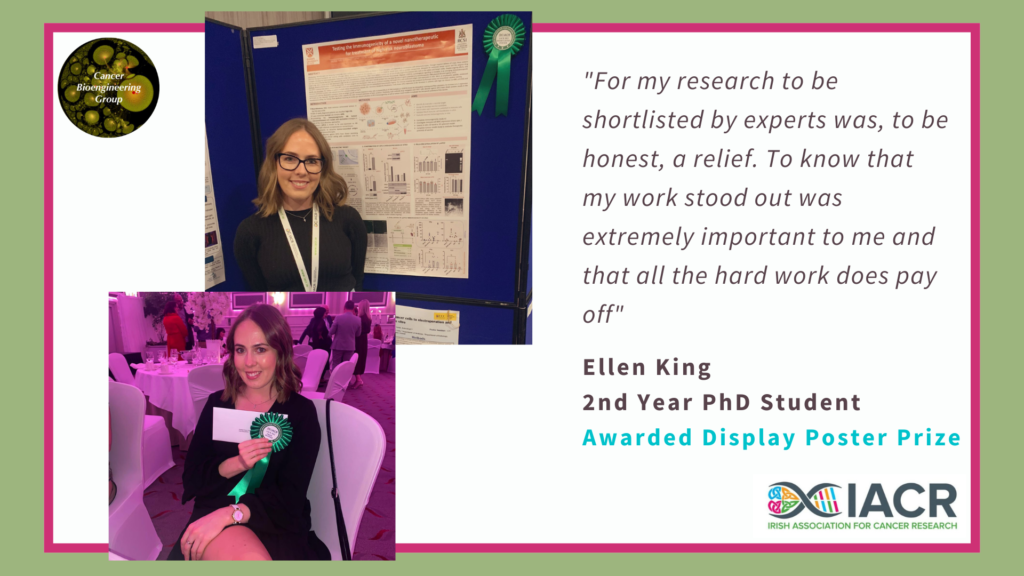
At the beginning of my career, I worked for two years in a Ukrainian company organizing international industrial conferences. So I have insider knowledge of how the conference works, and that the determining factor for the success is the active communication between the participants. And at the RCSI research day and Cork IACR conference, this component was perfect. At both events, I presented my poster and had a chance to discuss the recent advances in neuroblastoma epigenetic drug research. During RCSI Research day, I was excited to learn about the accomplishments of other undergraduate studies and was thrilled to learn that my classmate is participating in research too. He had developed an online recourse to practice cardiac auscultation, which is extremely useful for my medical studies. But professionally, I enjoyed the cancer research posters and presentations at the IACR conference and was eager to meet the researchers working on medulloblastoma, a paediatric neural cell cancer, and the research team from UCD, the neighbours of our university who worked on breast cancer. It was the most valuable opportunity to take a glimpse into other research, become inspired by the most ingenious methods, and cultivate professional knowledge and personal connections – I am so lucky I have been at RCSI Research day and the IACR conference! I have greatly enjoyed my time, and I am looking forward to (hopefully) going to the next year’s conferences again.

Written by Nadiya Bayeva

RCSI Research Day 2022

Cancer Bioengineering Group thoroughly enjoyed getting back to in-person Research Day at RCSI after 2 years, we’re now very much looking forward to the IACR conference later this month! We will have 2 oral and 5 poster presentations at IACR 2022.

Dream Team in action

Ronja: My typical day

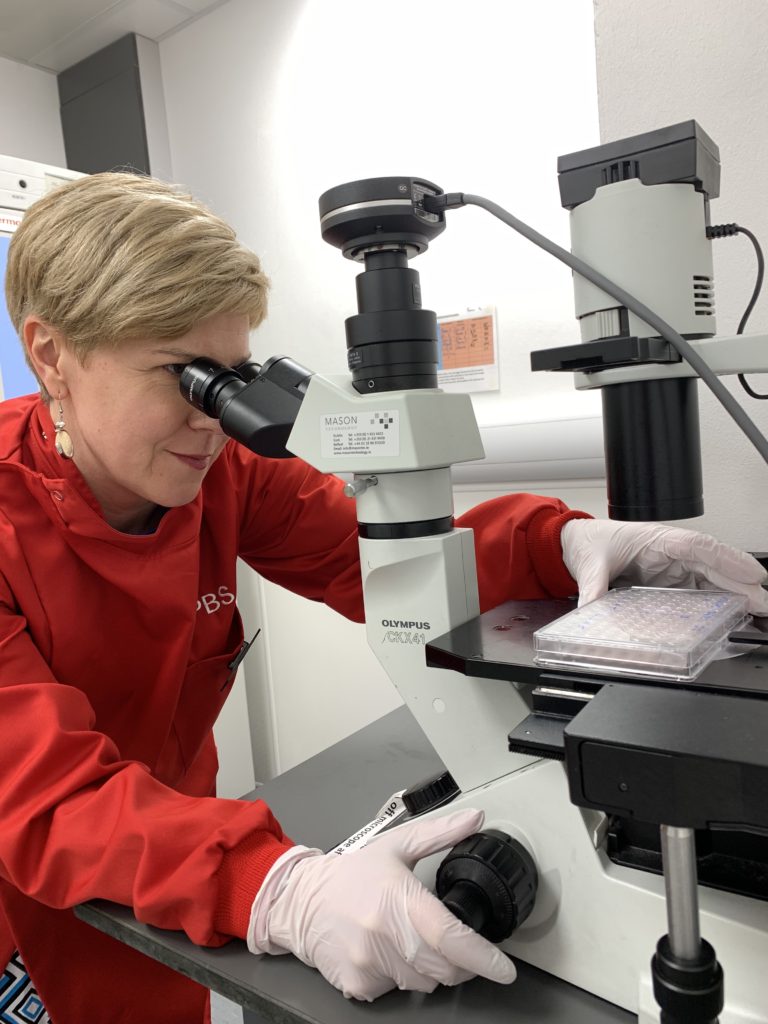
A typical day for me is difficult to describe because there are many facets to a PhD in the Cancer Bioengineering research group. Some days I spend in the lab sectioning, staining or looking at tumour samples under the microscope. Others I stay at home, read papers and try to figure out how they can help me to achieve my research goals. Some days I take part in the courses and workshops offered in the scope of a structural PhD. Then there are times when I sit here writing up for you guys what it is that I do those other days. The academic environment also provides lots of other opportunities to apply yourself and broaden your horizons or pursue what you enjoy. I, for example, have the chance to partake in weekly dissections for medical teaching which helps to keep my anatomical knowledge fresh and is an always welcome change of scenery (and smell) when I am stuck on other things. Furthermore, I get to see the other side of conferences and what is involved in their planning, because I am part of the local organising committee for the European Federation for Experimental Morphology Symposium 2022.

Figure 1 Working on neuroblastoma cancer the samples I am working with are quite unsurprisingly tumour cells. But these can be grown, for example, in mice (A) or on manmade scaffolds (D).  I am moving a staining rack that holds the microscopy slides through staining containers filled with different solutions (C) to stain the slides. After the slides are stained the excess stain is removed by washing in distilled water (B). The resulting images depend on the type of stain. Stains like Alcian Blue can only be viewed with brightfield microscopy (A). But Picrosirius red can also be viewed under polarised light or as seen here (D) with fluorescent microscopy.

Currently, not yet half a year into my PhD, a lot of my time is spent planning. That’s planning which methods to use, which products to order and which experiments, and analyses would result in the most coherent and rounded off story being told by the summation of my research. I also spend a lot of time optimising the methods I will use to assure reproducibility and avoid issues during the analysis later on. For example, the whole tumour sample stained with Alcian blue you can see in Figure 1A clearly shows discernible blue and red regions. However, I have spent about 2 months now trying to get to a point of producing this same outcome reliably rather than having samples show up entirely blue or very only faintly stained. Picrosirius red, the solution I used to stain the sample in Figure 1D stains collagen. But there are many different stains for collagen. After researching most if not all of them I chose this one because it can be viewed with different types of microscopies providing slightly different information. Another step of planning includes how many pictures of which magnification will be required, one image of a whole section for orientation such as in Figure 1A and then more zoomed-in images to investigate the structure of collagen such as in Figure 1D.

Between course work and planning and optimising different aspects of my project, my PhD provides me with plenty of opportunities to focus on something else whenever I get stuck to later return with a fresh set of eyes.

Written by Ronja Struck, a 1st Yr PhD student funded by the IRC-CFNCRF

Welcome to the Cancer Bioengineering Group!

It is time for a full group presentation here at the blog! Throughout the month we shared about our group members and their research focus on Twitter. Now, we would like to share more about the group here and invite you to keep following us on social media. 

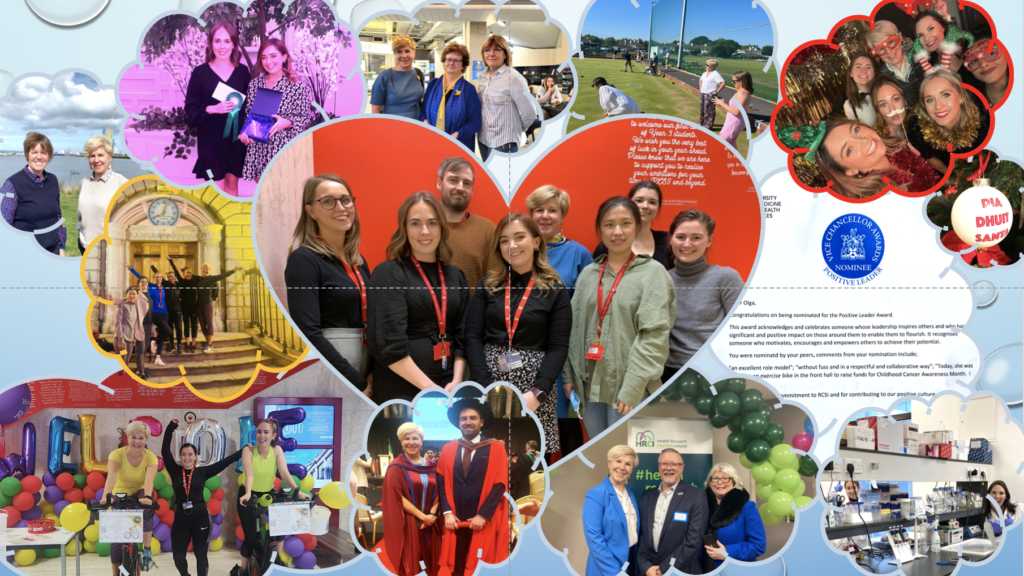
The Cancer BioEngineering Group is a research group led by Dr Olga Piskareva at the Royal College of Surgeons in Ireland. The group has 6 PhD students developing research projects around neuroblastoma biology.  

Our projects address topics related to neuroblastoma microenvironment, cell interactions, tumour resistance and the development of new therapies. To do that we use 3D in vitro models, identify immunotherapeutic targets and evaluate extracellular vesicles.  

We are a dynamic group proud to be engaged in research, science communication and patient involvement. We do that through different initiatives.  

We support and collaborate with several neuroblastoma charities around Ireland and internationally such as the Conor Foley Neuroblastoma Foundation, the National Children Research Centre, the Children’s Health Foundation Crumlin and the Neuroblastoma UK. Moreover, our projects are funded by the Irish Research Council in partnership with these charities and by RCSI StAR PhD programmes.  

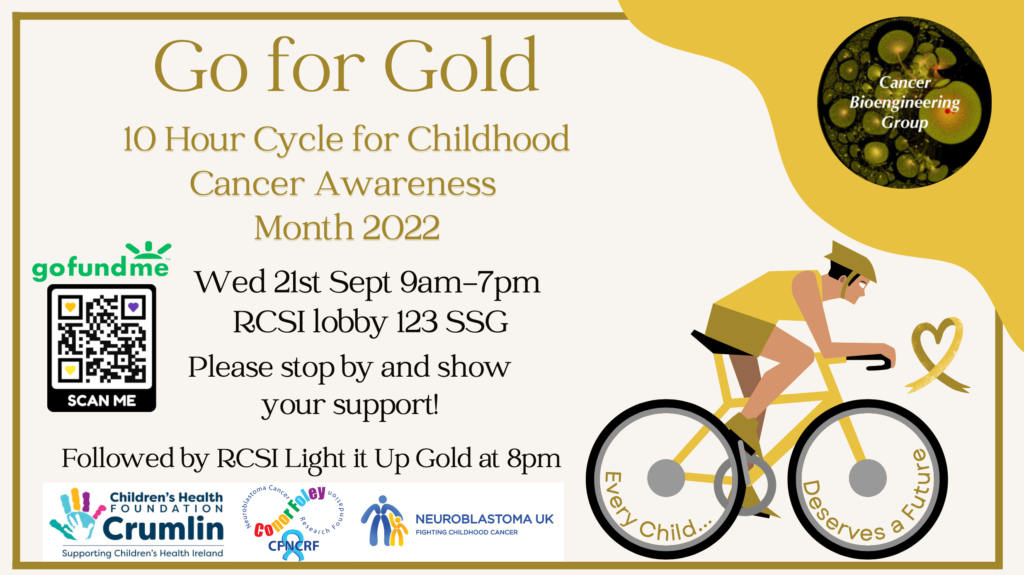
We promote neuroblastoma awareness through different activities. For instance, last September at the Childhood Cancer Awareness month we promoted a hiking challenge to raise money and increase awareness of neuroblastoma. We hiked for 30km at Wicklow mountains in a day and raised over € 2,000 for neuroblastoma research charities.  

We are also present in social media, creating content in the form of blog posts and tweets to share the science we are doing.  

We are always happy to answer questions and interact with the public. Follow us on our social media channels and read our blog to know more about us and our research.  

Thanks for reading and we go ahead with neuroblastoma research! 

Written by Luiza Erthal

#AskLuiza: Could we use blood tests to detect neuroblastoma?

For most neuroblastoma cases a tissue biopsy, which means remove a piece of the tumour and analyse under a microscope, is performed to confirm the diagnosis, allow the risk stratification (low, intermediate or high-risk cancer) and determine treatment.  However, it is not always possible to perform a biopsy. In these cases, other tests are available such as ultrasound, x-ray and urine test1. Although these tests help the diagnostic, they are much less informative to determine the risk group and to guide treatment.

Cancer is a genetic disease and as such several genetic alterations are present in the DNA and can be useful to determine a diagnostic and prognostic of the disease. These alterations can also be useful to monitor treatment effects. But, how we can examine the DNA without using a piece of the tumour?

The answer for that relies on our blood. Cancer patients have cancer cells circulating in their blood and these cells release what we call cell-free tumour DNA. The level of cell-free tumour DNA in the blood of a healthy individual is low while this is increased in cancer patients. The detection of cell-free tumour DNA with specific alterations may help to not only detect the disease but also determine if the tumour cells are changing after treatment.

Recently, a trial for a blood test that can detect 50 different types of cancer was launched in the UK2. The test called the Galleri test look for cell-free tumour DNA in the blood using modern genetic sequencing technology. It spots the DNA that has changes common in specific cancers but not seen in healthy cells.

One of the main questions of this trial is if the test can find early stages of cancers. Although neuroblastoma is cancer that could benefit from this test, unfortunately, it is not one of the cancer types detected. However, the presence of cell-free tumour DNA was already detected in neuroblastoma patients’ blood3. Moreover, several alterations in the DNA of neuroblastoma patients have already been reported to have predictive value for disease progression and treatment monitoring. These alterations include the increase in the number of specific genes, genes breakdown or increased activity of certain genes. Their presence may indicate poor outcomes and early detection could guide to specific treatment options.

The big challenge is to have a non-invasive diagnostic method, such as blood tests, that are sensitive enough to detect the early stages of the disease. Specifically for neuroblastoma, comprehensive analysis in clinical trials regarding cell-free DNA levels and their specific changes over time would help to advance the development of liquid biopsies, such as blood tests, for this type of tumour.

Written by Luiza Erthal

References

1. Tests for neuroblastoma, Cancer Research UK. February 25, 2021

2. The Galleri multi-cancer blood test: What you need to know, Harry Jenkins, Cancer Research UK. September 13, 2021.

3. Wei, M., Ye, M., Dong, K. & Dong, R. Circulating tumor DNA in neuroblastoma. Pediatr. Blood Cancer 67, (2020).

#AskLuiza about neuroblastoma biology

#AskLuiza

We are launching a new initiative #AskLuiza to help the public and patients know more about advances and current trends in neuroblastoma.

Luiza is a research writer at the Cancer Bioengineering Research Group. She holds a PhD in Biomedical Sciences from Trinity College Dublin. You will ask a question and Luiza will look for the answer in peer-reviewed research papers that the research community trust.

Leave your question and follow our blog to read the answer soon: https://forms.gle/vrgwKoZivyUVawk9A

A 30km Dublin Mountain Way in A Day

And the story began with a meeting of fantastic 7 at the very beginning of Dublin Mountains Way in Tallaght at 6.30 am on September 25th. The spirit, cheer, backpacks with essentials and branded tops were on, Strava was launched and we swiftly headed off.

It was quiet, dark and cheering. No one was on the streets, a few cars passed by. We took towards Bohernabreena reservoir through the sleepy estates of Tallaght, sensing the sunset. Clouds were low and the highest peaks in the Dublin Mountains including Seefingan, Corrig and the highest, Kippure were in the mist. Nevertheless, we were full of energy and hopes to see it later.

Cheat chats and jokes were here and there, we walked in small dynamic groups recalling our pre-covid life and stories that happened during the lockdown. A mix of newbies and maturating research students. We met some in person for the first time since the COVID restrictions admitting that our visual senses are extremely important to memorise a person and recognise him/her on the next occasion. We were enjoying this face-to-face communication and our team re-connection.

The first 8 km flew in a flash. We stopped for our breakfast in Dublin Mountains. The grass was wet, the sky was blue. Mountains started to draw their shape through the clouds. Yoghurts, fruits, bars immediately disappeared in our stomachs. Everyone was happy to lighten their backpack. Every little helps!

A few plasters were glued, and we continued on at a very good pace. The sky was changing with sunny spells. We travelled around Spinkeen and Killakee at their base doing up and downhills and verifying our route with the hiking app. At the 20 km mark, we stopped for lunch. Sandwiches, grapes, mandarines and sweets were shared and eaten and then polished with chocolates from the recent Nadiya’s home trip. Jellies left untouched.

At 25 km, our blisters reminded us of being humans. Our pace slowed down and we started a very mild ascent to Tibradden Mountain leaving the Pine Forest or Tibradden Wood behind. We climbed further to Fairy Castle, the highest point on the Dublin Mountains Way (537m). Throughout the entire way, Dublin showed its best views of the Phoenix Park and the Pope Cross, house roofs, Aviva Stadium, two Chimneys, Dublin Port… The scenery was fascinating and breathtaking. We saw Howth and Dun Laoghaire, Sugar Loaf… We met groups of Germans, French, Irish and many others.

At Three Rocks Mountain/Fairy Castle, we started our descent and entered Tiknock forest. This part was steep. We crossed the Gap Mountain Bike Adventure Park to reach Glencullen. Got lost at the end but just for a sec and reached the Glencullen junction at 2.30pm. It took us 8 hours with walks and stops from start to finish to complete the 30 km challenge in a day. We got tired but felt happy and satisfied.

We aimed to raise awareness of childhood cancer in general and neuroblastoma in particular as well as honour children with cancer, their parents, siblings, friends and careers, doctors and nurses, volunteers in the hospitals and researchers working to find cancer weaknesses and develop new treatments that are friendly to patients and target cancer aggressiveness.

We will count our tally in the coming days and transfer it to three wonderful charities that support childhood cancer research.

We thank everyone who supported this challenge!

Go raibh maith agat!

I’m Ronja

I’m Ronja, I’m from Germany, but have spent my entire adult life in the English-speaking parts of this world. Right after school, I interned with a PhD student working on cystic fibrosis for a couple of months. Having the chance to culture airway epithelial cells myself made me certain I was on the right track with biomedical sciences. So, I studied Biomedical Sciences (Anatomy) in Aberdeen. The best part of that degree was my introduction to dissections. I enjoyed them so much that I even considered becoming a full-time prosector. But that does not count as essential work, so I found a remote master’s degree in Health Research instead. Studying remotely gave me the fabulous opportunity to structure my own time. I could go and explore Scotland during the day and work in the evenings. But after 5 years of studying, I was finally ready to start a PhD and was ever so delighted when I heard I could weave in some dissections at RCSI. Now, I’m looking forward to discovering what Dublin has to offer and to getting stuck in my research project!

While I didn’t know much about the particulars of my PhD before starting, I had an idea about the project from the application and I knew accommodation was sorted out for me, but I had never seen the place or my future flatmates. The one thing that I was made aware of far in advance of moving to Dublin was that September was Child Cancer Awareness Month, for which the team was going to do a charity event. Based on past years I was expecting it to be a 10km run, which was pretty daunting to me. So, I prepared. I started running and cycling over the summer until 10km weren’t an issue anymore. But in the first lab meeting plans shifted. We were going to do the Dublin Mountains Way in a day. The 10km were tripled and depending on donations maybe even quadrupled. Quite a different challenge! But I believe my summer prepared me well for that too. Alongside running I started cycling a little as well. And because there was a free bike in Aberdeen for me, I cycled it down to Stirling. Let’s hope that the endurance needed to cycle 200km translate to hiking 30-42km!

Ronja Struck

Dublin Mountain Way in A Day, September 25th 2021

Here are our plans. This year we have upped the challenge, taking on the Dublin Mountain’s Way in a Day ⛰ We will hike through the Dublin Mountains from Tallaght to Glencullen, and maybe even all the way to Shankill on September 25th! Our challenge is not only to do #DMW in a Day & support three wonderful charities CMRF Crumlin/National Children’s Research Centre, Neuroblastoma UK and the Conor Foley Neuroblastoma Cancer Research Foundation but also beat our past fundraising records! If we raise 2K+, we’ll do 30km in a day. If 3K+ then 42km! Can u challenge us?  All funds raised will go to the 3 selected charities. Every donation big or small is hugely appreciated!

Please support us by donating to our Gofundme

https://gofund.me/ec59f131