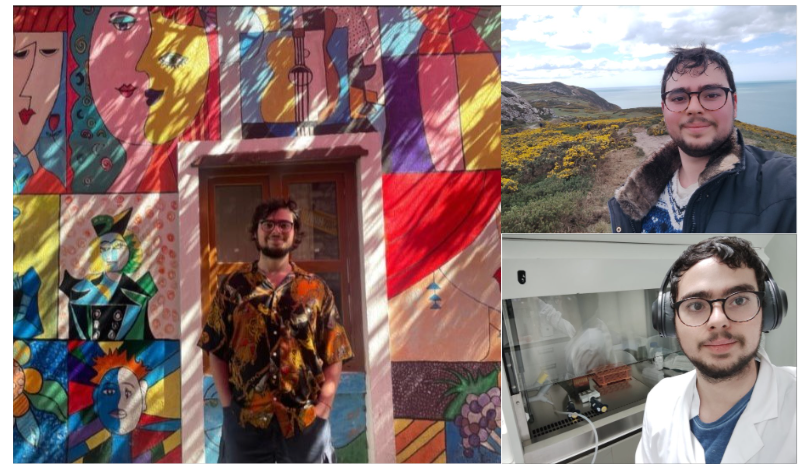
I’m Pierluca!

Good afternoon, readers! Pierluca here, writing to you as one of the newest members of this incredible team. For those who haven’t met me yet, I’m a PhD student joining the RCSI family for the next three years.  

My story starts in Brindisi, a charming harbor town in southeastern Italy. From there, my academic journey took me to the Netherlands.  During my two research projects, I explored how high-fat diets impact liver metabolism and investigated ways to prevent metabolic reprogramming and cell death.  
Now, I’m bringing that curiosity to RCSI, where my focus is shifting to something even more complex: cancer metastasis. In the lab, I’ll research how neuroblastoma invades the brain to form metastases. Using 3D bioprinting and scaffold models, I’ll grow Neuroblastoma Kelly and Kelly-cis cells to observe how they infiltrate brain-like structures and hijack the immune system.  

Science is intense, so balance is key! When I’m not in the lab, you’ll find me Hiking when the sun is shining or Playing cards in a cozy pub when the rain pours. Cooking with friends is a great way to spend some relaxing time at home and when I am alone, I enjoy a good book (currently reading The Master and Margarita, highly recommend!). 

Stay tuned for more about me and my research! 

Written by Pierluca Cancellieri, Mac4Me PhD student
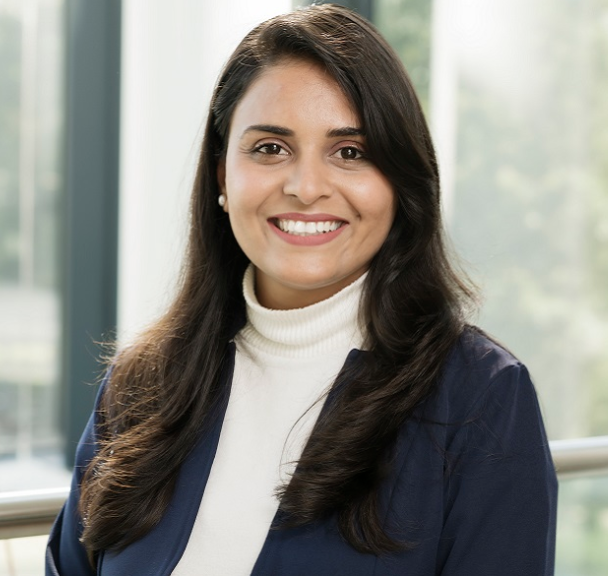
Charting New Territory in Neuroblastoma: A Marie Curie Fellow’s Perspective

As a DevelopMed Marie Skłodowska-Curie Fellow, I am committed to advancing childhood cancer research by investigating the biology of neuroblastoma, a complex and aggressive paediatric solid tumour. My research focuses on the high-risk form of the disease, where amplification of the MYCN oncogene is strongly associated with poor prognosis.

The project aims to elucidate the pathway crosstalk regulated by MYCN—specifically, how it alters normal cellular signalling and governs the critical cell fate decisions between proliferation and apoptosis. By employing mass spectrometry-based proteomics combined with systems biology approaches, I am constructing a comprehensive map of MYCN-driven signalling networks to identify potential therapeutic targets that could improve clinical outcomes for affected children.

A distinctive and rewarding aspect of my fellowship is my role as a visiting scientist at the Royal College of Surgeons in Ireland (RCSI), where I collaborate with Dr. Olga Piskareva’s lab, an internationally recognised leader in 3D neuroblastoma research. Here, I am gaining hands-on experience with 3D neuroblastoma spheroid culture systems, which more accurately recapitulate tumour behaviour compared to traditional 2D models. These advanced systems enable a deeper understanding of drug responses, tumour architecture, and cellular interactions in a physiologically relevant context.

This collaborative framework between UCD and RCSI fosters a dynamic, translational research environment and exemplifies the core values of the Marie Curie programme—innovation, collaboration, and real-world impact.

Every stage of this journey—from pathway elucidation to 3D model validation—contributes to the overarching goal of developing more effective, targeted therapies for children diagnosed with neuroblastoma.

Written by Rashmi Sharma

Mac4Me project kicks off with a meeting in Rotterdam and the first doctoral training session

The European doctoral network Mac4Me (Macrophage Targets for Metastatic Treatment) has officially commenced its action with a successful kick-off meeting held in Rotterdam on June 25-26, 2025. The event, organised by the Erasmus University Medical Centre (the project coordinator), brought together the project’s core partners to harmonise efforts and set the stage for the next four years of research.

Mac4Me goes beyond technical expertise, striving to ensure each doctoral candidate has the tools to flourish both professionally and personally. This commitment was evident in the first training, which covered clinical aspects and requirements related to the three metastatic cancer types Mac4Me is focusing on. Besides advanced scientific methodologies, including single-cell mechanics and organ-on-chip technology, the students gained insights into fundamental biological mechanisms such as tumour formation, immune evasion, and DNA repair deficiency in age-related diseases. The training also explored the ethics of cancer research and included an activity in which the communication team produced short introductory videos featuring each doctoral candidate on the website. A significant part of the training focused on Patient and Public Involvement in Research (PPI). This session, led by patient advocates from Dublin and the US, fostered an immediate connection with the doctoral candidates, emphasising the importance of collaboration and direct patient engagement at every step in the research process. A profound mutual interest in the project’s success was shared.

With nearly all doctoral candidates and principal investigators meeting in person for the very first time, the training and the meeting were marked by a palpable spirit of eagerness and enjoyment. This initial gathering fostered strong team-building among the doctoral candidates and across the various subprojects, laying a crucial foundation for their scientific and technical collaboration. The meeting proved to be a success in promoting the exchange of expertise and significantly strengthening networking opportunities, thereby setting a precedent for ongoing collaboration.

Mac4Me, Rotterdam, June 25-26, 2025

Mac4Me is a Horizon Europe MSCA (Marie Skłodowska-Curie Actions) Doctoral Network. The project is led by a core consortium of 14 partners and supported by an additional 11 associated partners. For more information about the consortium and the project, visit the Mac4Me website.

For media inquiries, please contact: mac4me@upf.edu.

Mac4Me MSCA Doctoral Network

We are delighted to provide training and contribute to neuroblastoma research through the Mac4Me Doctoral Network Programme. Mac4Me is a 48-month project that addresses both technical and social challenges in cancer metastasis. It focuses on three tumour types that show poor response to current immunotherapies: neuroblastoma, breast, and prostate cancer. These tumour types reflect cancer development across a person’s lifetime and share metastatic disease spreading to the brain, bone, and liver.

Working alongside researchers and patients, the network will train 18 Doctoral Candidates to study the tumour microenvironment at metastatic sites, with a particular focus on the macrophage immune cell population. It will combine organ-on-chip technology with microfluidic systems to investigate early cell-cell and cell-matrix interactions during tumour invasion. Mac4Me will move beyond traditional “thinking in boxes” approaches by integrating bioinformatics and Artificial Intelligence solutions with real-world clinical data. The project will focus on patient experiences and translate scientific advances into meaningful outcomes.

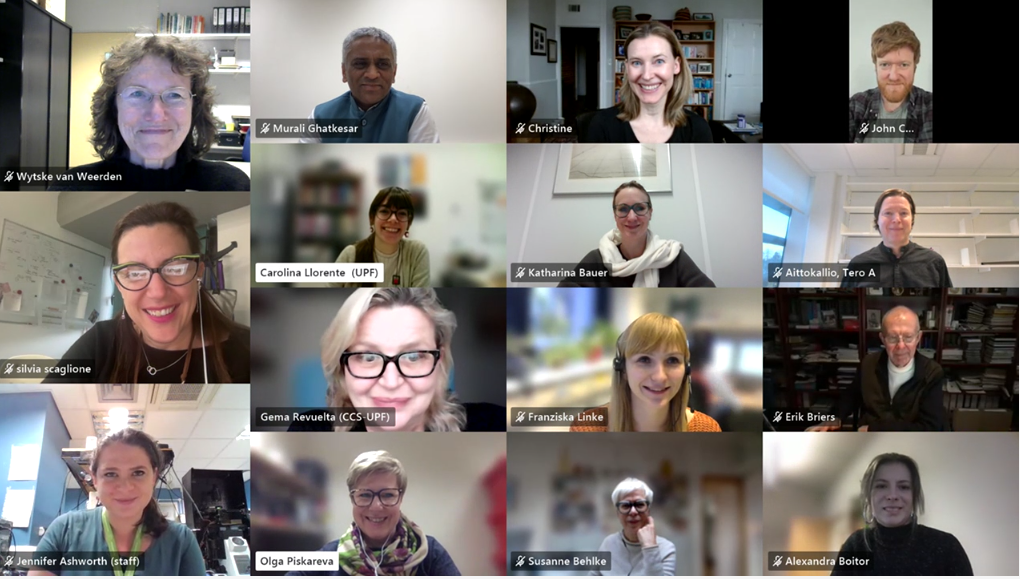
The kick-off meeting of Mac4Me partners, Feb 2025

We are very proud to train two out of 18 Doctoral Candidates, building upon the expertise of Drs Ian Woods, Adrian Dervan and Prof Fergal O’Brien in biomaterials and 3D bioprinting and Dr Olga Piskareva in neuroblastoma biology and 3D in vitro cancer models.