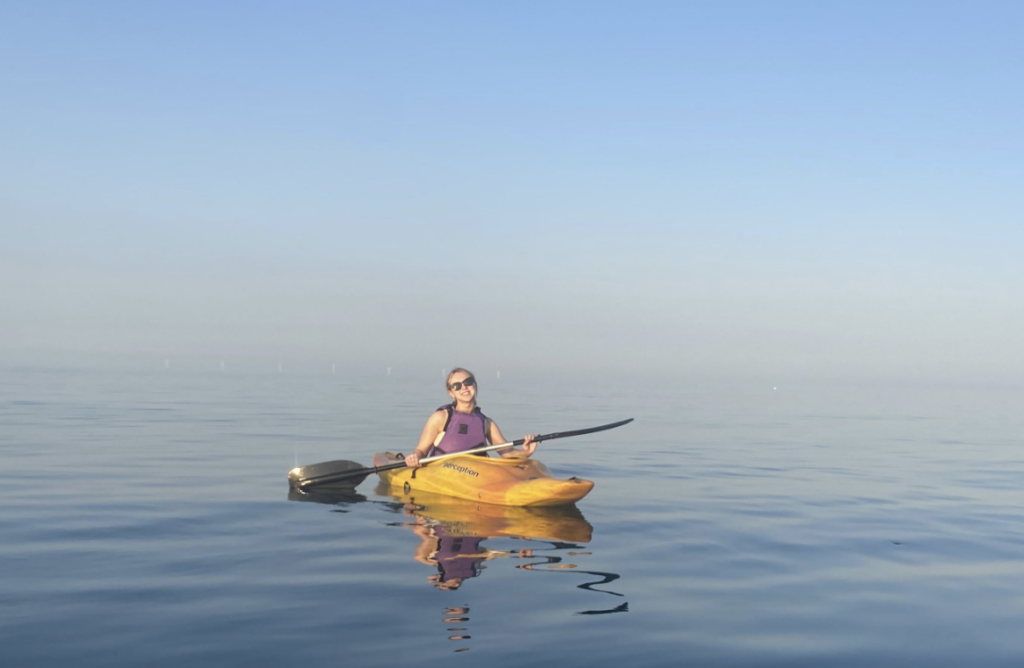
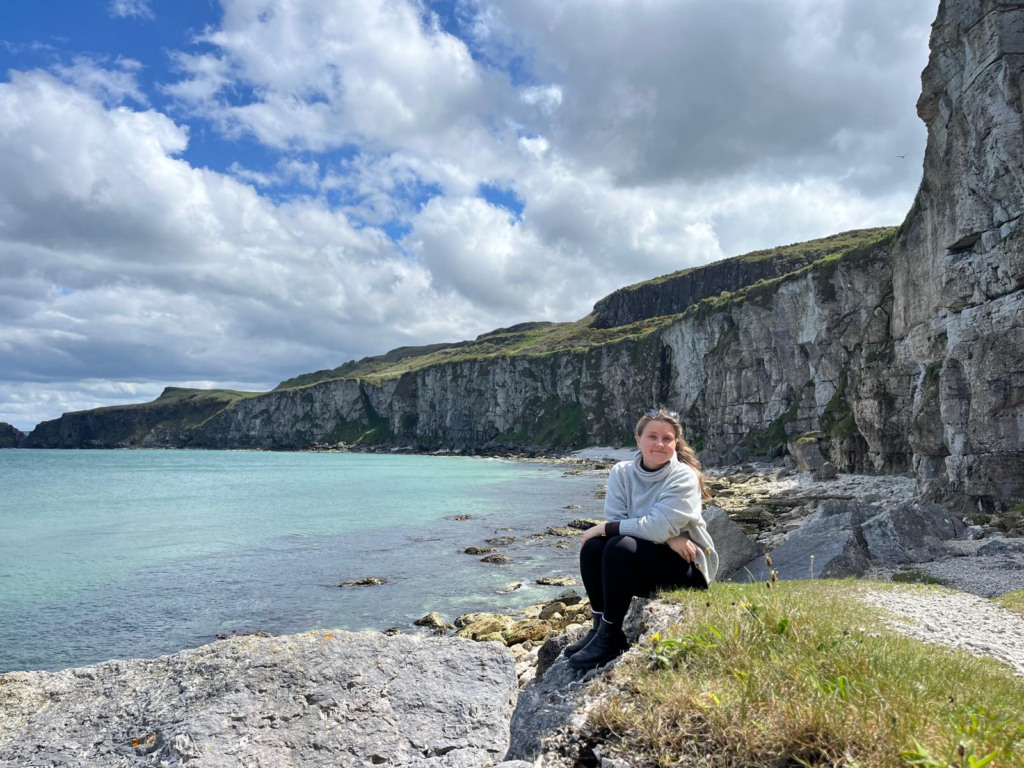
Hi! I’m Alannah, and I’ve recently joined Dr Olga Piskareva’s research group at RCSI to begin my PhD! I’m originally from Wicklow, Ireland, and completed both my BSc in Biotechnology and MSc in Diagnostics and Precision Medicine at Dublin City University (DCU).
Throughout my studies, I developed a particular interest in cancer biology and precision medicine, especially the potential for research to improve how we understand and treat cancer. Having previously worked on melanoma research, I’m really excited to explore a new area of cancer research, develop new skills, and take on the challenges that come with starting a PhD. I’m looking forward to seeing where the next few years take me!
Outside the lab, I love travelling, exploring new places, and making the most of any opportunity for an adventure! I particularly enjoy spending time outdoors, whether that involves hiking, discovering somewhere new, or just getting out and staying active. When I’m not travelling or in the lab, I also teach piano lessons, something I’ve been doing for several years and really enjoy!
I’m really looking forward to this new chapter and all the exciting experiences and opportunities ahead!
Hi everyone! I’m Isabelle. I’m 24 years old, and I’ve recently joined Dr Olga Piskareva’s group to start my PhD. I’m originally from Germany, where I completed both my Bachelor’s and Master’s degrees before moving on to this new adventure.
My interest in science goes back further than I can remember, but one of my earliest memories is taking part in a microscopy course when I was in fifth grade. I found it fascinating to discover a whole new world through a microscope, and looking back, it’s quite nice to think that my curiosity back then eventually led me to where I am today! I’m excited to deepen my knowledge, take on new challenges, and see where this PhD journey takes me.
Outside the lab, I enjoy cooking, staying active through sports, reading, and catching up with friends. I’m always happy to find a good book to get lost in, and one of my favourites is The Love Hypothesis by Ali Hazelwood, which I absolutely loved!
I’m really looking forward to this new chapter, learning from everyone in the group, and getting to know everyone better! 😊
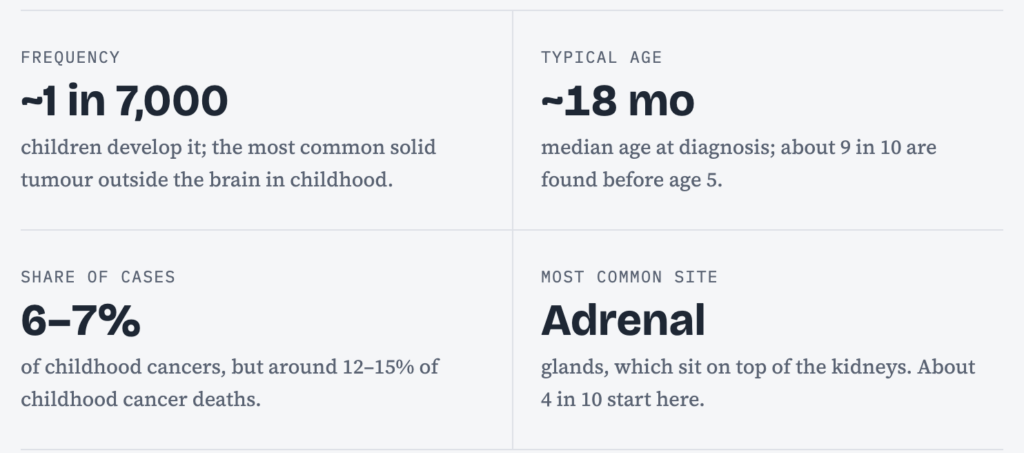
Our research is focused on neuroblastoma, a cancer of immature nerve cells that almost only affects babies and young children. It is one of the most unpredictable tumours in medicine: some vanish on their own, others are among the hardest childhood cancers to cure.
The genes that change the odds
MYCN amplification
Extra copies of the MYCN oncogene appear in about 20–25% of tumours. It drives aggressive growth, and any child with it is usually treated as high-risk regardless of stage.
ALK & PHOX2B
ALK mutations occur in roughly 10% of tumours and are the main cause of the rare inherited form (1–2% of cases). ALK can be targeted with drugs such as lorlatinib.
Chromosome changes
Losses of 1p or 11q and gains of 17q signal more aggressive disease. Whole-chromosome gains (hyperdiploidy) in infants tend to mean a better outlook.
In research, sophisticated technologies—single-cell sequencing, high-dimensional flow cytometry, or multi-omics analyses—often capture our attention. Yet the reliability of these approaches frequently depends on a much less celebrated step: the quality of the biological sample.
Recently, I revisited one of the most fundamental procedures in immunology research—peripheral blood mononuclear cell (PBMC) isolation. Although the technique is well established, performing it reminds me that careful sample preparation is not simply a technical prerequisite; it is an essential determinant of data quality and experimental reproducibility.
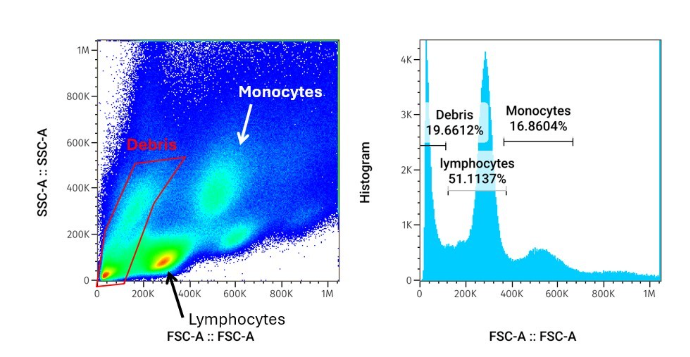
PBMCs, comprising lymphocytes and monocytes, are central to investigating immune responses in cancer, infectious diseases, and inflammatory disorders. Whether the downstream application involves functional assays, flow cytometry, transcriptomic profiling, or cell-based therapeutics, the integrity of the isolated cell population directly influences the biological conclusions that can be drawn (Figure 1).
Figure 1. Representative flow cytometric profile of PBMCs.
Forward scatter area (FSC-A) and side scatter area (SSC-A) were used to distinguish the major PBMC populations following density gradient isolation. Lymphocytes and monocytes were identified based on their characteristic size and internal complexity, while debris was excluded from downstream analyses (left). The corresponding FSC-A histogram illustrates the relative distribution of debris, lymphocytes, and monocytes within the isolated PBMC sample (right).
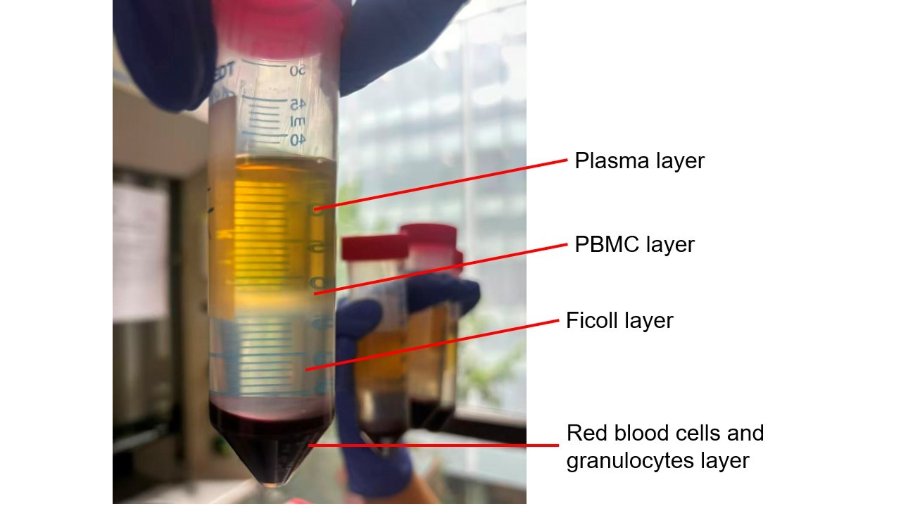
What continues to fascinate me is how much depends on meticulous execution. Maintaining a clean density gradient, preserving the delicate mononuclear cell layer during collection, and minimising contamination from granulocytes or erythrocytes all require patience and precision (Figure 2). These are not merely procedural details; they represent the difference between generating robust, reproducible data and introducing avoidable experimental variability.
Figure 2. Separation of whole blood using Ficoll.
As scientists, we often focus on interpreting complex datasets and uncovering novel biological mechanisms. However, every dataset begins long before the computational analysis. It begins at the bench—with careful pipetting, thoughtful experimental planning, and respect for the biological specimen.
PBMC isolation reminded me that scientific rigor is cumulative. Advanced technologies cannot compensate for poor sample quality, whereas meticulous preparation provides the foundation upon which meaningful discoveries are built. The most impactful science is not only driven by innovative ideas but also by consistency, attention to detail, and an appreciation that every step of an experiment contributes to the final result.
Sometimes, the quietest procedures in the laboratory are the ones that have the greatest influence on the science that follows.
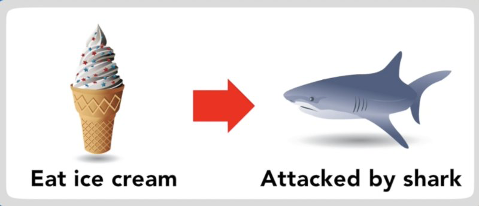
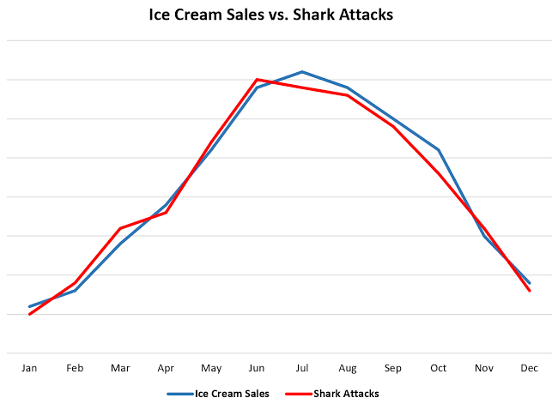
Have you heard that ice cream consumption increases the number of shark attacks? Or that when Nicolas Cage appears in movies, the number of drowning cases goes up? Should we just ban ice cream and Nicolas Cage to avoid these tragedies… well, it is not as straightforward as that.
I discovered this topic of bizarre correlations during the first few weeks of the introduction to statistics module. They were quite fun to discuss, and we had a few laughs speculating how they were made in the first place. Here, I just wanted to share a couple of these bizarre correlations and touch upon broader implications.
Just because two variables move together on a graph does not mean one causes the other. Shark attacks are not caused by eating more ice cream; both are connected (sharks and ice cream), but a third variable can lead to an increase in the summertime, when people go to the beach for a swim. Similarly, Nicolas Cage movies tend to be released in the summer, when people are more likely to drown. This is an example of confounding variables, where two variables seem to be connected (sharks and ice cream), but there is a third variable that is influencing both behind the scenes (summertime). People tend to forget that correlation does not imply causation, leading to hilarious or even dangerous misinterpretations of data.
In research, the idea of confounding effects is not as straightforward. For example, the more a person eats, the more sodium they consume, but also eating a lot of calories often leads to obesity. Both obesity and high-sodium diets are believed to correlate with high blood pressure. So, then what is the primary cause in this case: obesity or high sodium intake?
Tools like LASSO or Elastic Net can help tease apart which variable is really doing the work, but the data only goes so far. It still takes a researcher to interpret what it means. So the next time a striking statistic makes you want to ban ice cream (or Nicolas Cage), it’s worth pausing to wonder what’s really going on behind the scenes.
As I reflect on the work I have done leading up to my first publication since starting as a research assistant, I have thought deeply about what makes good scientific illustration, and more broadly, what makes good art. The purpose of scientific illustration is to visually synthesize research findings to aid in textual dissemination of scientific concepts. When first learning how to read a paper, I was taught to look through and try to understand each figure first. In my work process, I think about how people will look to my illustrations for clarity and understanding, as societally we translucently accept that knowledge can be and should be communicated beyond words.
There are two components that I believe make good scientific illustration. The first is understanding the language of the visual. Producing art requires integration of the subconscious into the conscious mind to communicate an idea effectively. This communication occurs in both the artist and the viewer, as the artist has to carefully consider how the viewer will both consciously and subconsciously derive meaning in an image from shape, line, form, and colour. Art that we consider ‘good’ will impact or emotionally resonate with the viewer in the way that the artist intended. Art that we consider ‘bad’ fails at communicating the meaning of its existence to the viewer.
Knowledge is what expands how we perceive beauty and what we perceive as beautiful. The second component required to create stunning visuals that effectively communicate scientific concepts and research findings to the viewers is that the artist must also have a deep understanding of the material researched. Famously, observation is the foundational principle in science and art, and curiosity is the driving factor of observation in both. Good scientific illustration must be produced by someone who intimately understands what they are drawing. Because of this, I believe that every good artist has the potential to also become a good scientist, and every good scientist has the potential to become a good artist.
The dilution of perception
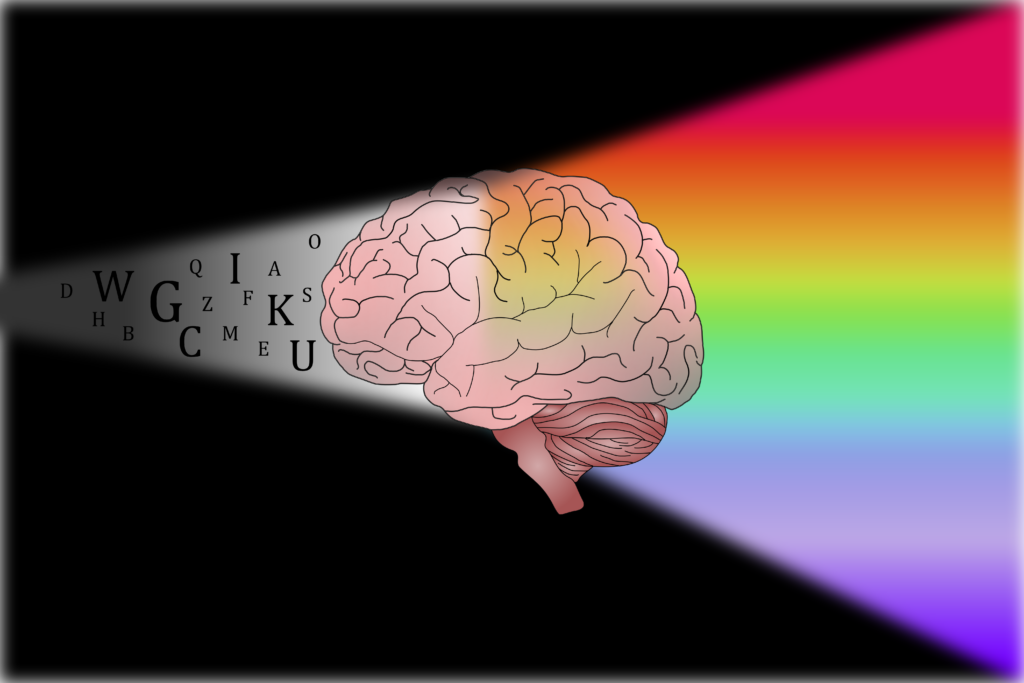
AI is something I get asked about a lot as someone who does illustration as a part of my job. We live in a world where you can ask a large-language model to generate an image summarising a text, and it is usually a bad piece of art. But why are images produced by AI often bad art? The human brain processes information through words, but also sound, image, colour, smell, touch, form, and emotion. We translate our sensory experiences and imagination into written and spoken language to communicate with each other, but we don’t always think, feel, and process in written words. All parts of living in our bodies affect our thoughts, emotions, and views of the world, and therefore, affect what we consciously and subconsciously communicate in art. Much like how dogs could not distinguish seasons solely based on how they perceive the colour of the leaves, AI fails to produce good art because it can only produce an image from the limited language of the written word.
The argument I think that a lot of people make in regards to using AI specifically in scientific illustration is that it falls into technical illustration, and therefore is inherently emotionless art intended to communicate an idea simply; sounds perfect for a robot! However, observation, a process at the very core of science, involves a synthesis of all five senses. We then primarily translate those observations into written words. Scientific illustration aims to simplify and bridge the gaps of what is lost in the written word to enhance understanding of complex concepts to a sensorially integrated mind.
As we move through this era of global uncertainty, we must befriend the liminality of it all in an attempt to reconnect with and expand our uniquely human language of art. When you make art, you are accessing a new layer of thought. I believe that when you attempt to draw your research, no matter your perceived skill level, this process helps to enhance your understanding of the material. The purpose of scientific illustration is to visually synthesise research findings to aid in the textual dissemination of scientific concepts.
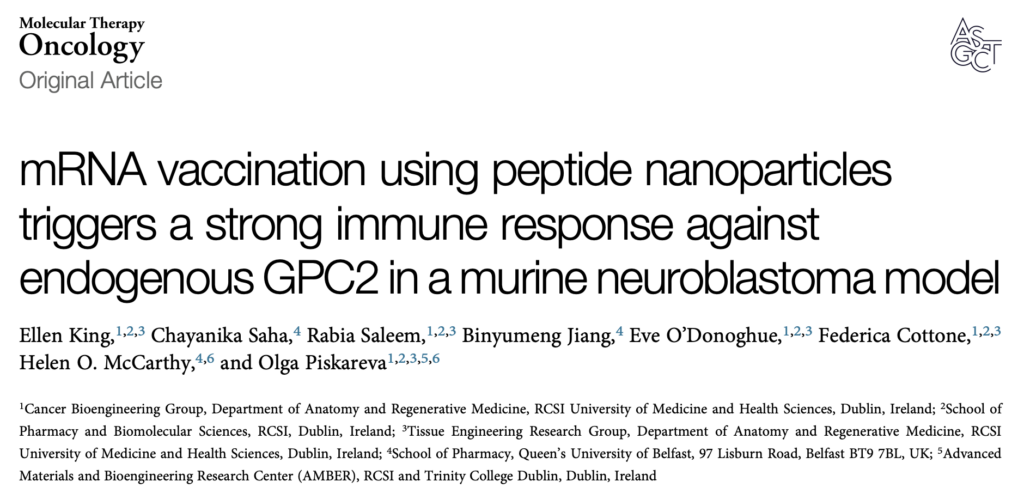
We are over the moon with our work being recognised by the American Society of Gene & Cell TherapyMolecular Therapy Family of Journals. The results are published in a Special Issue focused on the Advances in Paediatric Cancer Therapy. It is a true milestone in a challenge we undertook in collaboration with Prof Helen McCarthy at Queen’s University Belfast, with High-Risk, High-Gain funding from the Higher Education Authority North-South Research Programme. We did prove the HEA Ambition to highlight the huge potential of their initiative. Now, I can share the score for our application – it was 99/100*! Oh, my!!!! We are so happy that our idea was recognised back then. *I am still struggling to reach this threshold in other applications. 😉
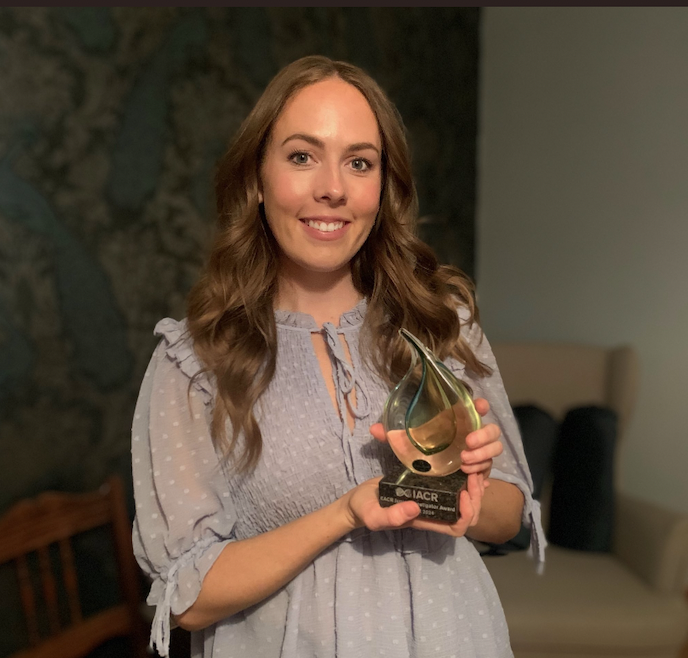
Ellen receives her IACR/EACR Junior Scientist Award 2025
However, my extreme credit goes to Ellen King, PhD, who took on my ambitious challenge (go/no-go!), trusted me, went above and beyond, and turned her PhD project into this publication with passion and diligence. Just for context, it took us 12 months with 7 rejections to receive the quality approval mark for this publication. All this time, she was on top of the reviewing and publishing game after graduating with her PhD in 2024, developing her own immuno-oncology portfolio in London. Onwards and upwards Ellen King, PhD!
We are proud to collaborate with the family of John Foley CMC, FIMCA, MIET. – the true inspiration for not giving up! Their story of the neuroblastoma battle is heartbreaking and inspiring at the same time. The Higher Education Authority funding helped us to secure follow-up funding from the Health Research Board (HRB) & the Conor Foley Neuroblastoma Cancer Research Foundation ( via HRCI – Health Research Charities Ireland) and Neuroblastoma UK. We appreciate their trust in our ambition and vision. THANK YOU!
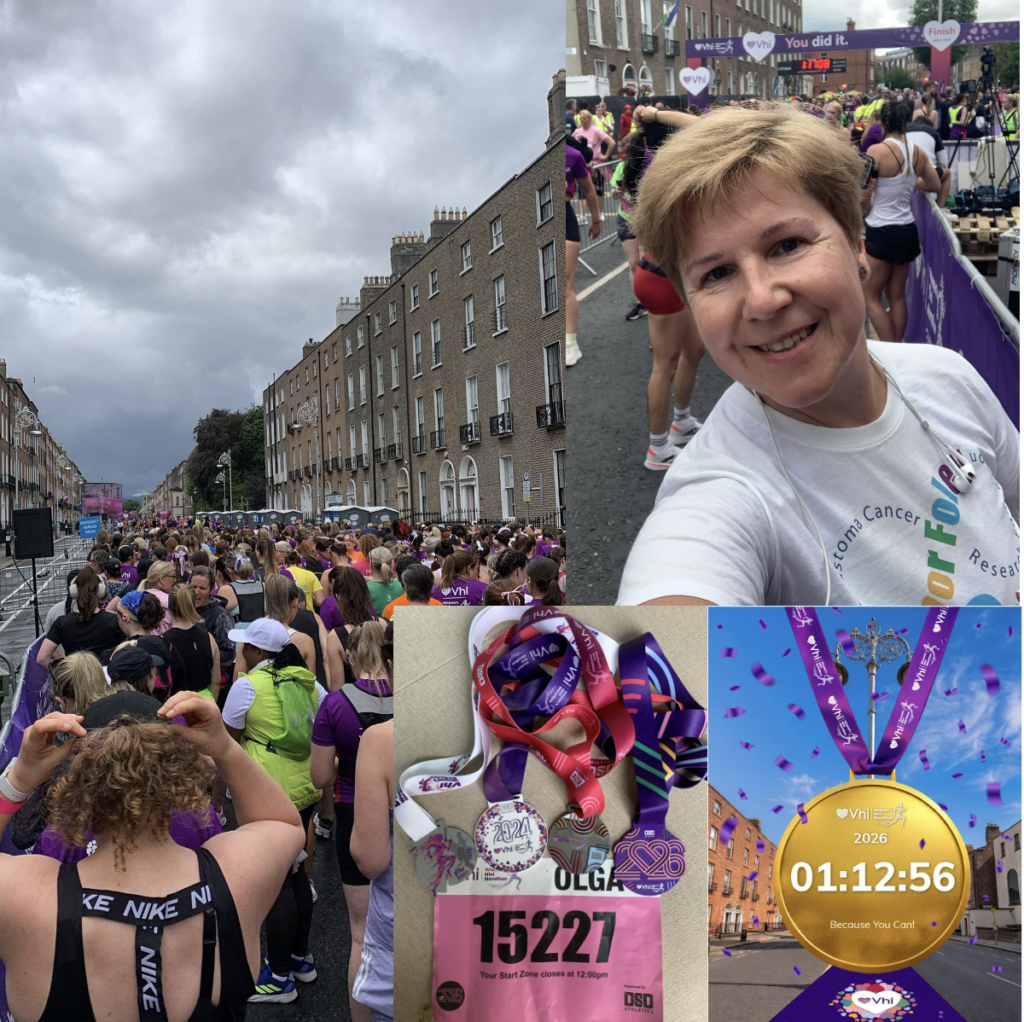
Yesterday, 30,000 runners, joggers, and walkers took part in the 44th VHI Women’s Mini Marathon. We were ages 14 to 92, from diverse cultural, educational, and fitness backgrounds. Each set their own ambition and target. It was my fourth race. My targets stayed the same: raising awareness for Childhood Cancer Research, supporting the Conor Foley Neuroblastoma Cancer Research Foundation, and finishing within 1 hour and 15 minutes with a smile.
The atmosphere was cheering and empowering, and the weather was very kind to us. I was in a pink wave, and we started about 12:30ish. Running in a big company with your allies is enjoyable and empowering. I was sinking into the diversity and variety of running women and supporters along the road, enjoying every minute. Some took over me, and I took over some. Somewhere after 5K, I was tapped by my TERG colleagues, so the race became even more enjoyable.
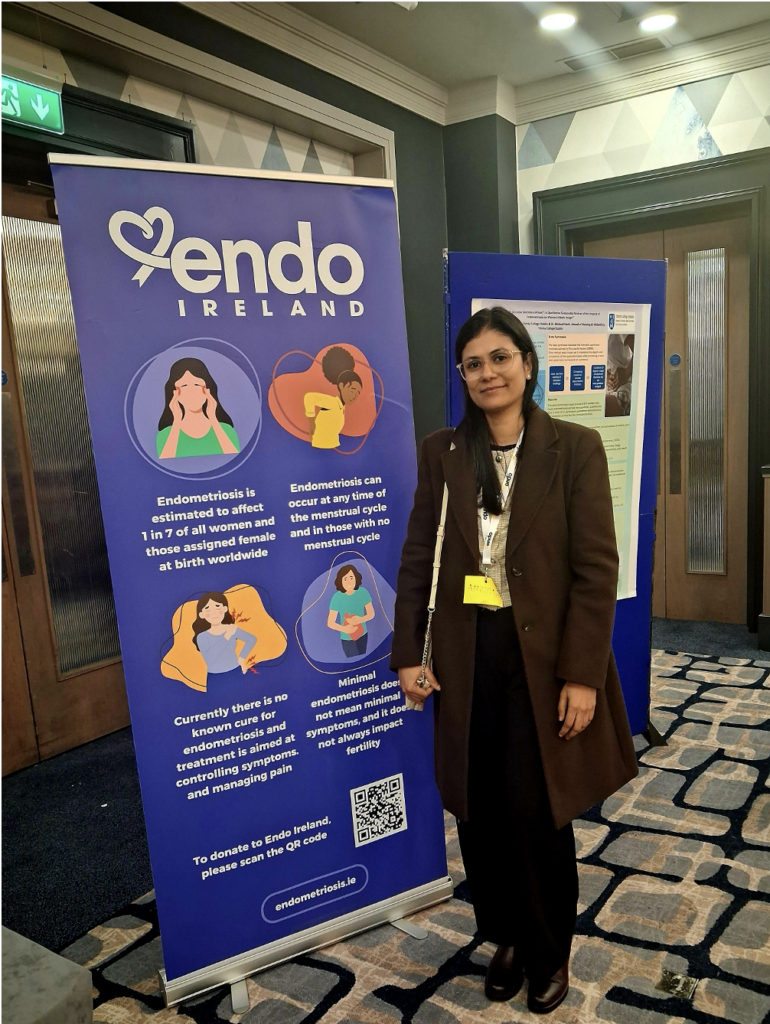
Endometriosis—a condition where tissue similar to the uterine lining grows outside the uterus—affects 1 in 10 women of reproductive age. The severity of the condition varies by individual, depending on the location and extent of tissue growth. As someone living with this condition, attending the Endo Ireland 2026 conference on March 28 in Dublin was a deeply personal and touching experience.
@Endo Ireland 2026
The conference was hosted by the Endometriosis Association of Ireland, an organisation run by volunteers dedicated to supporting and representing those impacted by the disease. The event featured a clinical panel where clinicians discussed current treatment options and their limitations. In a separate research panel, scientists shared their professional journeys and emphasised why more focus is needed in this historically underrepresented field.
The agenda also included personal stories from patients and expert talks covering essential topics such as mental health and nutrition. A representative from the National Women & Infants Health Programme (NWIHP) addressed current treatment limitations, listened to patient feedback, and highlighted a commitment to improving future care pathways. It was an amazing opportunity to connect with the patient community and share our journeys. I was also deeply inspired to meet researchers in the field and hear about their transitions from other research areas into endometriosis research.