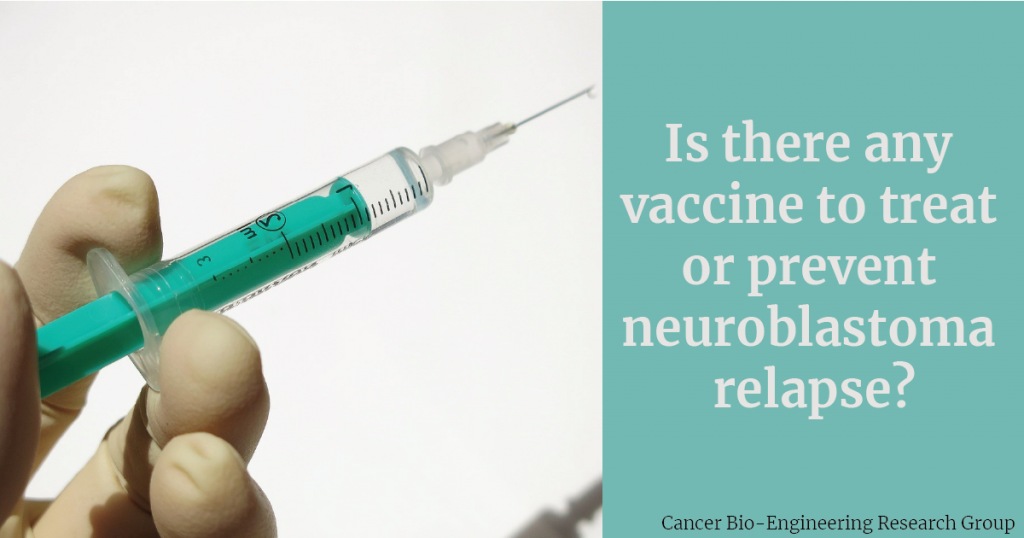
#AskLuiza: Is there any vaccine to treat or prevent neuroblastoma relapse?

Anti-cancer vaccines teach the body’s immune system to identify and attack tumour cells. They are a type of immunotherapy and can be used to treat cancer or prevent tumour recurrence. Therefore, they are typically used in patients that have already received other treatments such as surgery, chemotherapy or radiotherapy.

Although anti-cancer vaccines have been gaining more attention over the years, few are being developed for paediatric tumours. From 594 clinical trials in neuroblastoma at clinicaltrials.gov, only 12 active trials are evaluating vaccines. Furthermore, these vaccines are still considered investigational products. They do not have the approval for use granted by health authorities. Therefore, these drugs are available for patients that enter into clinical trials.

An example of these vaccines is the bivalent vaccine for high-risk neuroblastoma developed in the Memorial Sloan Kettering Cancer Center in the US, collaborating with the biopharmaceutical company Y-mAbs Therapeutics. This vaccine is called bivalent because it has two proteins specifically present on the surface of neuroblastoma cells.

The rationale behind the treatment using this vaccine is that the body will be stimulated to produce antibodies against these two proteins. These antibodies will recognise and attach to neuroblastoma cancer cells, thus signalling to the immune system that these cells need to be eliminated.
A phase II trial evaluates vaccine efficacy in 374 patients who received seven subcutaneous injections of the vaccine in combination with an oral intake of an adjuvant, called β-glucan, that boosts the immune system1. The adjuvant intake started either on the first vaccine injection or on the third injection every two weeks until the end of the vaccine schedule. The study aims to analyse the anti-tumour effect of the vaccine and the immune response generated by the vaccine plus β-glucan therapy. The study is estimated to be completed by 2023.
The trials active for neuroblastoma vaccines are phase I or II. After these phases, there are still phases III and IV to complete the evaluation and continue monitoring these therapies. Therefore, in a few more years, we will know if neuroblastoma vaccines will be successful or not.
Written by Luiza Erthal

Reference

1.         Memorial Sloan Kettering Cancer Center. Phase I/II Trial of a Bivalent Vaccine With Escalating Doses of the Immunological Adjuvant OPT-821, in Combination With Oral β-glucan for High-Risk Neuroblastoma. https://clinicaltrials.gov/ct2/show/NCT00911560 (2021).
#AskLuiza: What are the main differences between cancers in adults and children?

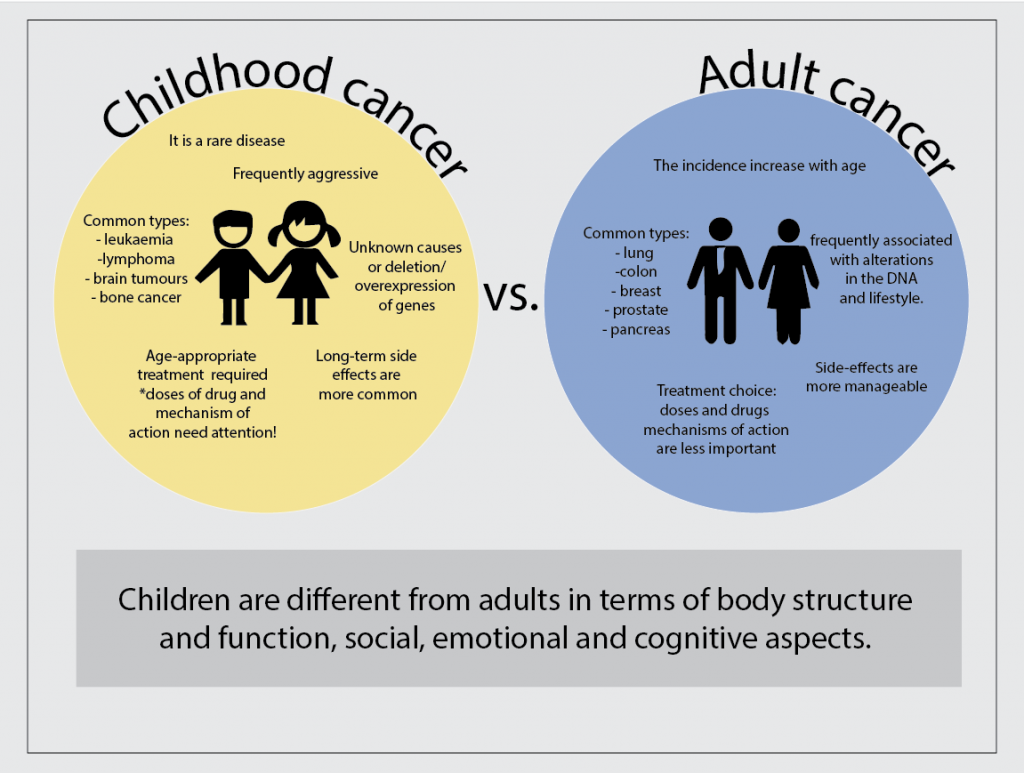
Looking carefully we can easily see that children are very different from adults. They have different needs, desires, likes and dislikes. Not surprisingly, the children body is also very different in their functioning and response to medical needs. Therefore, cancer in children has many different characteristics when compared to cancer in adults. Childhood cancer is different in terms of the most common types, the causes, the treatment and the course of the disease.  

Firstly, childhood cancer is rare and this sometimes impairs an early diagnosis. Therefore more aggressive diseases tend to be present at the time of diagnosis. Nevertheless, there are specific types of cancer that are more common in children, which helps in the diagnosis. They are cancers affecting the blood and lymph nodes (leukaemia and lymphoma), the brain (astrocytoma), the liver and the bones (osteosarcoma). These types of cancer are less common in adults.  

Another important difference between adult and childhood cancer is the leading cause of the disease.  Most of the time the cause of childhood cancer is unknown, although genetic contributions related to overexpression or deletion of genes can be determined. On the other hand, adult cancers are frequently associated with alterations in the DNA (mutations) as well as lifestyle.  

The treatment plays an important role in the differences between adult and childhood cancers. Usually, similar treatments are used for both adults and children, including chemotherapy, radiotherapy, surgery, transplants and immune therapy, according to the type of cancer and its stage.  However, the doses and types of drugs may differ between them. The differences in the treatment go beyond the doses and encompass the mechanisms of action and possible long term toxicities of drugs. For example, the use of drugs that damage DNA can be prohibitive in children due to the increased risk of secondary cancers in the future.   

In conclusion, specific types of cancer are more common in children and the cause of this disease is frequently unknown. Fortunately, children have great possibilities to survive cancers but the treatment needs to be carefully chosen and its long-term effect on the body have to be monitored for their whole life.  

Written by Luiza Erthal

References 

Kattner, P. et al. Compare and contrast: pediatric cancer versus adult malignancies. CancerMetastasis Rev. 38, 673–682 (2019). 

How Childhood Cancers Differ From Adult Cancers. Available at https://www.winchesterhospital.org/health-library/article?id=30409  

Accessed  November 18, 2021. 

How childhood cancers are different from adult cancers. Available at https://medlineplus.gov/ency/patientinstructions/000845.htm  

Accessed November 18, 2021. 

How is Childhood Cancer Different from Adult Cancer? Available at https://www.acco.org/blog/childhood-cancer-differs-from-adult-cancer/  

Accessed November 18, 2021. 

#AskLuiza: What is the progress in DMFO therapy trials?

Neuroblastoma relapse is one of the greatest challenges to complete cure for children with high-risk disease. At least 40% of high-risk neuroblastoma patients will experience cancer relapse 4 years after intense treatment, which includes a combination of chemotherapy, surgery, irradiation and the self-transplantation of stem cells (consolidation therapy). 

To overcome this problem improved maintenance therapy is needed. These are therapies administered to patients after the end of the initial treatment to prevent tumour relapse. Frequently, maintenance therapy for neuroblastoma includes immunotherapies such as antibodies against GD-2 and cytokines and 13-cis-retinoic acid. Although these therapies have some positive effects, the rate of relapse is still high.  Therefore, other options to prevent relapse are needed.  

Recently, a phase II clinical trial evaluated the effect of Difluoromethylornithine (DFMO) on event-free survival (EFS) and overall survival (OS) of high-risk neuroblastoma patients1Event-free survival means the length of time that the patient remains free of cancer after the end of treatment, while overall survival means the length of time that the patient is alive after the diagnosis or the start of treatment. The measurement of event-free survival and overall survival provides a good indication of the treatment effect.  

In this clinical trial report the therapy efficacy on 81 patients that received immunotherapy treatment with dinutuximab and started DFMO maintenance therapy at least 120 days after completion of treatment were compared to the efficacy (based on medical records) from a group of 76 patients that got the same treatment but without the maintenance with DFMO.  

DFMO inhibit the ornithine decarboxylase pathway, which is related to cell growth and decreased cell death, thus preventing cells to become cancerous and tumour progression. The results demonstrated that maintenance therapy with DFMO provided 85% of 5-year event-free survival compared to 65% for no-DFMO maintenance therapy, and 95% 5-year OS compared to 81% no-DFMO therapy2.  

In conclusion, this study results suggest a benefit provided by the DFMO therapy in preventing neuroblastoma relapse. The researchers suggest that early therapy with DFMO may further improve these results.  Therefore, more clinical trials evaluating this possibility are being conducted3,4.  

Written by Luiza Erthal

References 

1. SaulnierSholler, G. A Phase II Preventative Trial of DFMO (Eflornithine HCl) as a Single Agent in Patients With High Risk Neuroblastoma in Remission. https://clinicaltrials.gov/ct2/show/NCT02395666 (2020). 

2. Lewis, E. C. et al. A subset analysis of a phase II trial evaluating the use of DFMO as maintenance therapy for high‐risk neuroblastoma. Int. J. Cancer 147, 3152–3159 (2020). 

3. SaulnierSholler, G. Phase II Trial of Eflornithine (DFMO) and Etoposide for Relapsed/Refractory Neuroblastoma. https://clinicaltrials.gov/ct2/show/NCT04301843 (2021). 

4. SaulnierSholler, G. NMTT- Neuroblastoma Maintenance Therapy Trial Using Difluoromethylornithine (DFMO). https://clinicaltrials.gov/ct2/show/NCT02679144 (2021).