#JournalClub: Anti-Cancer Immunotherapy

Hi there, Federica here! In the fast-paced world of scientific research, staying informed about the latest studies and breakthroughs is crucial. It enables researchers to build upon existing knowledge, avoid redundant efforts, and discover new directions for their work. That’s why we’ve started a new series of blog posts highlighting recent papers and explaining their significance for our research.

Recently, a fascinating study explored an innovative method to boost the effectiveness of cancer immunotherapy: “A combination of a TLR7/8 agonist and an epigenetic inhibitor suppresses triple-negative breast cancer through triggering anti-tumour immune“.

The researchers investigated a combination of immune checkpoint blockade (ICB) and other drugs to turn “immune-cold” tumours (which evade the immune system) into “immune-hot” tumours (which the immune system can attack). They developed a special delivery system using nanoparticles called metal-organic frameworks (MOFs). These nanoparticles were loaded with two types of drugs—a TLR7/8 agonist and an epigenetic inhibitor (BRD4 inhibitor). To make the nanoparticles even more effective, they were coated with vesicles from the cancer cells themselves. This coating helps the nanoparticles specifically target cancer cells.

But how does it work?

The nanoparticles are designed to find and enter triple-negative breast cancer (TNBC) cells. Once inside, the drugs prompt the cancer cells to break apart and release signals that alert the immune system. These signals attract dendritic cells, which then activate CD8+ T cells—the body’s natural cancer fighters. The TLR7/8 agonist further enhances this immune response, making the treatment more powerful.

In both laboratory tests and animal models, this method showed significant promise. It not only slowed down tumour growth but also improved the body’s immune response to cancer. Importantly, the study found that this approach could remodel the tumour environment, making it more hostile to cancer cells. For example, they wanted to verify that their combined delivery system could really boost the body’s ability to fight tumours. They focused on a protein called calreticulin (CRT) that, when it shows up on the surface of tumour cells, helps the immune system spot and remove them. They found that when they used their special delivery system (CM@UN and MCM@UN), the levels of CRT on the surface of tumour cells went way up. This was especially true for the MCM@UN group, showing just how powerful their method was in getting the immune system to attack the tumours.

The original image was published in J Nanobiotechnology. 2024; 22: 296.

So, why is this study important for my work?

The principles of enhancing the immune system’s ability to fight cancer are central to both the research in the study and in my project. Like the nanoparticles in the study, mRNA vaccines can be designed to specifically target cancer cells, ensuring that the treatment reaches its intended destination. Another similarity is how the drugs activate the immune system, which parallels how mRNA vaccines work—by training the immune system to recognise and attack cancer cells.

I find this study really interesting as it sheds light on innovative strategies for cancer treatment and provides valuable insights that can inform and inspire our research on developing mRNA vaccines for childhood neuroblastoma!

Written by Federica Cottone
What Can VHI Women’s Mini Marathon Do For You?

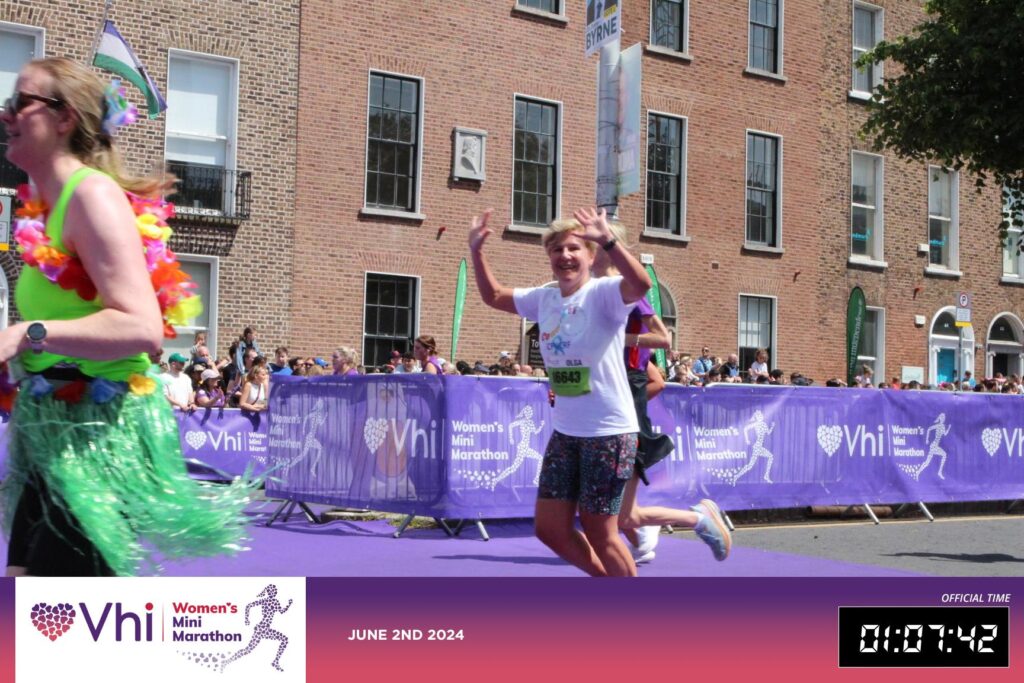
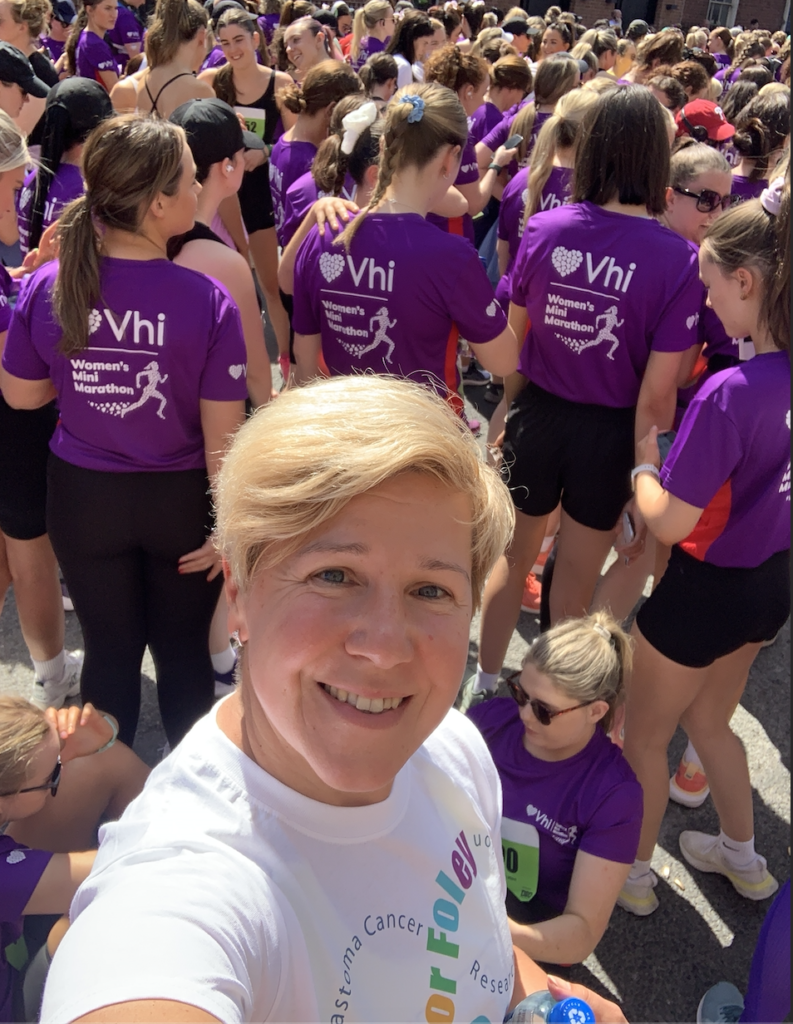
I have never been a runner. In my head, the word ‘marathon’ was linked to professional athletes and the Olympics or Athletics competitions. I could not imagine anyone doing a race as long as one gets guts. However, once I found the courage and motivation to explore my body’s limits. It was probably our team fundraising ‘Hell&Back’ challenge in 2019 that ignited that courage. We did many! Virtual VHI MiniMarathon, the Dublin Mountain Way in a Day, Cyclothone, to name a few.

Eventually, I decided to do it on my own in 2024. I booked the VHI Mini Marathon 2024 entry and started my training. Having many fitness apps at my disposal let me pick the right training plan. 10K sounded manageable. The fitness watch kept all my training records, so I got a very good understanding of my body potential and limits to do 10K.

On that sunny day, hundreds and hundreds of women were getting to the starting line. Each set their own ambition and target. I had three: 1) jogging from start to finish, 2) finishing within 1hr and 20 min, and 3) supporting the Conor Foley Neuroblastoma Cancer Research Foundation.

So, June 2nd was fast approaching, and I injured my calf during the Wicklow hike. However, giving up was not an option, but healing was required. So, I decided to stop running for a week and gradually get back on track.

The atmosphere was cheering and empowering, and the sun was bright and hot. The green ‘wave’ began their race at about 12:45. Running in a big company was easy. It is less doubtful if you are in a group of allies. Distance and time flew. I was sinking into the diversity and variety of running women and supporters along the road, enjoying every minute. Some took over me, and I took over some. I stuck to my training pace to ensure my power and energy were not draining quickly under the sun. My fitness watch counted the distance, heart bit and steps, showing that I was slightly slower on average than during my training. I decided not to break the limits and kept running, listening to my body. Somewhere at the back of my head, I hoped to speed up at the end, if any. Unfortunately for me, the final 1-2 km were up the hill, so the slop ate my efforts.

Being a researcher puts every experience in perspective. We tend to analyse the flow of any information, sometimes unconsciously, by asking questions and reflecting. One of the running advantages is that you see an accomplishment right now at the finish line. Your fitness watch provides all the data to plan and complete a given challenge with very good accuracy. It is not about luck. It is about your trust in your body and mind. You are in the driving seat! Delighted with my accomplishment!

So, what is next on my to-do list? Definitely another race, very likely Run in the Dark.

Written by Olga Piskareva

Class 2024: Congratulations to Ciara, Ellen and Rabia!

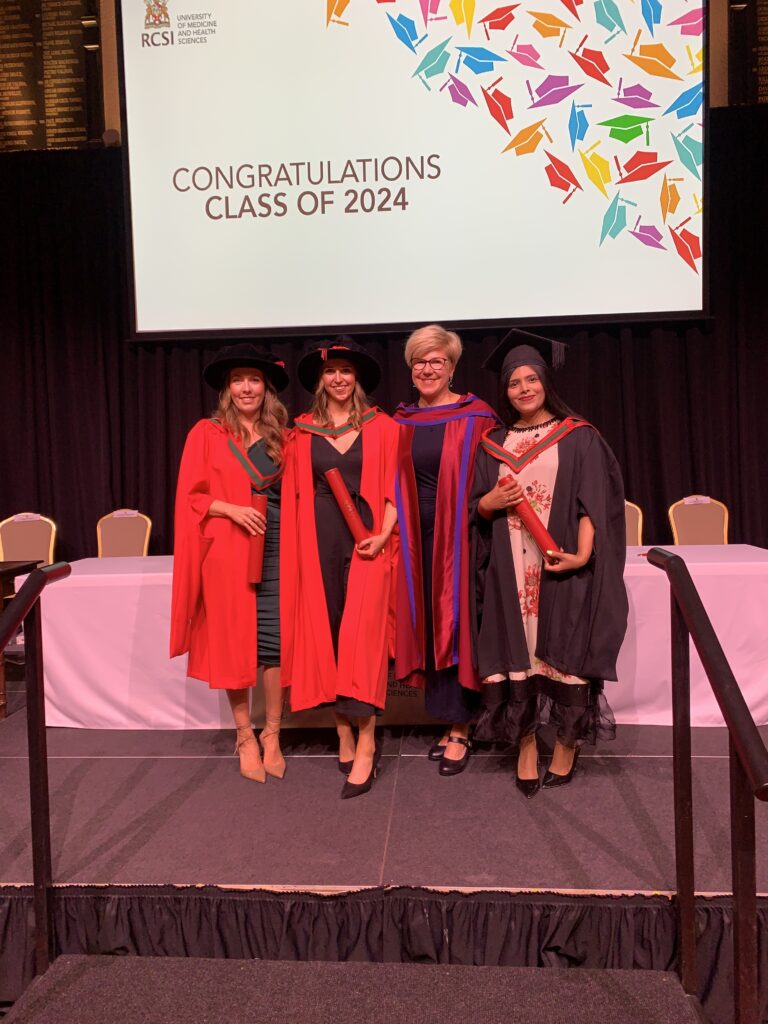
Massive congratulations on the official moulding of PhD and MSc by Research to our promising young scientists: Rabia Saleem, Dr Ciara Gallagher and Dr Ellen King! Great accomplishments!

Three different journeys, with two through the COVID-19 pandemic. The full range of ups and downs. Who said that the PhD is a straight line? It has never been. It is more like the Irish weather: some days are sunny and bright, and some have scattered showers, gale winds and stormy snow, with sunshine developing elsewhere. The journey was spiced up with publications, conferences, travels, days out and fundraising events with the team.

It is a proud moment for me as well. 🙂 Three PhD and one MSc by Research students graduated within the last 12 months.

Of note, Ellen was behind our Twitter activities in the past, making our team visible!

Wish you all the best of luck on your new adventure!

Olga Piskareva