How things work in science: targeting cell components.

How do researchers study cells? How do we get the nitty gritty?

We use many methods to tag and chase various cell components. One of my favourites is fluorescent microscopy. It allows the use of nearly all spectrum of colours from blue to purple in one go. However, we prefer to narrow it down to 2-3 colours and avoid their overlap.

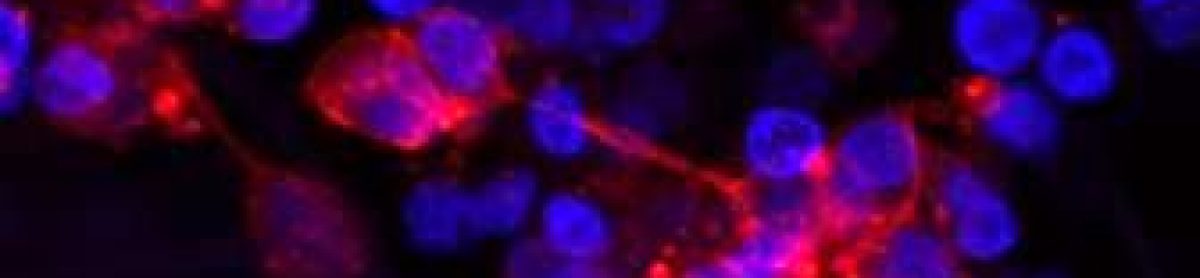
How does it work? First, we use DAPI or Hoescht, which are blue fluorescent dyes used to stain DNA. This way, we tag the nucleus of the cell. Then, we tag a protein of interest. In our case, it was MYCN, a protein that acts as a transcription factor. MYCN amplification is associated with poor prognosis in neuroblastoma. As a transcription factor, it binds to genomic DNA and is located in the nucleus. We used a specific antibody that was labelled with a green fluorescent dye. Look at the image below. The green colour pattern overlaps with the blue colour. Then, we tagged the cytoskeleton, a complex of various proteins that hold the cell architecture and dynamics. We used phalloidin with red fluorescence. It is a highly selective bicyclic peptide and a popular choice for staining actin filaments.
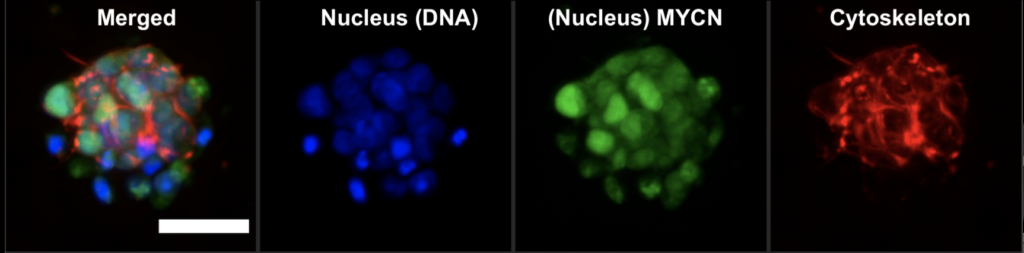
Neuroblastoma organoids stained with DAPI, Phalloidin and anti-MYCN antibody. This work was done during the Fulbright journey to Ewald’s Lab at Johns Hopkins

Now, we can enjoy visualising cells and test different research questions. For example, how do cells respond to a drug? Or how do neuroblastoma cells spread?

Written by Olga Piskareva
How things work in science: Scaffolding

At the Cancer Bioengineering Group, we use different types of scaffolds to mimic the 3D structure of tumours outside the body. We use these scaffolds to test new therapeutics and understand the tumour microenvironment. But I bet you didn’t think we had this in common with spiders?

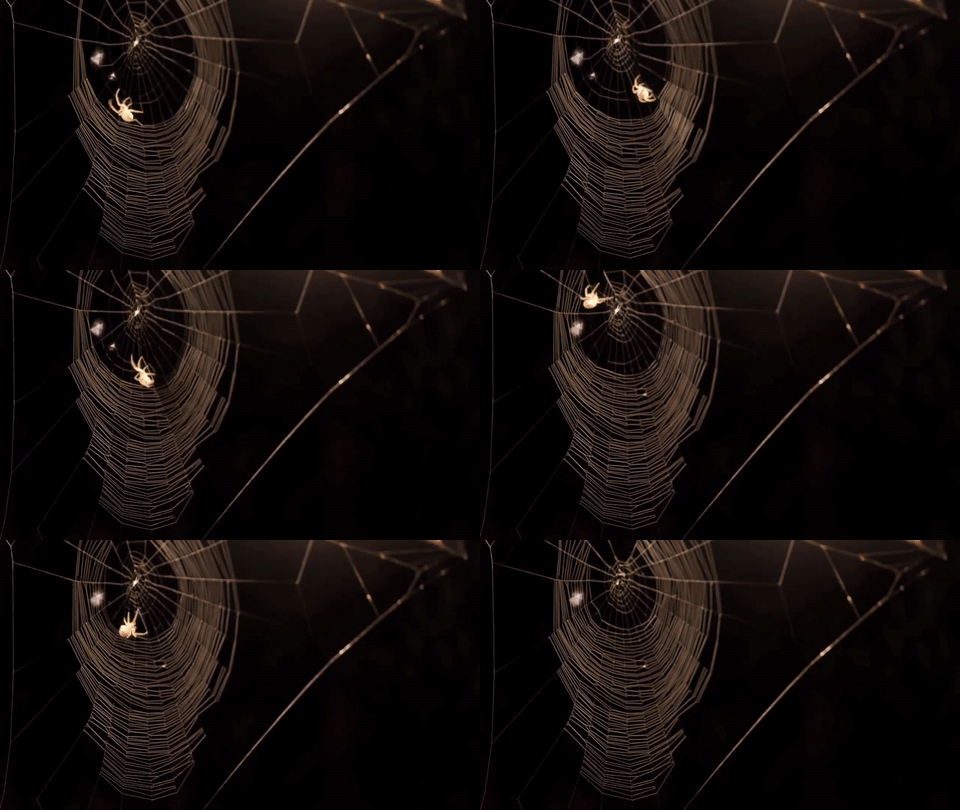
Spiders make their webs by producing silk from specialized glands in their abdomen. They release the silk through spinnerets located at the back of their abdomen, then use their legs to manipulate the silk strands into intricate patterns, depending on the species and purpose of the web.

The process of web building begins with a scaffold. The specialized glands that spiders use are called spinnerets, and they produce liquid silk proteins that solidify into a thread when they come into contact with air. Using their many legs, spiders can manipulate the threads by changing the speed and tension they enforce on the silk, thus controlling thickness, stickiness and strength. They first lay a framework of non-sticky threads, known as scaffolding. And layer by layer, different species of spiders will add their own artistic sticky silk design to the scaffold depending on their aim. Take the deadly redback spider for example, these guys have a utilitarian approach to web building relying on their webs mainly for shelter and capturing prey. As such, they don’t put much effort into producing irregular and messy homes. In comparison, the orb-weaving spider produces “Mona Lisa”-like designs, with complex geometric patterns and intricate designs. The differences in effort seem to come from the environments in which the webs are located, with the redbacks choosing more sheltered environments and thus not needing much strength to their webs. Whereas orb-weaving spiders are more adapted to a range of environments, from forests to grasslands to urban gardens. So, while the redback gets a lot of attention for their neurotoxic venom, they need to step up their artistic skills to match that of their orb-weaving colleagues.

The redback spider and its webs are reminiscent of an aggressive tumour, which is erratic, dangerous, and unpredictable. We want to find the “anti-venom” for such tumours so we can wipe them out for good.

Watch this amazing web-building timelapse by BBC Earth.

Written by Ellen King

How things work in Science: Tìr na nÒg

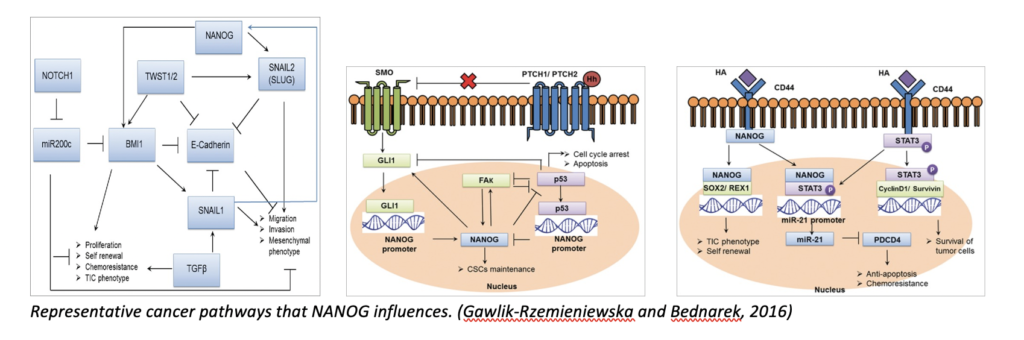
In humans, NANOG, SOX2, and OCT4 are transcription factors that maintain the undifferentiated state of embryonic stem cells (ESCs). NANOG was first discovered in 2003 by Chambers et al. and Mitsui et al. as a transcription factor in ESCs responsible for cellular self-renewal. More importantly, it enables continuous self-renewal of cancer stem cells, leading to metastasis when the regulatory genes involved do not function normally. These have been identified as cancer stem cells, with NANOG being a marker of “stemness”. In multiple cancer types, NANOG has various effects, including cellular expression of mesenchymal phenotype, cellular invasion/migration, repressed apoptosis, drug resistance, and increased angiogenesis. In pathways, NANOG either promotes or represses the expression of other genes that lead to cancer-favoured cellular behaviour. Overall, a higher expression level of NANOG is usually indicated in cases of poor prognosis.

NANOG is even more interesting due to its eponym, which comes from Tìr na nÒg. A Celtic myth of the Land of Youth, where the Tuath Dé resided in a supernatural land of paradise. This land offered beauty, health, joy, and everlasting youth to the inhabitants. As the myth goes, the Tuath Dé were gods of the land, and the god that ruled, Manannán mac Lir, was the first ancestor of humans. In various Celtic legends, humans are invited by the gods to visit Tìr na nÒg on great adventures.

However, time passes much slower in Tìr na nÒg, making it precarious for humans to return to their own world. As is the fateful tale of Oisín, who fell in love with the Tìr na nÒg goddess, Niamh. He travelled with her to Tìr na nÒg, where they lived happily in paradise. Upon a visit back to Ireland, Oisín realized that all his family had died over the years. When Oisín found a group of men who were struggling to move a giant rock, he stopped to lend them a hand while on his horse. However, the weight of the rock caused his saddle strap to snap. He fell from his horse, and when he touched the ground, he suddenly aged 300 years all at once.

Written by Alysia Scott

Sources:

Gawlik-Rzemieniewska, Natalia, and Ilona Bednarek. “The role of NANOG transcriptional factor in the development of malignant phenotype of cancer cells.” Cancer biology & therapy vol. 17,1 (2016): 1-10.

The Story of Tír Na NÓg.” Celtic Titles, 10 Feb. 2022

Congratulations to Dr Ciara Gallagher!


Huge congrats to a newly minted Dr Ciara Gallagher!  She defended her PhD on March 8 – International Women’s Day. Your enthusiasm and perseverance are truly fascinating! May this be the stepping stone towards a brighter future, Ciara!

We thank examiners Dr Marie McIlroy (RCSI) and Prof Jan Škoda (Masaryk Uni) for the time and expertise they provided.

We also thank the Irish Research Council for their generous support!

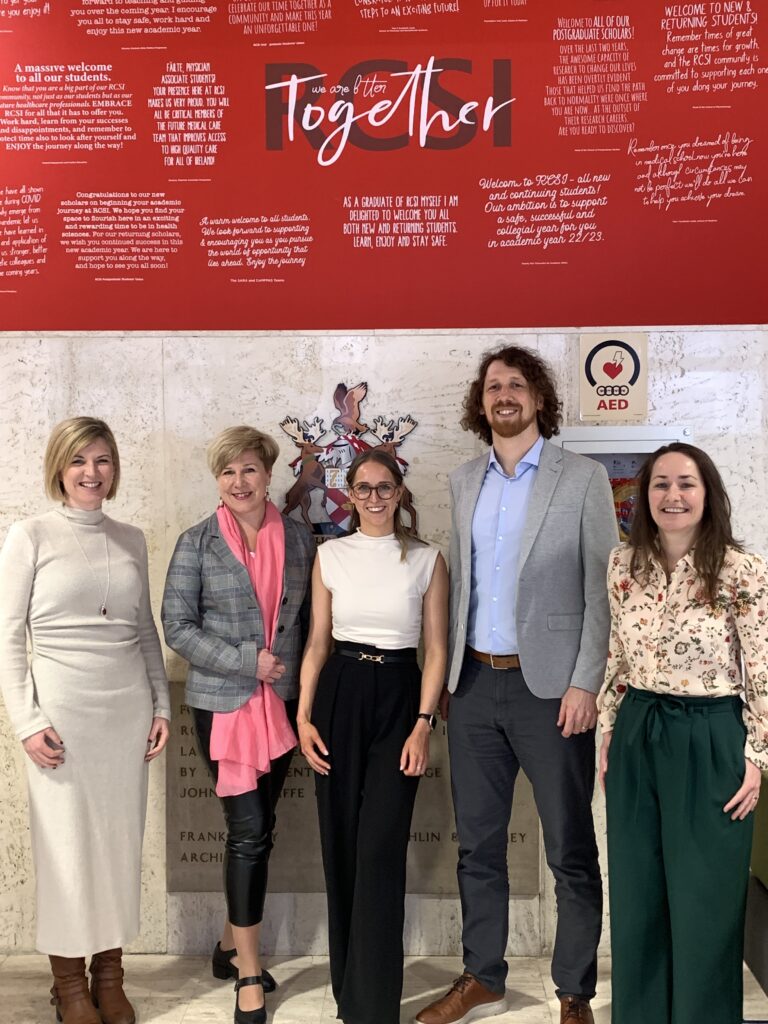
Dr Ciara Murphy (Chair), Dr Olga Piskareva (Supervisor), Dr Ciara Gallagher, Prof Jan Skoda (examiner), Dr Marie McIlroy (Examiner)