#GoForGoldCycle2022

We are the Cancer Bioengineering Group, and September is a very special month for us as it is Childhood Cancer Awareness Month. Childhood cancer is the 2nd leading cause of death in children after accidents. Our group researches childhood cancer neuroblastoma, a cancer of immature nerve cells. Neuroblastoma is responsible for approximately 15% of all childhood cancer deaths. Despite intensive multimodal treatment, as many as 1 in 5 children with the aggressive disease do not respond, and up to 50% of children that do respond experience disease recurrence with many metastatic tumours resistant to many drugs and more aggressive tumour behaviour that all too frequently results in death.

This is what we want to change! We believe that every child deserves a future, and our team of postgraduate researchers led by Dr Olga Piskareva is dedicated to strengthening our knowledge of this disease and identifying new potential ways to tackle it, as well as taking part in fundraising activities so our group and others can continue with this research.  

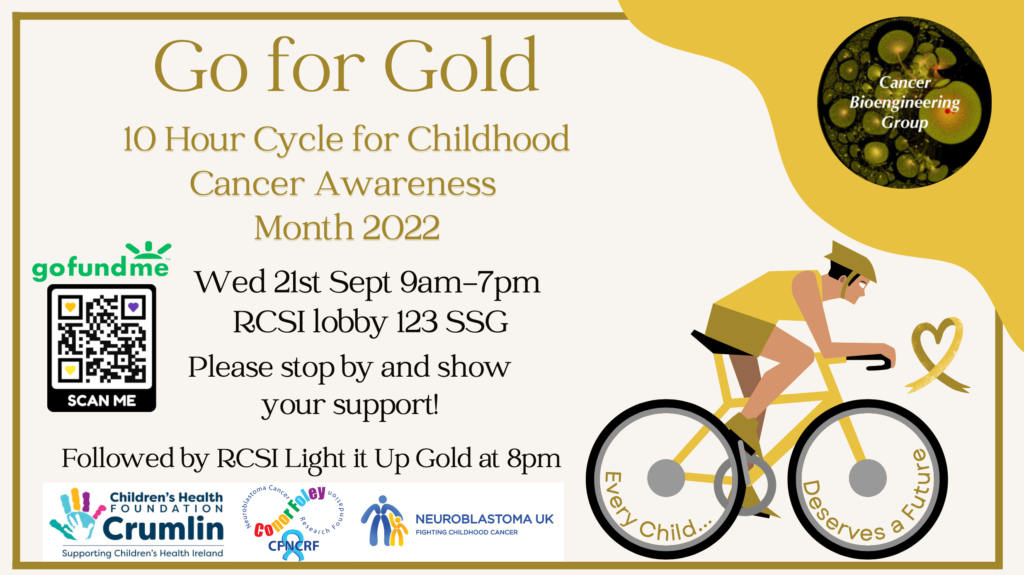
On Wednesday, the 21st of September, RCSI 123 SSG will #GoGold in support of this cause. Please come by to see the RCSI building lit up and share your pictures on social media with the hashtag #ChildhoodCancerAwarenessMonth to raise awareness.
How are you, PI?

Yeah, our (my) blogging is sporadic. The pattern is well recognisable – more posts with success stories or accomplishments or about the key activities. It is easy to share :). Please excuse us (me) when we are off the radar, but we remember our supporters and readers. We are back on track to celebrate Childhood Cancer Awareness Month this September.

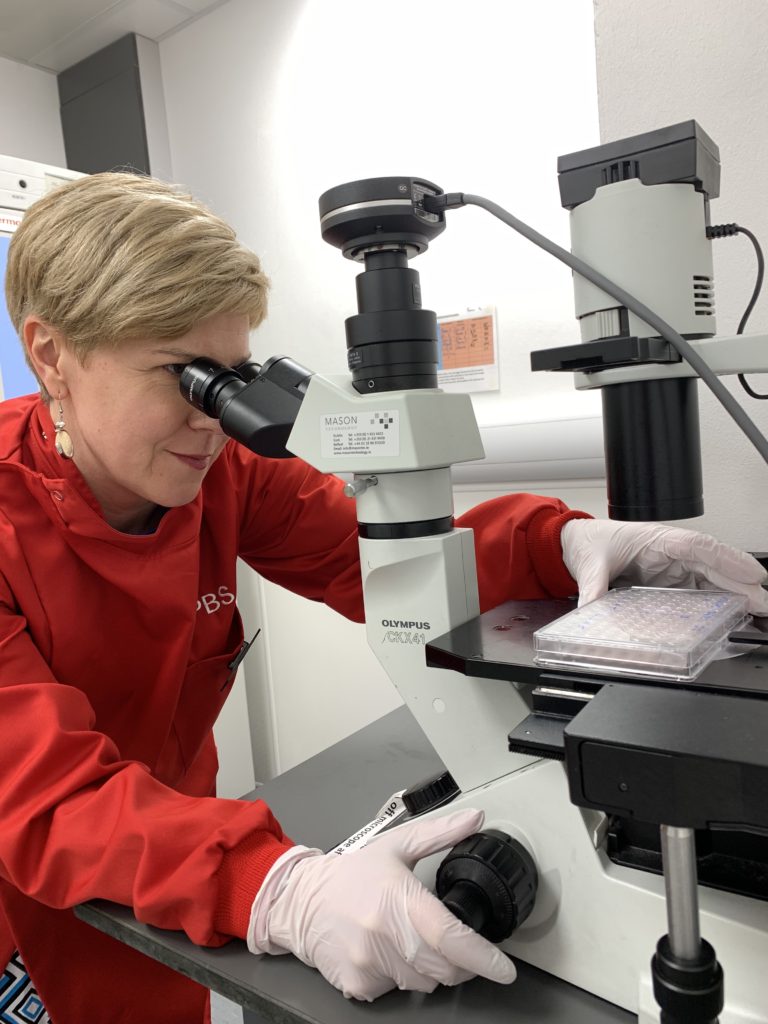
So, how did my summer go? Well, nothing to complain about. I had time to go back to the labs, pick up on the outstanding task, and take on the white coat. Indeed, it comes with some assurance as well as troubleshooting. Some days were better than others. Some experiments worked, and another was inconsistent or inconclusive.

A fancy photo, but the routine cell culture itself can be very boring.

Where did I pick it up? This research journey is one year old already. 🙂 This project is focused on validation our 3D neuroblastoma model to test novel therapeutics. We set an experiment that required different expertise and contribution from every team member. In an ideal world, it was supposed to finish in 6 months. But the reality doesn’t stop to shake you. Various components have been delayed sometimes due to unforeseen circumstances (e.g. a broken equipment or out of stock reagent) or due to the lack of manpower or miscommunication at a given time. Eventually, we put the work on hold in October 2021, when we completed ~60%. Another go to continue was taken in April 2022. No luck! Then plan B was activated, and I have been back in the labs. Despite these challenges, this time has not been lost. We developed new ideas to complement the original plan. Now, the crucial 20% has to be done and dusted within 2 weeks time before teaching starts. Wish us a luck!

After the challenge of leading the Foundation Year Medicine Cycle, I am 100% positive that I love research with all up and downs. This routine is fascinating, it is not static. One day differs from another. Research questions are flowing in non-stop…

September 2022 is Childhood Cancer Awareness Month

Today marks the start of Childhood Cancer Awareness Month, which we celebrate every year to support and learn more about kids with cancer, their loving families, the doctors and caregivers who look after them and treat them, the young survivors of cancer and those kids and teens who lost their battle, and the scientists who working hard to find a way to stop childhood cancer.

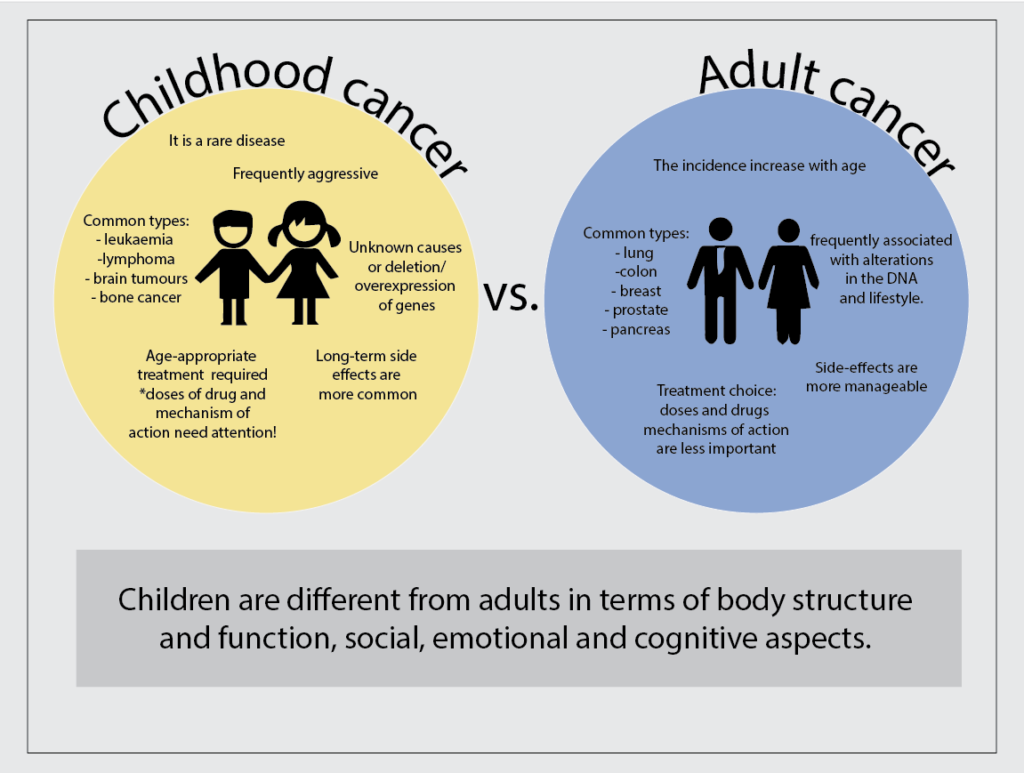
Childhood cancer is an umbrella term for many other types of this disease. Every 100th cancer patient is a child. Cancer is the 2nd most common cause of death among children after accidents. When it comes to a disease, we have to acknowledge that children are not little adults. They are constantly developing. So their diseases have different ways of progressing and responding to treatment. The causes of childhood cancer, including neuroblastoma, are not known. It would be right to expect more blind alleys and failed ideas in understanding these cancers. To address these challenges, more curiosity-driven and translationally focused research is needed.

The illustration was created by Luiza Erthal

The most common childhood cancers:

  • Leukaemia and lymphoma (blood cancers)
  • Brain and other central nervous system tumours
  • Muscle cancer (rhabdomyosarcoma)
  • Kidney cancer (Wilms tumour)
  • Neuroblastoma (tumour of the non-central nervous system)
  • Bone cancer (osteosarcoma)
  • Testicular and ovarian tumours (gonadal germ cell tumours)