Two New-Minted PhD in 2025!

What a year – two young and talented postgraduate students have been minted with a Doctor of Philosophy Degree in September and December of 2025. They are Dr Lin Ma and Dr Ronja Struck. Hard work and dedication are the cornerstones of this challenging but rewarding journey.

They sailed through scattered showers and sunny spells, gale winds and stormy snow with sunshine developing elsewhere, turning chilly under clear skies on some days with temperatures below/above zero. The full spectrum of emotions and hard work was spiced up by the uncertainty of COVID-19 restrictions. Well done to Ronja and Lin!
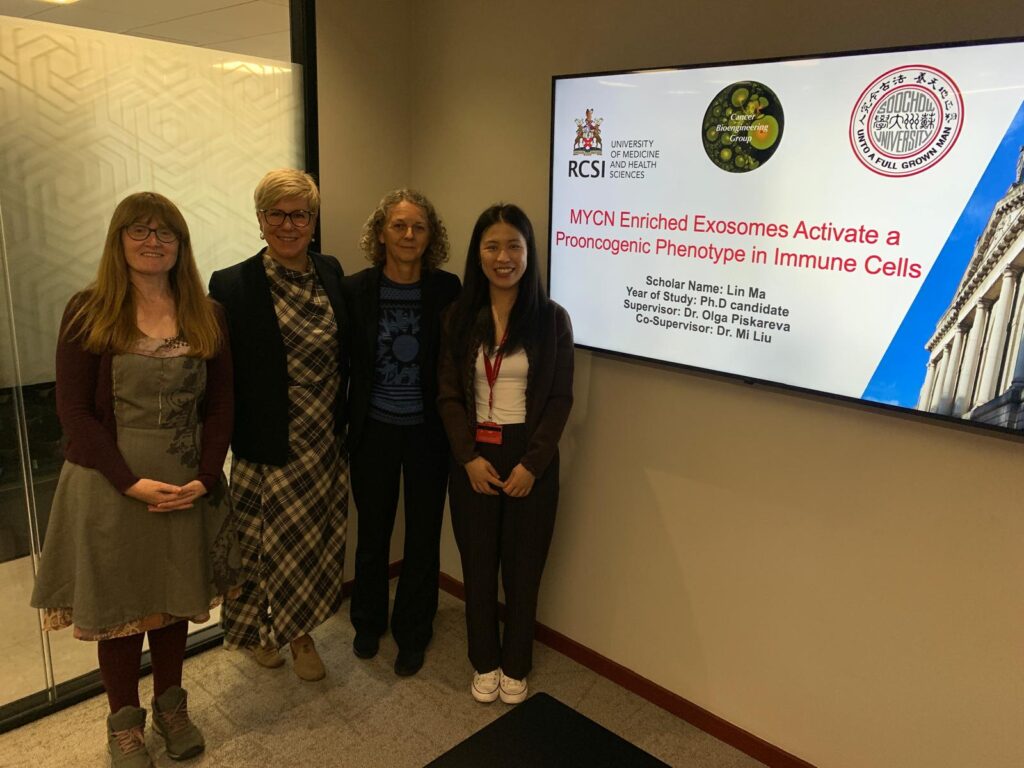
My greatest thanks to Lin’s examiners Prof Sue Burchill (University of Leeds, UK),  Dr Joan Ní Gabhann-Dromgoole  (RCSI, Ireland) and the independent chair Prof Kevin McGuigan (RCSI, Ireland)!!

My greatest thanks to Ronja’s examiners, Prof Martina Rauner (Dresden University, Germany), Prof Fabio Quondamatteo (RCSI, Ireland) and the independent chair Dr Inmar Schoen (RCSI, Ireland)!!

This work would not be possible without the generous support from the Irish Research Council (Research Ireland) and the Conor Foley Neuroblastoma Cancer Research Foundation to Ronja, and from the RCSI-Soochow University StAR International PhD Programme to Lin.
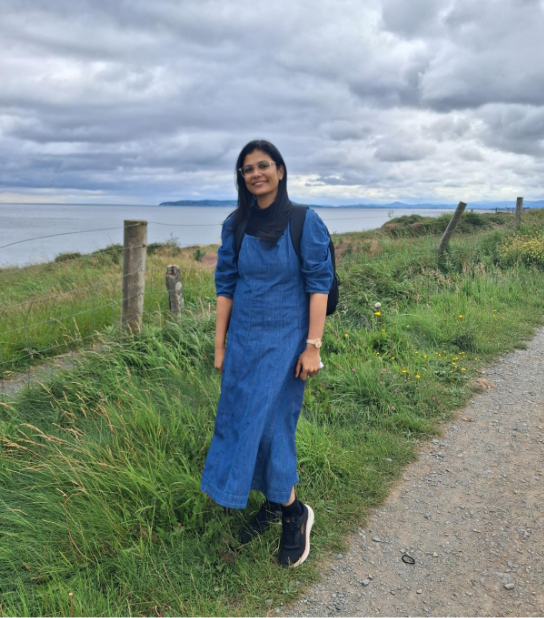
Hi Everyone! I’m Anusha

Hi, I am Anusha from India. I recently joined Dr Olga’s team at RCSI as a research fellow.  I completed my PhD in the development of nanomaterials for image-assisted cancer therapy. After that, I had an amazing run as a research scientist for 7 years, working in cancer immunotherapy. Work focused on the development of nanomaterials for the delivery of immunomodulatory drugs and on engineered adjuvants for therapeutic cancer vaccines. Then came my lil son Aadi, and I took a two-year break. When I was actively looking for positions after my break, I thought of writing a Marie Curie grant, and that’s how I met Dr Olga. Dr Olga then offered me a position at RCSI to work on neuroblastoma. I am just incredibly grateful for this opportunity and to be part of an amazing team, especially after being away from the lab for a while. It’s a new role, a whole new world here in Dublin, and I am waiting to see what exciting things come next.  

Falling in love with the Irish coast @ Donabate 

Written by Anusha Ashokan

How cancer cells communicate?

Hot off the press! The study carried out by Thomas Frawley during his PhD has just been published in Journal of Personalized Medicine.

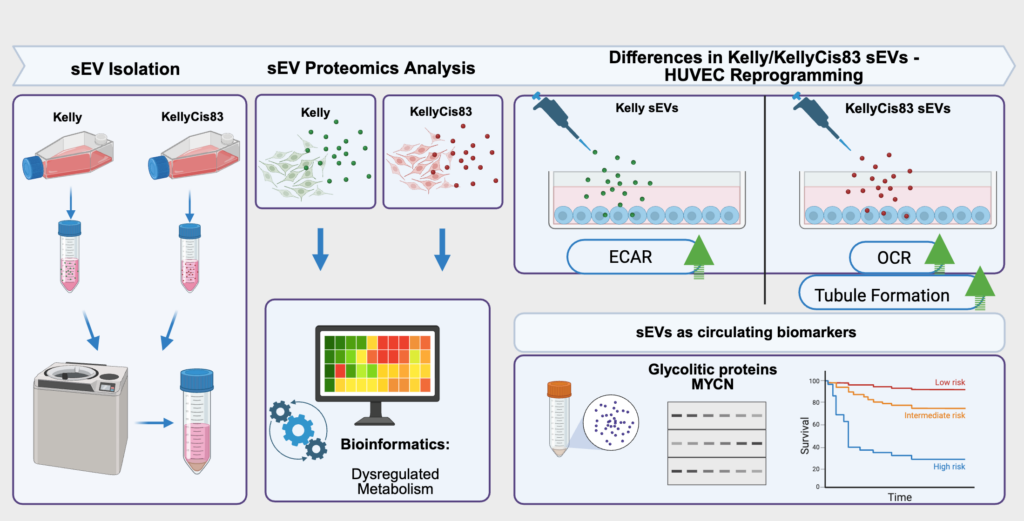
Cancer that is resistant to treatment is a big challenge because it often leads to lower survival rates. Tumour cells release small extracellular vesicles, which can influence other cells in the body by carrying various proteins. The study focused on understanding what proteins are in these particles from resistant and sensitive cancer cells and how they affect non-cancerous cells, like those involved in forming blood vessels. Our study discovered that these packages from resistant cancer cells contain special proteins involved in how cells produce and use energy. These findings suggest that these proteins could be used as markers to monitor disease progression or treatment response, using less invasive methods such as blood tests.

A schematic summary of Frawley’s study, also known as a graphical abstract. J. Pers. Med. 2025, 15(12), 584; https://doi.org/10.3390/jpm15120584 (registering DOI)

Understanding how resistant cancer cells influence their surroundings could lead to new ways of diagnosing and treating high-risk neuroblastoma. Detecting these proteins through blood tests could help personalise treatment strategies, making them more effective without the need for invasive procedures. This research opens the door to using tiny particles from blood to better understand how cancer progresses and responds to therapy.​