Hot off the press! The study carried out by Thomas Frawley during his PhD has just been published in Journal of Personalized Medicine.
Cancer that is resistant to treatment is a big challenge because it often leads to lower survival rates. Tumour cells release small extracellular vesicles, which can influence other cells in the body by carrying various proteins. The study focused on understanding what proteins are in these particles from resistant and sensitive cancer cells and how they affect non-cancerous cells, like those involved in forming blood vessels. Our study discovered that these packages from resistant cancer cells contain special proteins involved in how cells produce and use energy. These findings suggest that these proteins could be used as markers to monitor disease progression or treatment response, using less invasive methods such as blood tests.
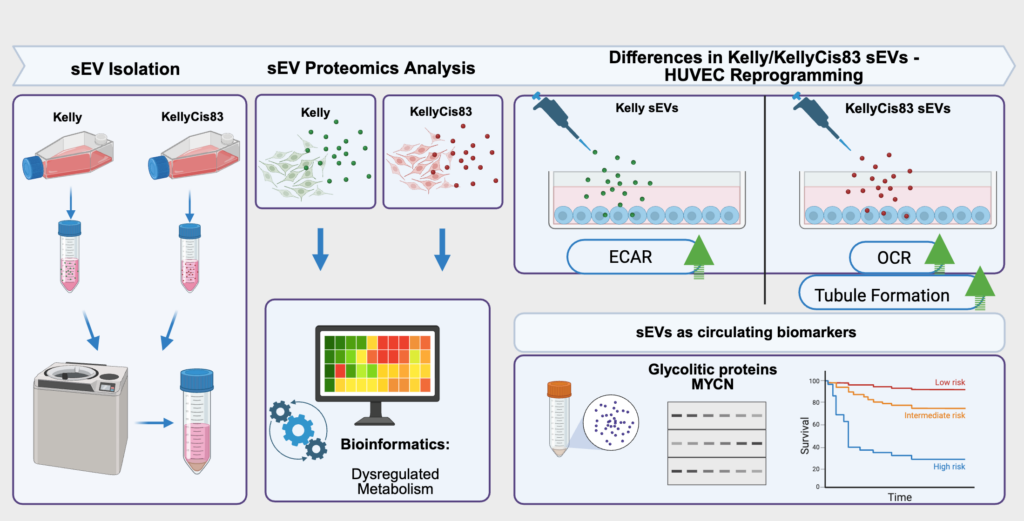
Understanding how resistant cancer cells influence their surroundings could lead to new ways of diagnosing and treating high-risk neuroblastoma. Detecting these proteins through blood tests could help personalise treatment strategies, making them more effective without the need for invasive procedures. This research opens the door to using tiny particles from blood to better understand how cancer progresses and responds to therapy.