Childhood and Cancer

Walking in Mainz last week I saw a lovely fountain capturing 3 girls under umbrellas (Drei-Mädchen-Brunnen) at the ball square. This fountain was built between two Catholic girl’s schools symbolising the separate education and happy childhood. It has charmed me and reminded rainy days in Ireland and how this fountain may fit any park or square in Dublin.

My second look at the picture gave me another perspective. This sculpture could illustrate not only happy childhood but also the protection we can give to children with cancer being their umbrellas. As September is childhood cancer awareness month, I am picking this picture to support this call. Raising awareness about childhood cancer we help to make their dreams come true. Dreams for better treatment, better quality of life full of love ahead through better funding of childhood cancer research and access to innovative treatments.
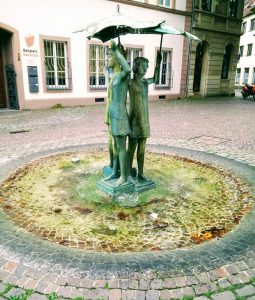
Three girls fountain in Mainz Germany

What lessons have been learnt?

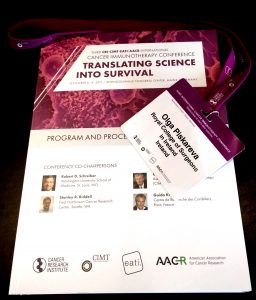
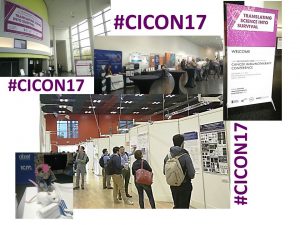
Today is the final day of the Third International Cancer lmmunotherapy Conference. The meeting was run at the Rheingoldhalle Congress Center in Mainz/Frankfurt, Germany from September 6-9, 2017. More than 500 people attended this meeting.

The focus of the scientific program was on “Translating Science into Survival”. Talks covered the challenging areas in cancer immunology and immunotherapy. The full list of topics can be found in the meeting program.

At the moment cancer immunology and immunotherapy is a hot topic in the next generation of anti-cancer therapies. Lots of attention is given to checkpoint immunodrugs as it was proven by the prevalence of talks on this subject in the program. Indeed, this drug has great potential, but at the same time, it is not universal. About 50% of patients do not benefit from it.

What lessons have been learned from the talks:

  • Checkpoint immunotherapies are the main stream
  • Not all cancer patients would respond to immunodrug
  • Genetic landscape of a tumour and/or the patient may contribute to this, thus making beneficial to check genetics for this type of treatment
  • Immunodrugs work better in combination with conventional therapies such as chemotherapy.
  • The immune system can be tuned by a drug, but it will switch on compensatory mechanisms to balance the intervention.
  • Lots have to be studied further


Father of Chemotherapy and Cancer Immunology

I was giving a talk at Georg-Speyer-Haus Institute for Tumour Biology and Experimental Therapy yesterday. The aim of my visit was to establish collaboration with Prof Daniela Krause, who is the expert in bone marrow microenvironment and targeted therapies. She took me to the Institute museum that keeps the history of this place and phenomenal researchers used to work there.

This research institute was established in 1904 to support work of Paul Ehrlich, its first director and funded by the private foundation “Chemotherapeutisches Forschungsinstitut Georg-Speyer-Haus”. Paul Erlich is the Father of the chemotherapy concept originally developed to treat diseases of bacterial origin. He reasoned that there should be a chemical compound that can specifically target bacteria and stop its growth. He developed Salvarsan, the most effective drug for treatment of syphilis until penicillin came onto the market.

Paul Erlich is also known for his contribution to cancer research. He and his colleagues actively experimented on how tumour originates and spread. They also tried to understand how immune system can beat cancer applying vaccination concepts.

Paul Erlich’s Lab back then. Now it is a museum

Paul Erlich and Ilya Mechnikov were jointly awarded The Nobel Prize in Physiology or Medicine for his “work on immunity” in 1908.


The Nobel Prize Diploma

Tumour immunology and immunotherapy for neuroblastoma

The main challenge in treating high-risk neuroblastoma is to stop or control tumour spread and development of resistance to multiple chemotherapeutic drugs. Immunotherapy is one of the recent advances in our understanding how our immune system handles body invaders such as virosis, bacteria and now tumour cells. Immunotherapy holds great promise as a treatment option for neuroblastoma as well as for many adult cancers owing to the specificity of immune effector cells targeted to a tumour. Another advantage is a potential reduction in the systemic side effects observed with other forms of treatment.

This video ‘Tumour immunology and immunotherapy’ will give a brief overview of the basic concepts.

Immunotherapeutic approaches for neuroblastoma include the use of chimeric antigen receptor (CAR) T cells against both L1-CAM and ganglioside 2 (GD2) cell surface antigens to promote host antitumor response. Anti-GD2 antibodies bind GD2 and cause cell death by activating both complement-dependent cytotoxicity (CDC) and AB-dependent cellular cytotoxicity (ADCC) from natural-killer cells.


Treatment of High-Risk Neuroblastoma

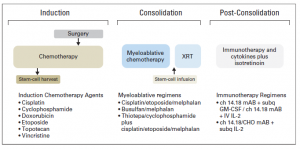
Children with high-risk neuroblastoma is the most challenging group to treat. Current treatment strategy for this group consists of 3 treatment blocks:

  1. induction: chemotherapy and primary tumour resection;
  2. consolidation: high-dose chemotherapy with autologous stem-cell rescue and external-beam radiotherapy [XRT];
  3. post-consolidation: anti–ganglioside 2 immunotherapy with cytokines and cis-retinoic acid.
Adopted from: Pinto NR et al JCO  2015, 33, 3008-3017.
Up to 50% of children that do respond experience disease recurrence with tumour resistant to multiple drugs and more aggressive behaviour that all too frequently results in death.
For the majority of children who do survive cancer, the battle is never over. Over 60% of long‐term childhood cancer survivors have a chronic illness as a consequence of the treatment; over 25% have a severe or life‐ threatening illness.
Reference:

Pinto NR, Applebaum MA, Volchenboum SL, Matthay KK, London WB, Ambros PF, Nakagawara A, Berthold F, Schleiermacher G, Park JR, Valteau-Couanet D, Pearson AD, Cohn SL. Advances in Risk Classification and Treatment Strategies for Neuroblastoma.J Clin Oncol. 2015 Sep 20;33(27):3008-17.


What is neuroblastoma?

Neuroblastoma is a childhood cancer. The word neuroblastoma consists of two words neuro and blastoma.The term neuro refers to nerves, blastoma  –  to a cancer of immature cells.

It starts in some types of nerve cells during embryo development.transforming immature nerve cells into cancerous cells. This type of cancer occurs most often in infants and young children mostly under the age of 5 years old.

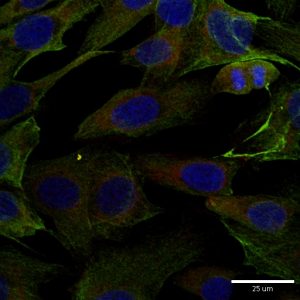
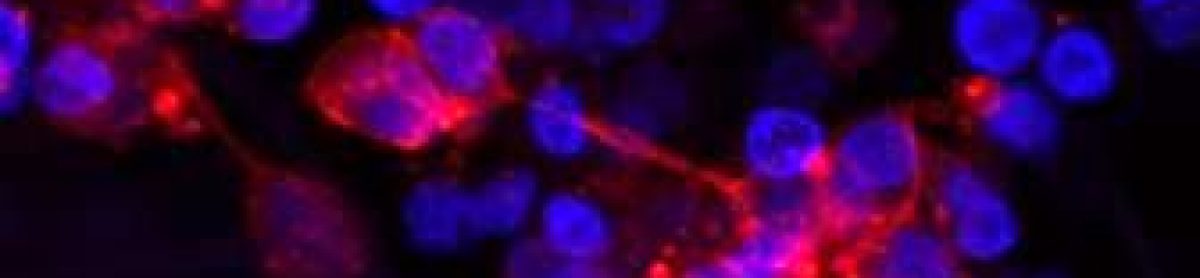
Neuroblastoma cells

Neuroblastomas behave very differently:


The types of treatment used for neuroblastoma can include:

Children who survive have a high chance of developing long term side effects as a result of the treatment that saved their lives

More details about neuroblastoma can be found here:

American Cancer Society

Cancer Research UK