
New Orlean’s Red Beans & Rice

While completing my Master’s degree at Tulane University in New Orleans, Louisiana, I found the top-notch post-grad comfort food I’ve taken with me ever since. After a day of work, the last thing I want to do is come home and cook an entire meal. Luckily, red beans and rice can be adapted to a slow cooker. Allowing me to throw all my ingredients in and come home to an amazing-smelling apartment with the most satisfying warm bowl waiting for me.

There’s something to the name “The Big Easy” that describes New Orleans because the people and the food take life a bit slower and enjoy every savoury bit together. My favourite memory in New Orleans is when my friends and I prepped a massive stock of red beans and rice for the week of Mardi Gras. This is an entire week of festivities and parade floats where the city quite literally shuts down since everyone participates. It was so comforting every night (or early morning) to come back from the parades and dish out the prepped meal that would fill you up, stick to your bones, and help you fall sound asleep with more than enough energy for the next days of parades.

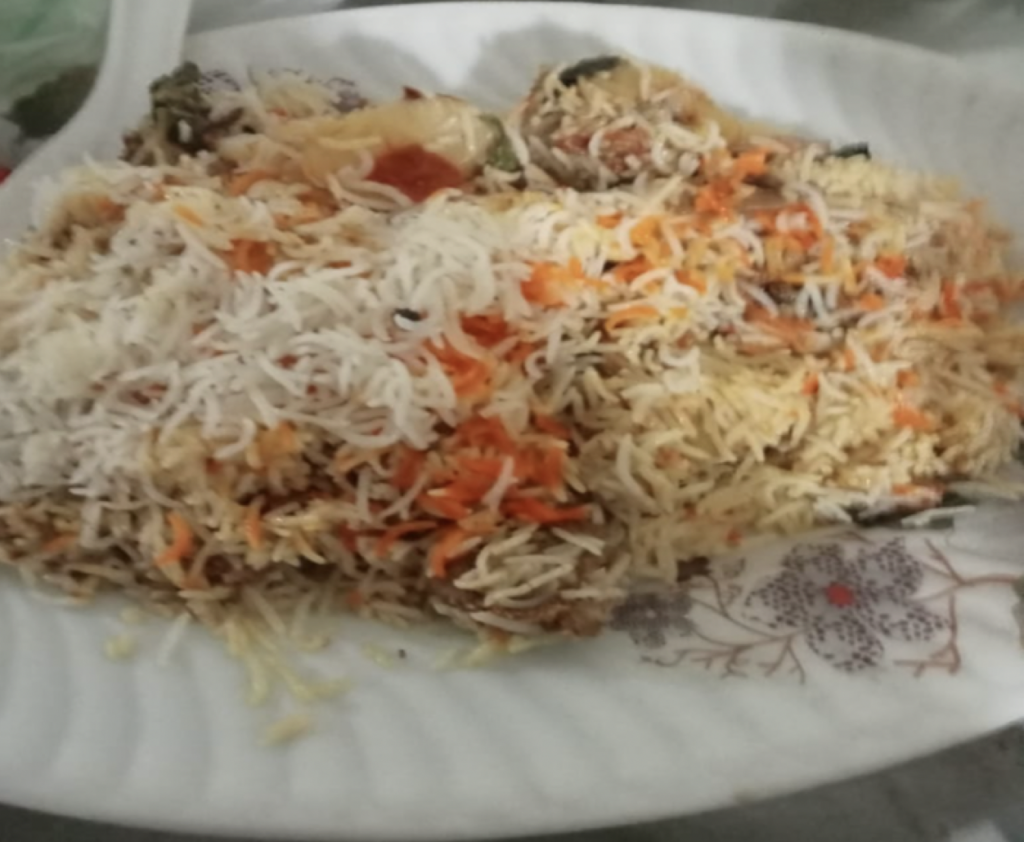
My first red beans and rice in New Orleans

Red beans and rice is a Cajun dish with Haitian influence and contains the “holy trinity” – bell pepper, onion, and celery. You can find this vegetable blend in the base of almost every Cajun meal, including etouffee, jambalaya, and gumbo. Red beans and rice are traditionally made with a stovetop pot set on a low boil all day. However, the ease of a slow cooker is made with the PhD student in mind as it also keeps well during the week. The most important piece is to get red beans and soak them for about 12 hours before cooking them. This will make the beans more digestible as well as more hearty. Andouille is a Cajun spiced sausage that might be at a speciality butcher shop. Another crucial ingredient, Slap Ya Mama (yes, you read that right), is only available in the U.S. Slap Ya Mama seasoning has its name because “every time a mama uses it, she receives a loving slap on the back and a kiss on the cheek for another great dish”. There are so many great memories I have from my time in New Orleans and I’m happy to share my favorite meal. I hope you are able to replicate this dish and taste the Southern Comfort that is very true for New Orleans.

Laissez les bons temps rouler!

Recipe:

Serves 6, Cook time is 4 –8 hours

  • 450 grams of dried red kidney beans (New Orleans Camelia brand recommended)
  • 450 grams Andouille sausage (or smoked), sliced ½ inch
  • 4 tablespoons olive oil
  • 1 yellow onion, diced
  • 4 ribs celery, diced
  • 1 green bell pepper, chopped
  • 4 cloves garlic
  • 1 bunch green onions, chopped and divided
  • 3 cups chicken broth
  • 3 cups water
  • 1 tablespoon Slap Ya Mama seasoning
  • 1 teaspoon black pepper
  • 1 teaspoon dried thyme
  • 1 teaspoon dried oregano
  • 3 bay leaves
  • Handful of fresh parsley, chopped

For serving:

  • Cooked long-grain white rice
  • Hot sauce

Instructions:

  1. Rinse beans and soak.
  2. Brown sausages in oil on both sides. Set aside.
  3. In the same pan, add garlic and onion, sauté for 2-3 minutes until transparent. Then add the bell pepper, celery, and half of the green onions. Sauté for 5 minutes.
  4. To the slow cooker, add your cooked vegetables. Then add the red beans, black pepper, Slap Ya Mama, dried thyme, oregano, and bay leaves.
  5. Add the water and chicken broth.
  6. Set the slow cooker to high setting for 4 hours or low for 8 hours.
  7. When beans are ready, take out 1 ½ cups to mash and put back in pot.
  8. Remove the bay leaves and add the sausage back in. Cook until sausage is hot.
  9. Serve over a bowl of hot white rice with hot sauce, green onions, and parsley for garnish.

Notes:

  • In New Orleans, they also add a split-faced grilled sausage to the top.
  • This can be adapted to an Instant Pot (Pressure Cooker) as well. Just set the pressure to high for 60 minutes with a 15-minute natural release.
  • If the beans seem too thick, add more water.
  • This is a great dish that can be stored for a week or frozen for two months.

Enjoy!!!

Written by Alysia Scott

Navigating Time and Tasks in the PhD Journey – The Struggles of Autonomy

Embarking on a PhD is an exhilarating endeavour. It offers the freedom to structure one’s own time. But this autonomy can be a double-edged sword; while providing a sense of flexibility and leisure, it also presents challenges in managing time effectively, prioritising tasks, and maintaining a productive schedule. In the context of a PhD, self-discipline and efficient planning quickly become the guiding stars of success.

The absence of rigid working hours requires a strong sense of self-motivation and discipline to stay on track. Without proper time management, it’s easy to fall into the trap of leisurely indulgence, neglecting the essential tasks and milestones that shape the PhD journey. Never before did I appreciate nagging parents, teachers or just people to which you could outsource motivation and feedback as easily. In a PhD, you’re on your own. You’re the only one who truly cares that what you’re working on is getting done. Done well and done at the right time. There is your supervisor, of course, and maybe collaborators. But it is not their job to stand behind you and say have you done this yet or that yet. They don’t see how much work you do or don’t do in a day. No one tells you to get off your arse when you’ve just stared at a blank screen for 20 minutes, and no one tells you to give it a rest when a simple problem turns out to be far more time-consuming and exhausting than expected because things still need to be kept moving. In the end, you can only rely on yourself to tell you whether you have worked enough or not. No one else knows. That can be extremely motivating and similarly defeating when you feel like you’ve done nothing but work for a couple of weeks and the results still aren’t there, so it seems like it doesn’t make a difference.

To conquer the time management challenge, prioritisation becomes paramount. As a PhD student, the spectrum of tasks can quickly seem overwhelming. Between different avenues and tasks that would progress your project, keeping up with writing, creating figures for adjacent projects, producing posters and presentations for conferences, writing blog posts, and making videos for funders and meetings, there always are more things to do in a day than could possibly be crammed in on the most productive of days. Figuring out how to manage urgency and importance becomes crucial to staying afloat. Identifying the most critical tasks and allocating time accordingly ensures progress and prevents the accumulation of unfinished work.

Navigating the realm of a PhD

Maintaining a reasonable schedule becomes a balancing act. Especially when you pepper a couple of meetings in the very early morning because your collaborators are in a different time zone. And yet creating and adhering to a schedule is the foundation of effective time management. Despite the constant changes and different requirements, I find it helps immensely to establish a routine to cultivate discipline and maintains an easy overview over the week to allow myself to check what has been achieved and how long it took, so I can gauge how much more I need to do or whether I get to relax and leave half an hour early another day. It is crucial to strike a balance between focused research, data analysis, writing, and personal well-being. Regularly reassessing and readjusting the schedule as priorities shift guarantees that all aspects of the PhD journey receive the attention they deserve.

Navigating the realm of a PhD requires a delicate dance between self-motivation and effective time management. While the allure of autonomy can be tempting, the importance of prioritising tasks and maintaining a schedule cannot be understated. By striking a balance between work and personal well-being, the PhD journey can be transformed into a harmonious symphony of progress and achievement. Well, that’s the idea anyway.

As you embark on your own PhD adventure, you realise every day that time is a precious resource, and effective management is the compass that guides you toward success.

Written by Ronja Struck

#DineWithRonja: Wedding cake struggles

What feels like ages ago now, my friend had asked me to bake the cake for her wedding. Sounds like a big ask at first. But I managed to talk myself off the ledge I climbed onto with the face every person pulled that I told of this plan. Simply by remembering that she is fully aware of who I am and never wanted a classic wedding cake but rather a little something to remind her of the good old days when we’d bake together. Her, following the recipe to a t and me, doing my darndest to find a way to make it our own, have a little fun with it and usually ending up making the cake a little worse than it would have been had I just stayed out of it. After plenty of back and forth, I decided on Fanta cake. With the wedding in the height of the strawberry season, what better than a sponge base with a little cornucopia of strawberries perched atop a vanilla cream dream? But the height of strawberry season also means scorching summer… It was a scorching hot day, with the sun beaming down mercilessly. As I meticulously assembled the cake, whispers of doubt crept in. Would the cream layer melt and cause the cake to run off in the heat?

But hey, the best part of this cake is the base, anyway. So I shoved away the doubts and got on with it: In a mixing bowl, I beat 4 eggs, 250g sugar and a pack of vanilla sugar until they reached a fluffy consistency. Then added 125ml of oil and 150ml of Fanta, creating a harmonious blend. Gradually, I mixed in 250ml of flour and 3 tsp of baking powder until all ingredients were well incorporated.

I started out neat enough, with a clear space and ingredients all lined up neatly…

While that baked at 180°C for not quite 25 mins on a well-greased tray I started worrying about the problem child: the cream mixture. This is a funny one not just because it made me worry on the day, but it was also the reason I couldn’t really test bake here in Dublin because you can’t buy ‘schmand’ over here. I have since learned that schmand is simply sour cream with 20% instead of 10% fat and that crème fraiche is the same thing with 30% fat. So I could have saved myself a headache had I just mixed sour cream and crème fraiche and tested baking over here rather than the day before in a rush… anyway, I mixed together combine 600 ml of cream, 400 ml of sour cream, 2 packets of vanilla sugar, and 2 packets of dr oetker vanilla paradise cream, a no boil vanilla pudding. And only when the cake is cold, this gets spread all over it. Mine was still lukewarm, but it worked still.

And finally, don’t underestimate how long it takes to wash and arrange the strawberries. And how many do you need. The recipe says 1.5kg. But mine were so big that I needed to run back to the shops that morning to get more, even though I had more than 1.5kg of good strawberries left.. But I made it. Everything seemed doable yet. That’s when things turned tits up. The cake glaze didn’t work for me. First, it didn’t want to solidify, and then it just kept running off the cake. When spreading the vanilla cream, I tried to make a little barrier around the outside of the cake. And at first, that worked well enough. But the strawberries were so high that I needed to fill in more and more cake glaze that just kept seeping off the cake onto the counter and away. But that was going to have to be a tomorrow problem.

…But chaos soon took over. If you look closely, you can even make out the initials of the happy couple in the strawberries.

Quickly dressed friends already showed up to take me to the wedding. In an instant of sound thinking, I grabbed a spare tray and some ice packs to keep the cake cool on a scorching day and felt all the better for it when everyone else was overheating and with the cake on my lap, my thighs were positively frozen.

It even survived the ceremony in the car before we arrived at the venue, where it was finally placed in a fridge again before everyone got to try it and comment.

I think that may have been the first cake I ever made that no one told me how I could have improved on it after they tried it. Everyone seemed delighted, the strawberries were really juicy and flavourful, and even people who didn’t know I made the cake but thought it was part of the catering complimented it. Not sure that’s what my friend had in mind when tasking me with the cake, but she seemed delighted even though I didn’t deliver one of my classic disasters. Maybe there’s a point to recipes after all.

And yet this was all that was left of it by the time I made it to the desert buffer.

Written by Ronja Struck

How I became interested in science?

I’ve just submitted my PhD thesis following 4 years of cancer research, which came after a 4-year undergrad in Biomolecular Sciences. But how did I get here? What prompts an interest in science? Or in my case specifically, in biology. When I was younger, I had bad asthma – estimated to affect 1 in 5 children in Ireland at some point (Asthma Society of Ireland). I remember spending many a morning in the asthma clinic in Tallaght Hospital when I was in primary school, entertaining myself in the play area while patiently waiting my turn to see the doctor. Admittedly, I didn’t really know what asthma was back then – I just knew that it was the reason I often got out of breath while playing sports and had to carry my clunky inhaler with me everywhere I went from school to sleepovers.

Asthma Society of Ireland Statistics

This changed in Secondary School in one of my 1st year Biology classes. We were learning about organ systems, and I vividly remember reading a small paragraph in the respiratory system section describing an asthma attack as a tightening of the muscles around the airways leading to constriction. It was by no means a detailed description, but for the first time, it made me think about what was actually going on in my body when I got out of breath. This awakened an interest in me as to how the body works. I continued to enjoy science classes throughout school and picked both Biology and Chemistry as Leaving Cert subjects. This enjoyment even led my friends to buy me some test-tube shot glasses as part of my 18th birthday present – a gift that I still have 8 years later! I was delighted to get into a Biomolecular Sciences degree after the Leaving Cert, and it was during this degree that my interests focused on cancer biology and immunology, the key research areas of my PhD, which looked at immune cell interactions in childhood cancer neuroblastoma. As this project comes to a close, I can’t help but wonder what my next scientific endeavour will be – will I stay in cancer research or unlock a new area of interest? Only time will tell!

My scientist origins 2015 – messing with St Paul’s most popular skeleton Mr. Bones in a Leaving Cert. chemistry class, the test-tube shot glasses my friends bought me for my 18th birthday, and the lab coat I bought for my undergrad degree (quite clearly not designed for short people)

When you’ve been in science for so long, it can be easy to forget how it all began, so I challenge any scientists reading this to reflect on what sparked their interest and led them to where they are today and how we can support the interests of the up-and-coming scientists of the future!

So, did I manage to keep sane?

Absolutely not.

If you read my last blog post in May, you’ll know that I made a list of my five top tips for keeping sane while thesis writing (read here). Well, today, I’m here to tell you that despite my best efforts, the “so close to the end” pressure and lunacy did eventually get me.

As I’ve said before, writing a thesis is hard. Not knowing when you’ll be done is hard. Setting deadlines to work towards, which subsequently fall through, is hard. And I actually now think it’s unreasonable to believe that there’s a 5-step formula to prevent this from taking a toll on your mental state.

I submitted my PhD thesis on the 15th of June – I won’t tell you how many months later than my original goal this is. But I submitted it nonetheless. The weeks leading up to this submission were tough as I started to feel the burn-out and longed to be done. I think the tips I shared before can help during this time, but I won’t tell you that they made my stress and desire to be finished disappear.

These feelings lifted the day before my submission, my last day of minor edits and final checks when I got up to watch the sunrise. I sat watching the sun rising over the sea and tried to embrace where I was in the present rather than thinking about where I could have been had I submitted sooner or where I’ll be in a few months when I close my PhD chapter. I started to feel some relief as I could see the light at the end of the tunnel just as clearly as I could see the sun rising. I listened to Billy Joel Vienna on the way home – “Slow down, you’re doing fine” – reinforcing all these feelings.

My “light at the end of the tunnel” – the sun rising over the sea in Dun Laoghaire

That day I wrote my thesis acknowledgements, where I thanked everyone who helped me through my PhD. I focused particularly on those who helped me in my not-so-sane moments over the thesis-writing period, my family and close colleagues/friends.

I still believe that the tips from my last post – maintaining social contacts, exercising, getting outdoors, having some fun and planning ahead – can help you navigate the thesis process. But I take back what I said about them keeping you sane. Because sometimes, the task at hand is just too big for one person to tackle without going off the rails a bit. It’s a balance between self-care, asking for help when needed, and simply riding out the waves.

For anyone who’s writing up and is feeling a lack of sanity, I hope you can find your own ways to ride out the waves, and I hope your light at the end of the tunnel becomes visible soon. I can assure you the post-submission honeymoon period is definitely something to look forward to!

Thesis submission celebrations at the Swan Bar – an RCSI tradition

Written by Catherine Murphy

My Fancy May

Hi again, it’s Lin! Last April (the end of April 2023), I was back in China, then started my 2 years of life at Soochow University (SU). Before I popped into the lab, I had a short holiday (In May). Therefore, I travelled to some cities in China.

The top 1 of my favorite cities is my hometown – Yantai (a coastal city in Shandong Province). I went straight back to Yantai after I left Dublin. I haven’t seen my family for two years since I went to Ireland. I missed them soooo much.  I visited my grandparents, my uncle, my aunt, and my cousin, I had a happy time with them.  If you want to travel to Yantai, I suggest coming here every May and June. The cherry is ripe every May and June. Therefore, at this time every tear, you can not only eat a lot of cherries, but you can also go to the farm to enjoy the joy of picking cherries.

After 2 weeks of family time, I went to Hong Kong to visit my friends. My friend showed me around Hong Kong. If you like to climb mountains and enjoy the natural scenery in the mountains, I suggest going to Ngong Ping 360 and the Peak. You can try the cable car in Ngong Ping 360 and the Peak Tram in the Peak. You will have a different experience and enjoy your time. If you like shopping, you will love Hong Kong. There are some expensive shops and also some cheap ones. There is something for everyone in Hong Kong.

After traveling from Hong Kong, I returned to Suzhou, where my college is located. Soochow is famous for its Chinese classical gardens. My favorite place in Soochow is not the garden but Shantang Street. I always go there with my friends at night time. Blowing the wind and enjoying the night lights, Shantang Street is particularly charming.

Due to limited time (I need to be back in the lab as soon as possible), there are many places I did not go to, such as Yunnan, Tibet, and Gansu. If you want to travel to China, I hope my experience can give you some advice.

Written by Lin Ma

#DineWithFederica

Hello everyone!

My best friend turned 30 over the weekend, and I decided to surprise her by coming to her party in Palermo 🥰  

While I was in Palermo, I asked my grandmother to cook for me one of my favourite dishes: pasta alla norma. Who knew that I would be writing a blog post about it during my back flight to Dublin?! 

It is typical Sicilian pasta that reminds me of my childhood summer that I used to spend with my relatives in our sea house. ☺️Those months of holidays were really packed with activities: morning at the beach, lunch at home, a quick nap, and a play date with friends until my mom came home from work (good times 😂).  For lunch, my grandmother used to make me pasta alla norma, which I ate sitting on a low wall on the patio. I loved that moment, and I’m sure you will love this delicious pasta 😊

Ingredients:

  • Aubergines
  • Sunflower and olive oil 
  • Pasta 
  • Tomato sauce 
  • Grated cheese (we use a typical cheese named ricotta salata, but it is possible to use parmigiano as well)
  • Basil 

Method

Step 1: Rinse the aubergine and pat dry with kitchen paper. Then, chop them into cubes of small sizes.

Step 2: Drizzle a splash of sunflower oil into a large frying pan and heat it. Once hot, add the aubergines in a single layer and fry until softened and golden -stirring occasionally.

Step 3: Place the fried aubergine in a single layer on a kitchen towel to drain the oil. In this way, the aubergine will be crunchy. 😋

Step 4: Add a splash of olive oil to a pan or pot, and when the oil is warm, add the tomato sauce. Add the salt and leave to cook on low heat for a few minutes.

Step 5: Meanwhile, cook the pasta in a pot of boiling salted water until “al dente”, which means that it should be soft enough to eat but still have a bit of bite and firmness to it.

Step 6: Drain the pasta and place it again in the pot. Then, add the tomato sauce and the aubergine and toss well.

Step 7:  Divide between bowls, grate over the cheese and finish with the basil scattered on top.

The last image is from the Internet, as I was too hungry and I forgot to take a pic 🙄

Buon appetito! (means enjoy 😋)

Written by Federica Cottone

Back to my roots – Biomolecular science careers and alumni event at TUD

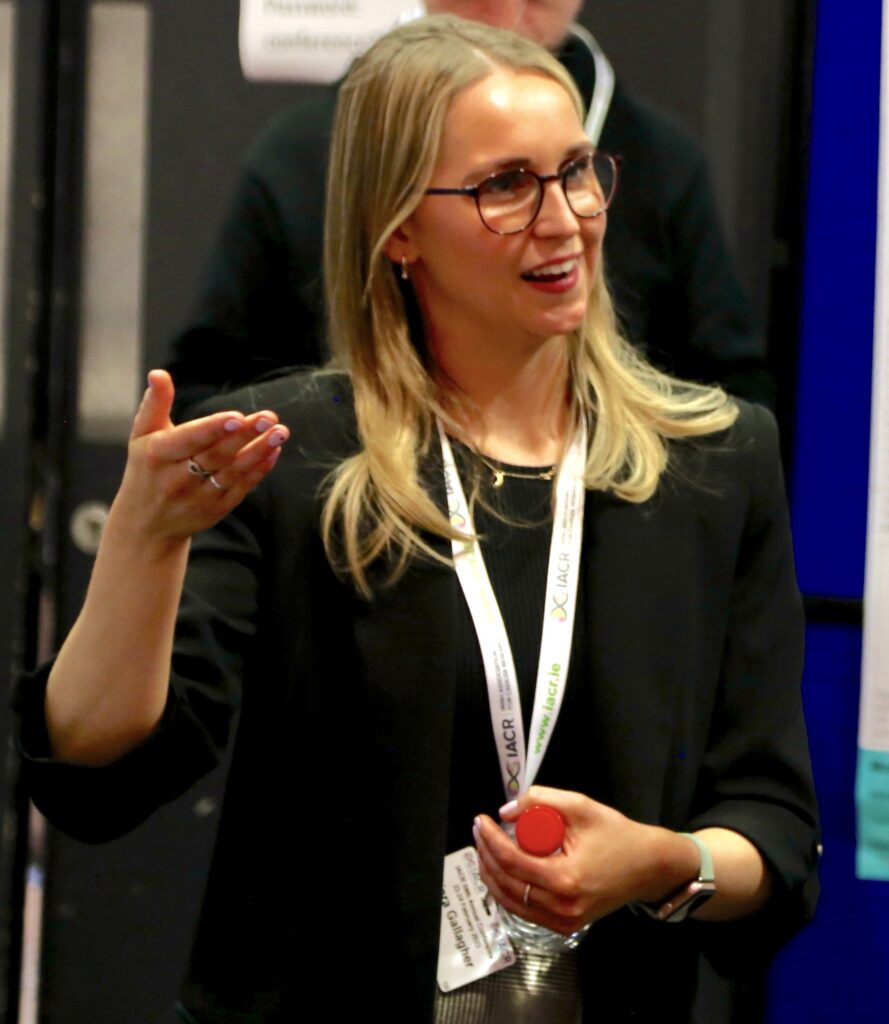
Hi again, Ciara here!  Last week (May 2023), I was asked back to the college I completed my undergraduate degree at the technological university of Dublin (TUD). They held their first Bio-molecular Science Careers and Alumni event. This event entailed previous graduates returning to the college to enjoy an evening of talks from graduates of other years showing their journey since graduation.  I was lucky enough to be amongst the panel of speakers to hopefully inspire this year’s graduates about all the possibilities available after graduation. It was also great to be back and connecting with familiar faces of classmates, lecturers and TUD staff. I had a fantastic time reminiscing about my time in college. I was lucky to be one of the residents of the old DIT Kevin St (now located at TUD Grangegorman). My course was very hands-on, accumulating 30 hours of lab work a week along with lectures. Although it was intense, I thoroughly enjoyed my time in DIT (now TUD).

My presentation on the evening was aimed at students thinking about research as their next step. I told them all about my career journey since 2017, from graduating college, moving to industry and coming back to academia to complete my PhD.

So, for my blog post this week, I would like to leave you with my top tips I shared with them for starting out on a PhD journey.

  1. Pick a topic you have a genuine interest in – don’t just take an opportunity because you don’t think it will come around again.
  2. There will always be funding available. You have to look in the right places and be persistent in your search.
  3. Get to know your supervisor (PI) before starting; you spend 4 years building a relationship with them.
  4. Ask questions to current PhD students; you can never ask too many questions before beginning.
  5. Work as a research assistant (RA) with a research group while searching for funding and before committing to a full-time 4 year-PhD. It helps get a feel if research is the right place for you.
  6. Enjoy the extended college years!

Written by Ciara Gallagher

The Conferring 2023

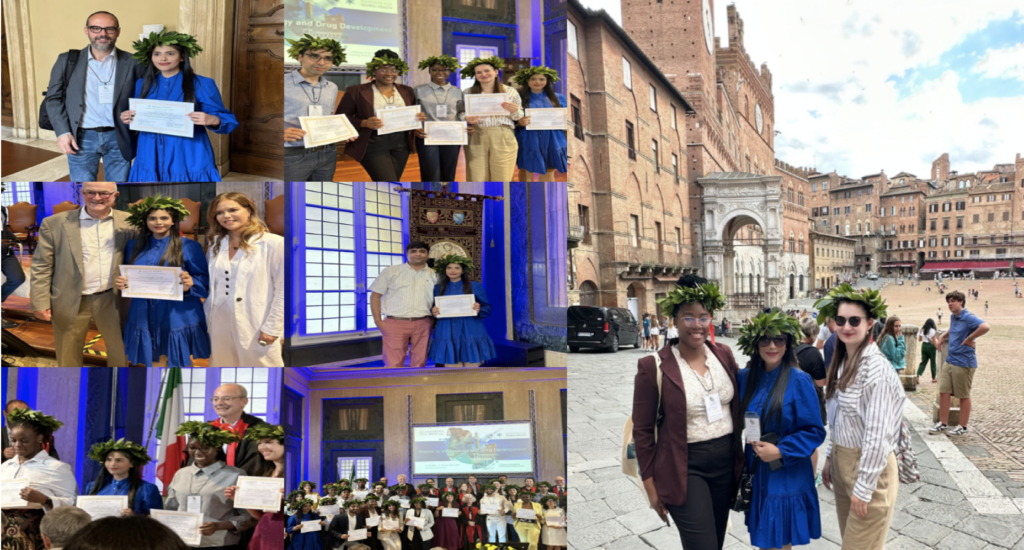
The Graduation/Conferring Ceremony in the Dublin Convention Centre is the highlight of the RCSI Academic year. This event is emotional for graduates and their families but is the same for their lecturers, tutors, mentors and supporters.

Seeing your students graduating is a happy moment. Meeting their parents, too! The Conferring Ceremony is the only chance sometimes. Both Nadiya and Sanat joined our team on two consecutive summer research projects and presented their work at research conferences and the RCSI Research Days. It was a great pleasure to work with them and see their progress and participation in our team activities. Both showed an incredible ability for human relations and empathy, to work in a team and lead their projects swiftly grasping complex scientific concepts.

No doubt that Nadiya and Sanat will be physicians of outstanding quality and achieve great things in their life. It is my great pleasure to congratulate them on their degree in Medicine and wish them all the best.

Congratulations to Dr Nadiya and Dr Sanat!

#DineWithOlga

We all collect trophies and tokens to bring home during holidays. So, do I. Teas and spices are a zeal for me. For Christmas 2022, we stayed in Lanzarote, and I was determined to find something special in this part of Spain: a taste, a spice or a dish. With a careful touch by César Manrique’s vision, the volcano-shaped countryside inspires and recharges.

The time was festive, prompting me to make a featured dish. It would have been a roasted Turkey or Ham in Dublin, but what could I do on holidays? I came very quickly to an idea to cook Paella in our self-catering house. I tasted it several times but have yet to cook it myself. Why not? Although Paella is widely recognised as one of the most popular and renowned Spanish dishes, it’s important to note that the term “paella” (or more accurately, “la paella”) actually refers to the cooking pan used to prepare the dish rather than the dish itself.

Ingredients, including a Paella spices’ mix sachet, were easy to buy in the supermarket. All I needed was a recipe. Indeed, it is not a problem nowadays – just Google it! So, I cooked a Seafood Paella for our family Christmas Dinner. Yummy!

In February 2023, I attended a conference in Barcelona and chatted with my Spanish colleagues about Paella over lunch. What was a big surprise for me is that the authentic version has chicken but not seafood. Spanish still debate, indeed, how faithful Paella should taste. Modern Paella certainly, has many variations. For example, peas and chorizo. Having only chicken makes Paella close to Plov, Pilaf or Pilau – an Asian dish with rice, vegetables, spices and meat, which I do often anyway. This is one of my family’s favourite dishes. Now, I can do it a Spanish style. So, here is a chicken Paella recipe with optional ingredients for every taste. Enjoy!

Ingredients

2 tbsp olive oil [sunflower oil can also be used],
1 onion
1 tsp each hot smoked paprika, saffron or turmeric [to give yellow colour], dried thyme, grided black and red pepper, salt,
300g paella or risotto rice [1.5 standard size glass]
300g carrots [2-3 of average size]
5-6 cloves of garlic
1.2 kg chicken [it can be just tights or wings, or both]

Method

Step 1: Cut chicken is small pieces, grate carrots, and chop onions.

Step 2: Heat the olive oil in a large wok or casserole pot. Add the chicken and cook for 20-25 min.

Step 3: Add the chopped onion and grated carrots and soften for 5 mins.

Step 4: Add the smoked paprika, thyme and paella rice, and stir for 1-2 min.

Step 5: Add 3 glasses of water [so water covers rise excessively]. Season and cook, covered, for about 15 mins, stirring now and again until the rice is almost tender and still surrounded with some liquid.

Optional: A casserole pan is handy for chicken Paella as the chicken needs more space and longer cooking time than e.g. seafood. Chopped tomatoes [200g] can be added in step 4. Chicken can be replaced with the seafood mix [400g] but should be added when rice is cooked. Then rice should be cooked in chicken broth (750-800 ml). Chorizo can be added in Step 5. Squeeze over the lemon juice, sprinkle with chopped parsley and serve with the lemon wedges.

Enjoy cooking and dining!