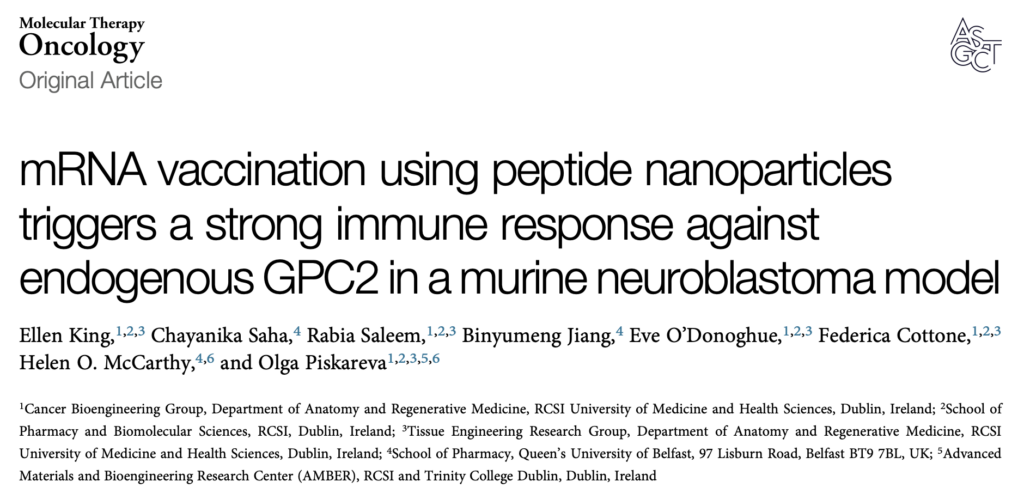
We are over the moon with our work being recognised by the American Society of Gene & Cell Therapy Molecular Therapy Family of Journals. The results are published in a Special Issue focused on the Advances in Paediatric Cancer Therapy. It is a true milestone in a challenge we undertook in collaboration with Prof Helen McCarthy at Queen’s University Belfast, with High-Risk, High-Gain funding from the Higher Education Authority North-South Research Programme. We did prove the HEA Ambition to highlight the huge potential of their initiative. Now, I can share the score for our application – it was 99/100*! Oh, my!!!! We are so happy that our idea was recognised back then. *I am still struggling to reach this threshold in other applications. 😉
Indeed, great research is teamwork, trust and collaboration – huge appreciation goes to Chayanika Saha, Federica Cottone, Eve O’Donoghue, Rabia Saleem, and Binyumeng Jiang. You are the Rising Stars!
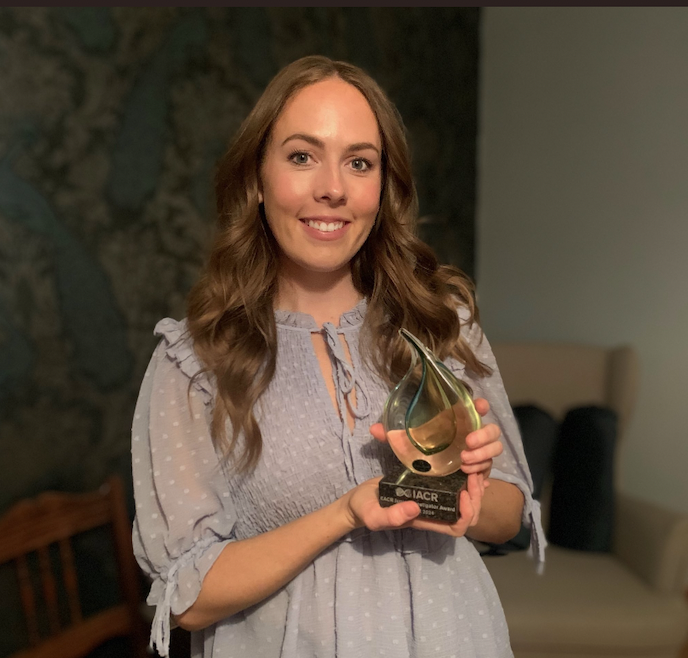
However, my extreme credit goes to Ellen King, PhD, who took on my ambitious challenge (go/no-go!), trusted me, went above and beyond, and turned her PhD project into this publication with passion and diligence. Just for context, it took us 12 months with 7 rejections to receive the quality approval mark for this publication. All this time, she was on top of the reviewing and publishing game after graduating with her PhD in 2024, developing her own immuno-oncology portfolio in London. Onwards and upwards Ellen King, PhD!
We are proud to collaborate with the family of John Foley CMC, FIMCA, MIET. – the true inspiration for not giving up! Their story of the neuroblastoma battle is heartbreaking and inspiring at the same time.
The Higher Education Authority funding helped us to secure follow-up funding from the Health Research Board (HRB) & the Conor Foley Neuroblastoma Cancer Research Foundation ( via HRCI – Health Research Charities Ireland) and Neuroblastoma UK. We appreciate their trust in our ambition and vision. THANK YOU!
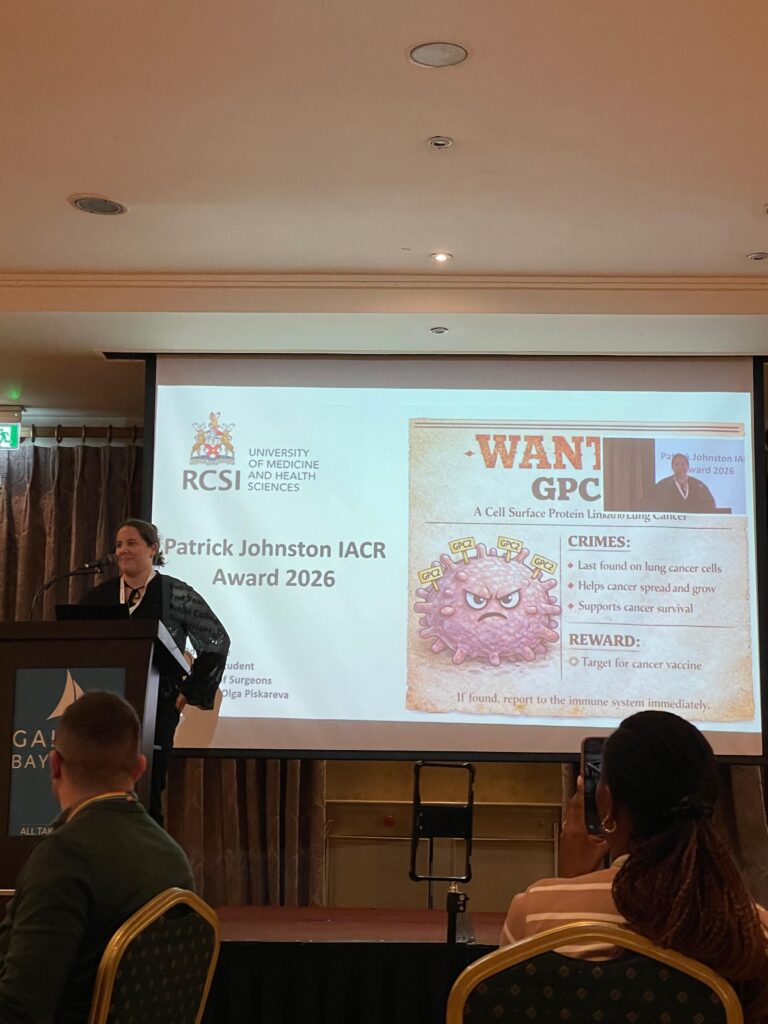
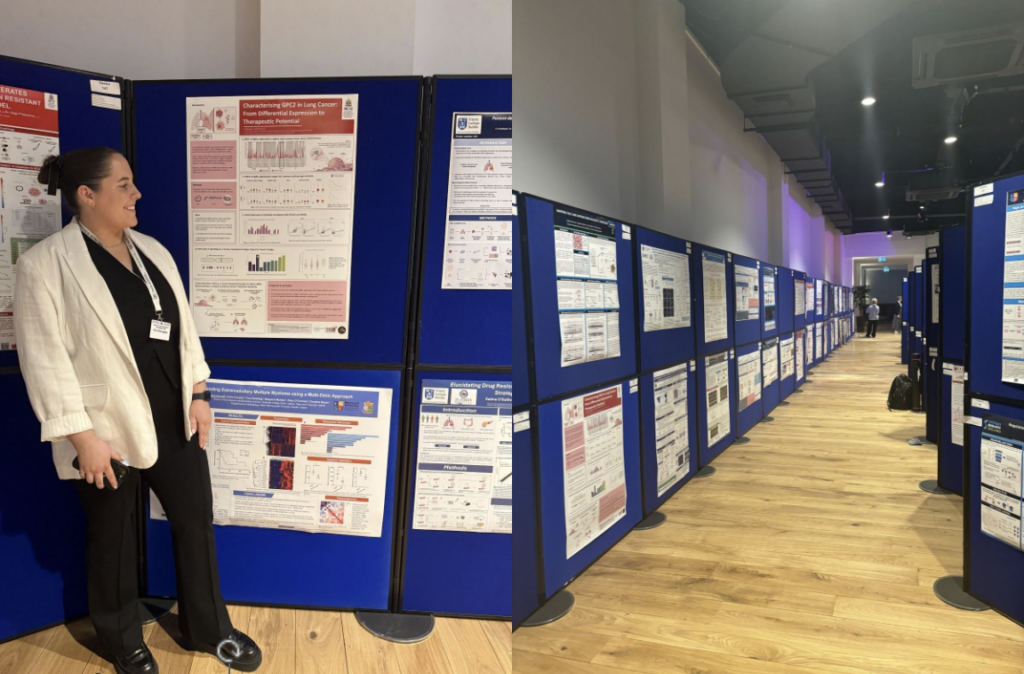

 This meeting is the biggest event for Irish cancer researchers.