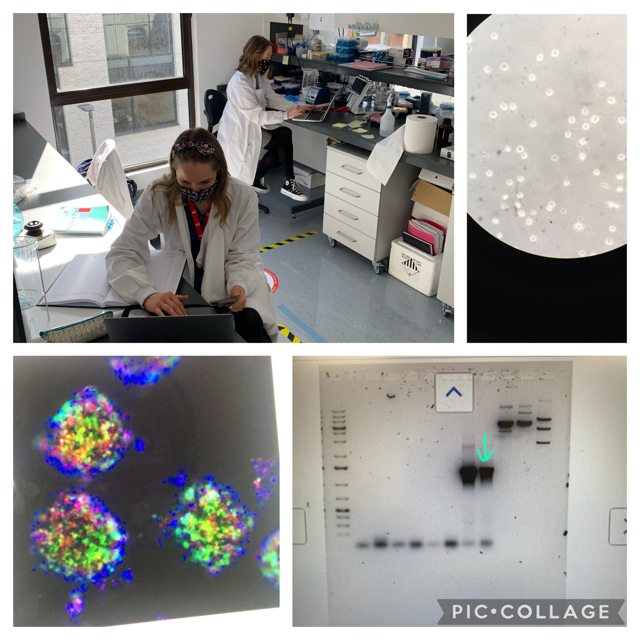
In the Spotlight at EACR Virtual Congress

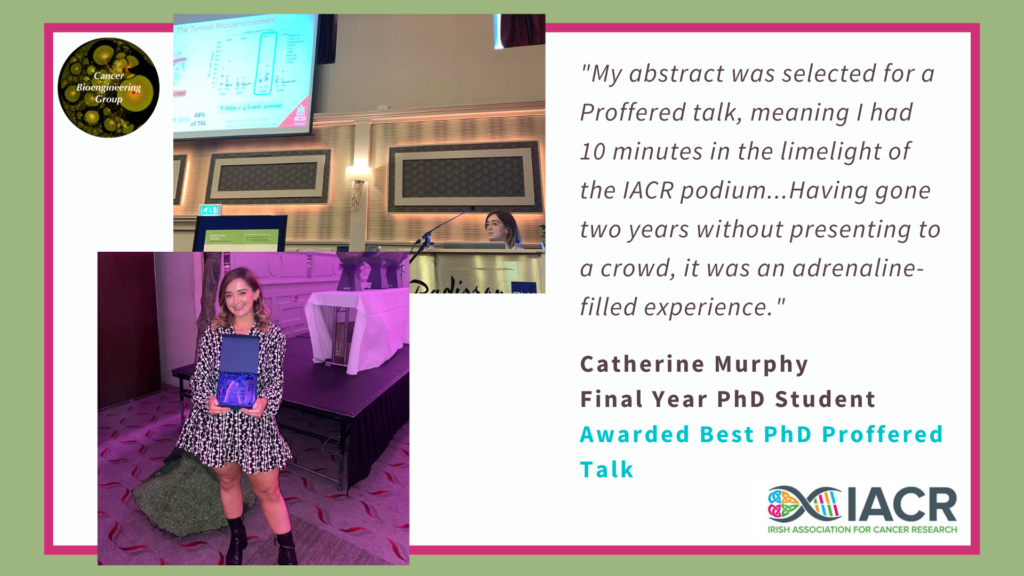
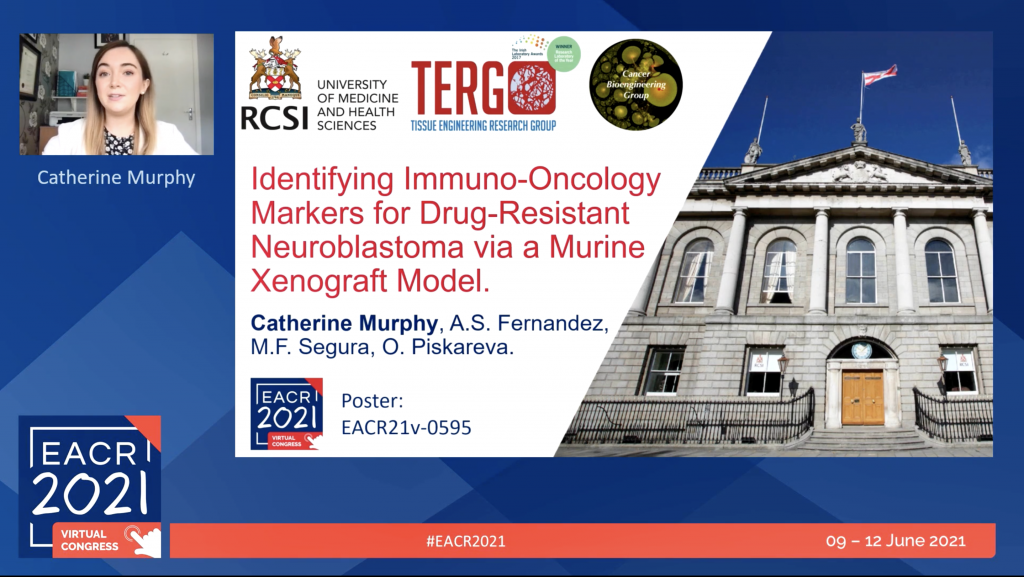
In early April, shortly after attending the Irish Association for Cancer Research (IACR) virtual conference, I was delighted to find out I had been selected for a “Poster in the Spotlight” presentation at the European congress in June. I was invited to give a 10-minute presentation about my research on finding new immuno markers for drug-resistant neuroblastoma. This would be my first time presenting at a conference outside of Ireland (though I remained in my home in Dublin and not in the hoped destination of Turino) and so it was a very exciting experience!

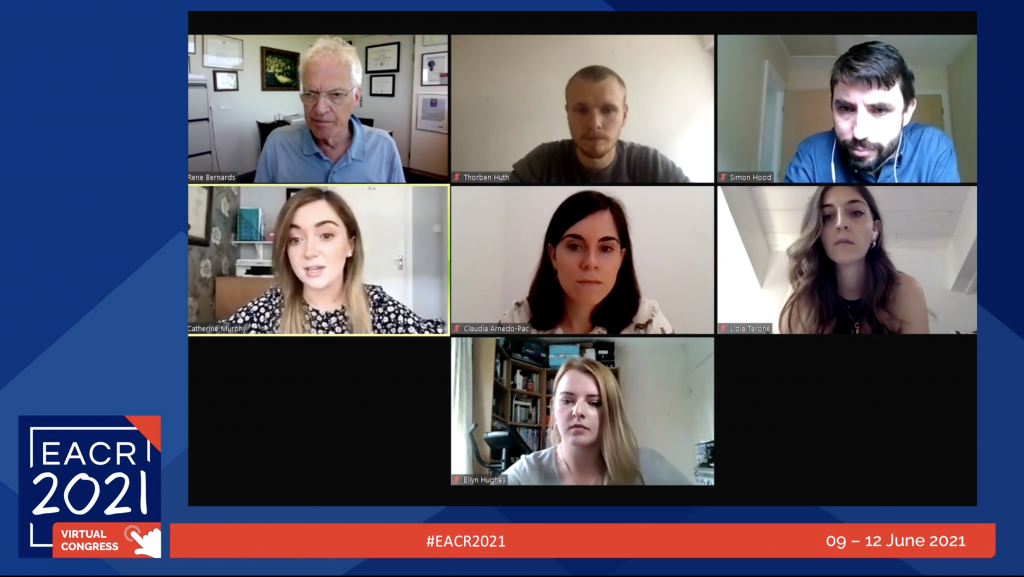
On the morning of my talk, I logged onto zoom to meet the EACR session organisers and the other speakers in my session – a mixture of PhD students and Post-doc researchers from Germany, Spain, Italy and the UK. Each of our talks was then broadcasted to the virtual congress platform where cancer researchers around Europe could tune in.

After the presentations, we joined a “Meet the Speakers” session where we could chat with those who had tuned in, answer questions and open up some research discussions. I was asked one question from a researcher doing similar work to me on how I investigate the relationships between certain genes in cancer, and I was able to refer her onto the software I use – I hope this aids her research, as that’s the real aim of attending these conferences!

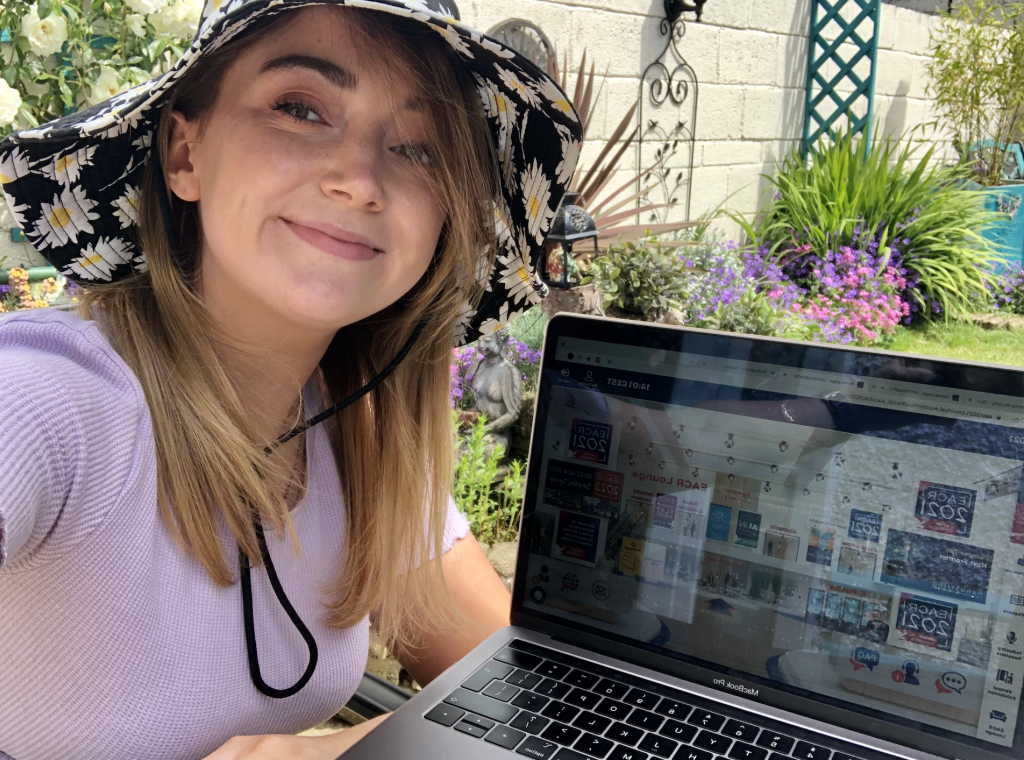
Following this, it was time to relax and watch some of the other interesting talks taking place in the congress. The EACR were running a photo competition to show where you were watching from in order to win a place at the 2022 congress in Seville. So, I took this opportunity to take my laptop out to the back garden and watch the congress in the sun, getting a selfie for twitter with #NotQuiteTorinoEACR2021. Fingers crossed by this time next year travelling for international conferences will be a reality for researchers once again!

Catherine Murphy, Neuroblastoma UK funded PhD student

How neuroblastoma cells spread?

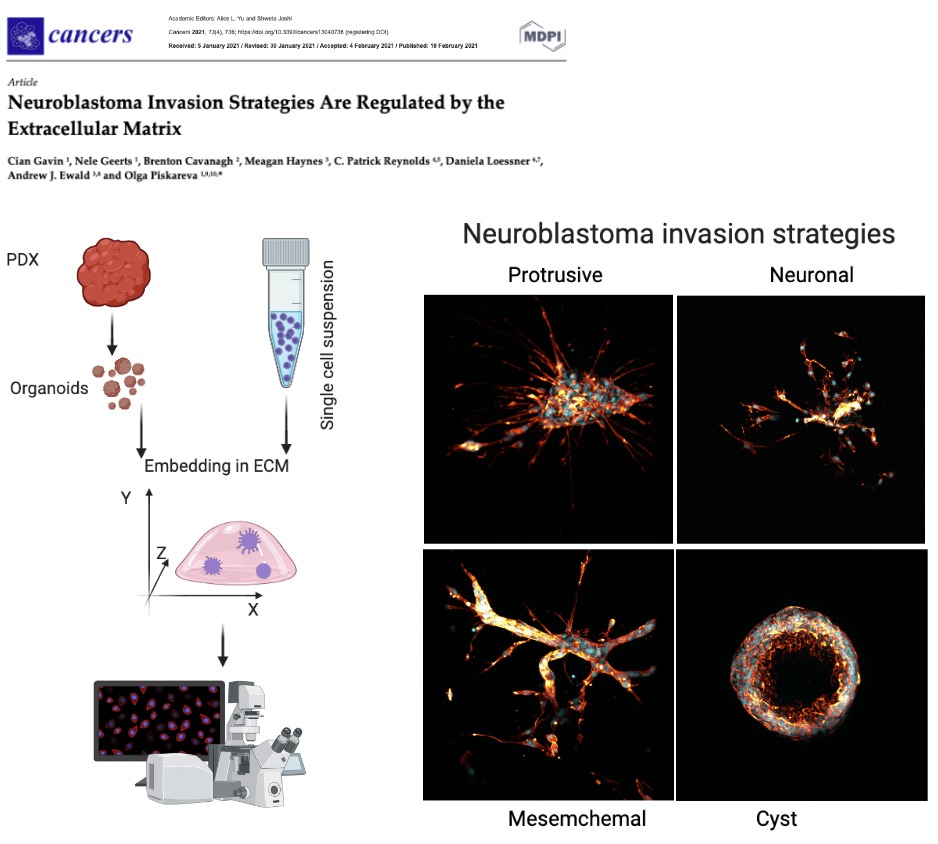
Since I joined neuroblastoma research, I have been puzzled by the fact that half of the children with neuroblastoma have the disease spread at the time of diagnosis. It is still a puzzle whether cells spread and primary tumour growth happen simultaneously or more adventurous cancer cells escape the primary tumour location later.

At a cancer conference, I met Prof Ewald who studies this process in breast cancer. I was fascinated by the approach and started to look for opportunities to join his lab. To tell the truth, very few exist for mid-stage career scientists! One of them is the Fulbright program.

One day, I opened my email saying that I received a Fulbright-HRB Health Impact Scholar Award to travel to Johns Hopkins University and adapt their 3D models to learn how neuroblastoma spreads. It was a life-changing experience both personally and professionally. The amount of experimental data collected over 4 months of work did not fit a 1TB memory stick! Indeed, this short journey was just a start of a new research inquiry.

On my return home, the greatest task that remained was to make sense of every single experiment. Cian Gavin took over and spent almost a year systematising, characterising it, and placing it into a context. It was meticulous work with very little known about invasion strategies in neuroblastoma. Now, we are happy to share our findings published on Cancers.

Where do we go now? Well, our next step is to understand the cellular players behind neuroblastoma invasion and how we can target them to stop neuroblastoma spread. It won’t be a short and sweet journey, but we are ready for it!

This fantastic and rewarding work was supported by Fulbright Commission Ireland, National Children’s Research Centre, Health Research Board, Science Foundation Ireland, the National Institutes of Health/National Cancer Institute (Prof Ewald), Alex’s Lemonade Stand Foundation for the COG Childhood Cancer Repository (Prof Reynolds) and the National Institutes of Health/National Cancer Institute (Prof Reynolds).

One Day of the Life as a Researcher: undergraduate student

This summer, I had an amazing opportunity to work under the supervision of Dr. Olga Piskareva. I scheduled to join the lab for the second time, however, this plan was unfortunately cancelled to the COVID19.  I was still hopeful and later I got the opportunity to work on a remote research project. My goal was to write a comprehensive review of existing and prospective antigens for antibody specific immunotherapy for neuroblastoma.

This was my first literature review and I was excited about it. I had previously worked on a lab neuroblastoma project that’s why I was familiar with the topic. However, this was a completely new and different undertaking for me.  Before starting the project I had to understand about literature reviews are and how are they written. My project involved looking at a lots of clinical trials and PubMed articles. I had to learn about how clinical trials work and had to develop a search strategy for the project. I understood that literature reviews are a very important part of lab research and forms its backbone. 

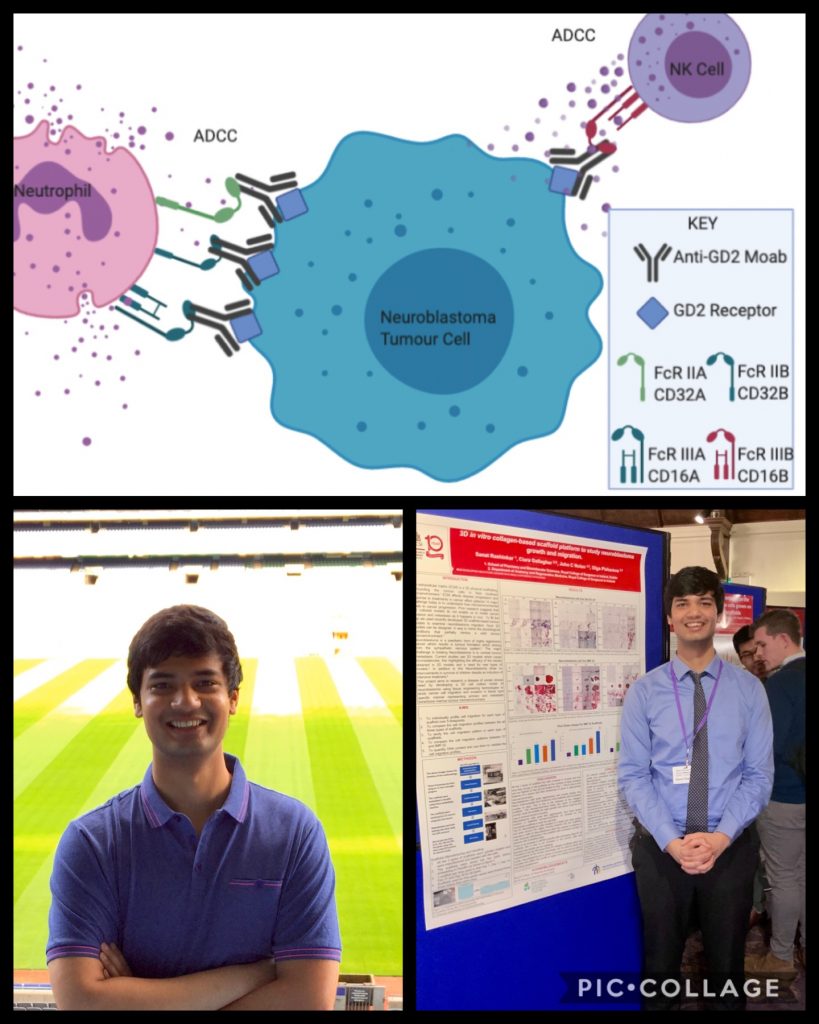
Sanat’s review focussed on antibody-based immunotherapy in neuroblastoma, which aims to induce ‘antibody-dependent cellular cytotoxicity’ to kill cancer cells. Luckily, Sanat had wet lab research experience in 2019 pre-COVID where he got to present a research project at the Matrix Biology Ireland meeting.

I started writing the project and ended up writing 40 pages! I developed awesome illustrations to support my review using the software. This was one of the most enjoyable parts of the remote research! As I was writing the project I understood that ‘Neuroblastoma is a devasting disease for children and the tremendous amount of effort and knowledge is being built upon to find a better and enhanced treatment to reduce the disease burden.’ 

I learnt and gained many critical skills during this review. My review on the existing and prospective knowledge about immunotherapies will enable researchers to get a summary of knowledge that will aid in giving them direction to eventually, create effective immunotherapy to defeat neuroblastoma. 

Sanat Rashinkar, 3rd Year RCSI Undergraduate Medicine Student