I’m Ronja

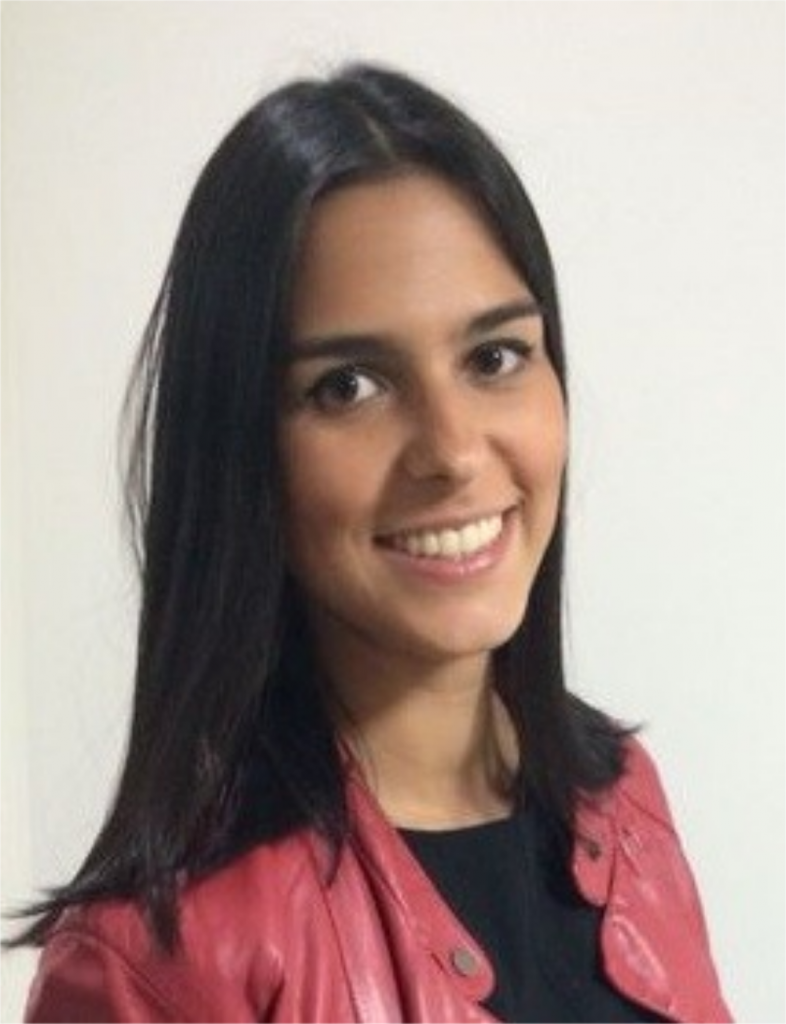
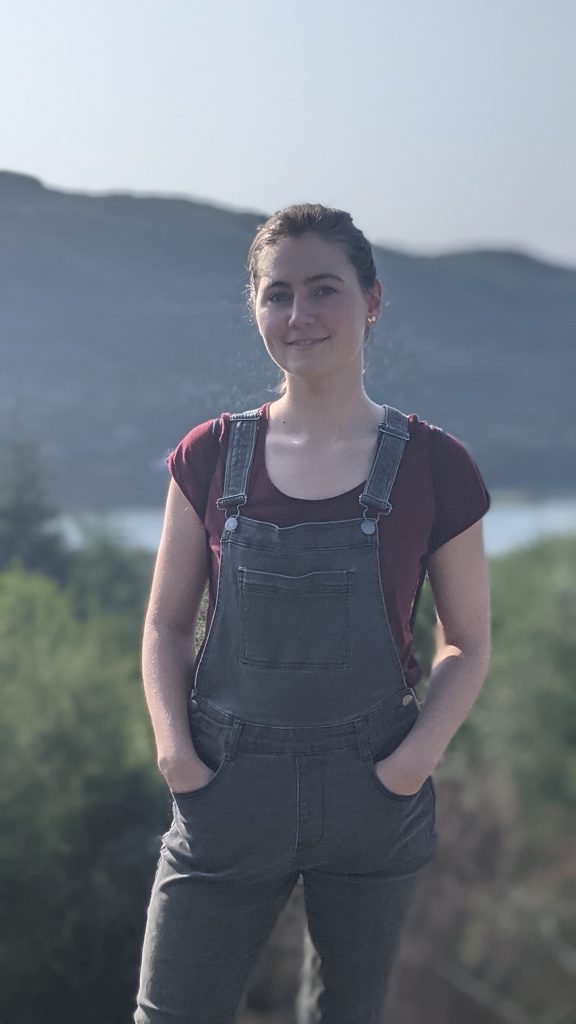
I’m Ronja, I’m from Germany, but have spent my entire adult life in the English-speaking parts of this world. Right after school, I interned with a PhD student working on cystic fibrosis for a couple of months. Having the chance to culture airway epithelial cells myself made me certain I was on the right track with biomedical sciences. So, I studied Biomedical Sciences (Anatomy) in Aberdeen. The best part of that degree was my introduction to dissections. I enjoyed them so much that I even considered becoming a full-time prosector. But that does not count as essential work, so I found a remote master’s degree in Health Research instead. Studying remotely gave me the fabulous opportunity to structure my own time. I could go and explore Scotland during the day and work in the evenings. But after 5 years of studying, I was finally ready to start a PhD and was ever so delighted when I heard I could weave in some dissections at RCSI. Now, I’m looking forward to discovering what Dublin has to offer and to getting stuck in my research project!

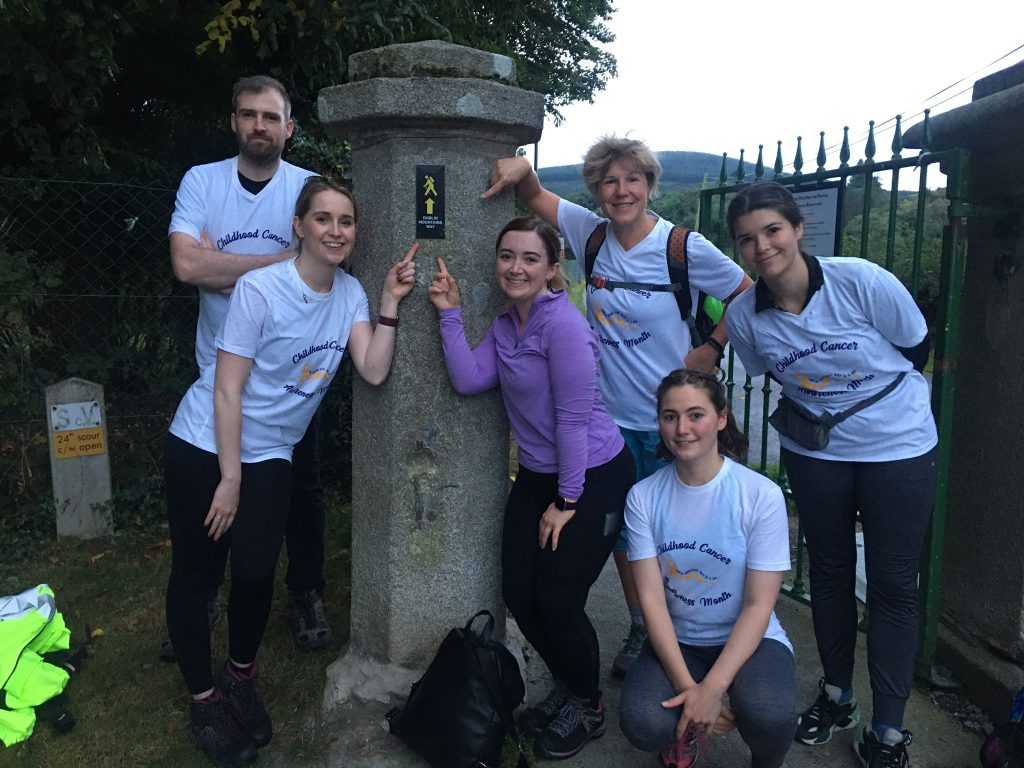
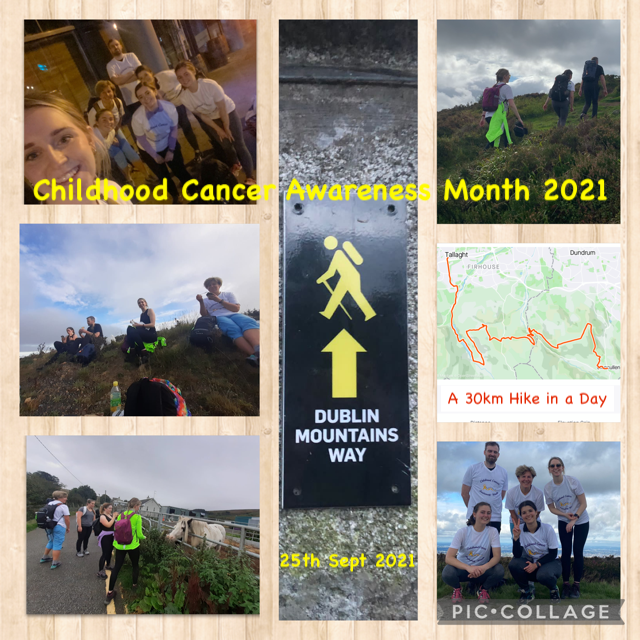
While I didn’t know much about the particulars of my PhD before starting, I had an idea about the project from the application and I knew accommodation was sorted out for me, but I had never seen the place or my future flatmates. The one thing that I was made aware of far in advance of moving to Dublin was that September was Child Cancer Awareness Month, for which the team was going to do a charity event. Based on past years I was expecting it to be a 10km run, which was pretty daunting to me. So, I prepared. I started running and cycling over the summer until 10km weren’t an issue anymore. But in the first lab meeting plans shifted. We were going to do the Dublin Mountains Way in a day. The 10km were tripled and depending on donations maybe even quadrupled. Quite a different challenge! But I believe my summer prepared me well for that too. Alongside running I started cycling a little as well. And because there was a free bike in Aberdeen for me, I cycled it down to Stirling. Let’s hope that the endurance needed to cycle 200km translate to hiking 30-42km!

Ronja Struck

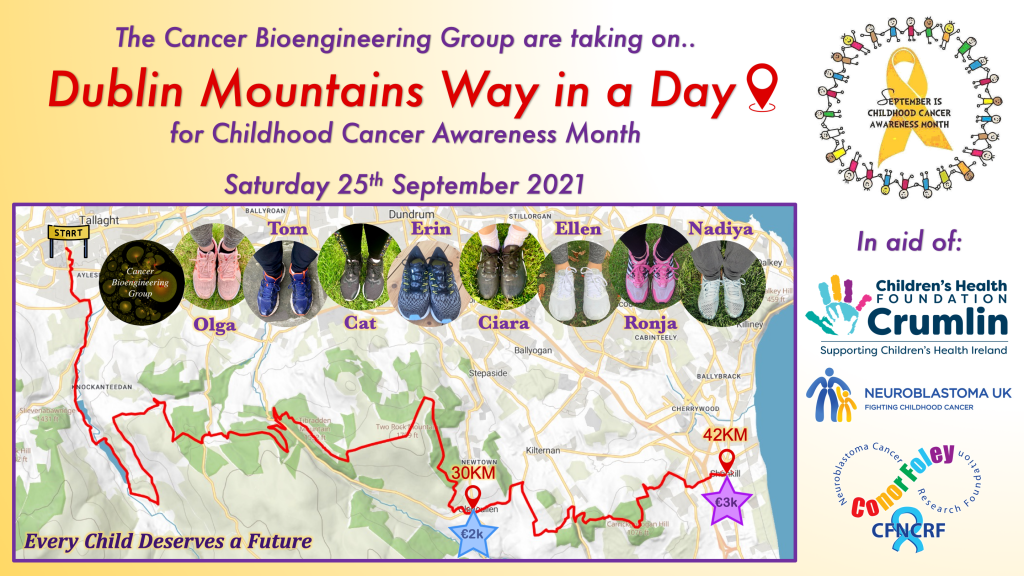
Dublin Mountain Way in A Day, September 25th 2021

Here are our plans. This year we have upped the challenge, taking on the Dublin Mountain’s Way in a Day ⛰ We will hike through the Dublin Mountains from Tallaght to Glencullen, and maybe even all the way to Shankill on September 25th! Our challenge is not only to do #DMW in a Day & support three wonderful charities CMRF Crumlin/National Children’s Research Centre, Neuroblastoma UK and the Conor Foley Neuroblastoma Cancer Research Foundation but also beat our past fundraising records! If we raise 2K+, we’ll do 30km in a day. If 3K+ then 42km! Can u challenge us?  All funds raised will go to the 3 selected charities. Every donation big or small is hugely appreciated!

Please support us by donating to our Gofundme

https://gofund.me/ec59f131

A warm welcome to our new PhD students!

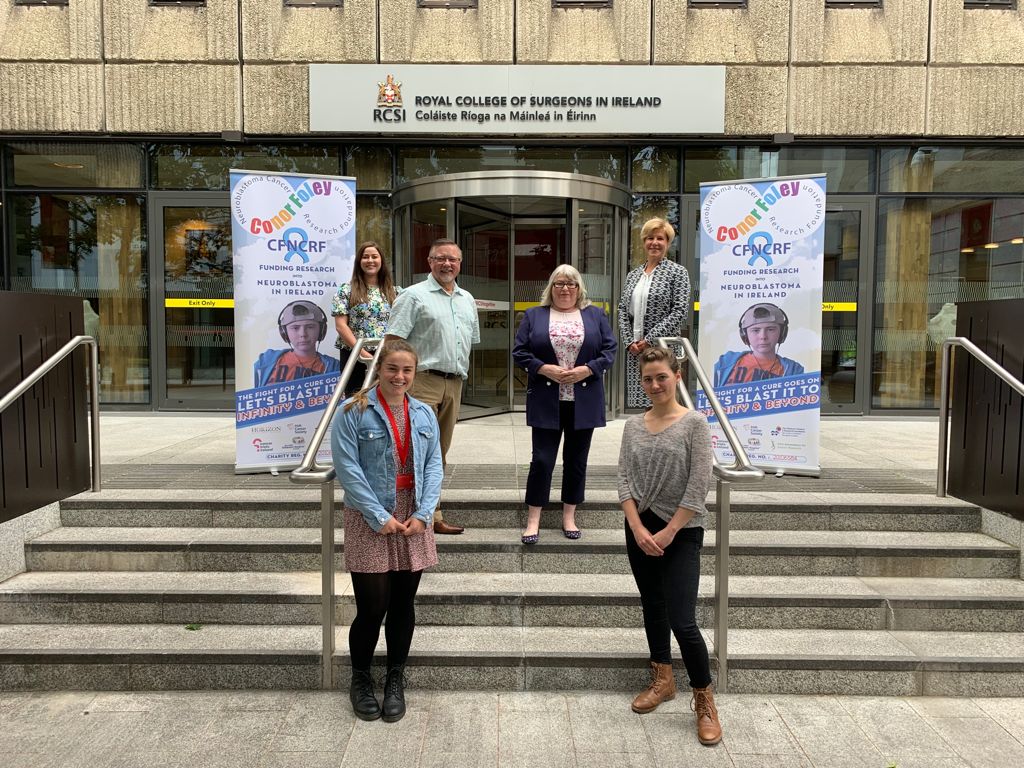
A warm welcome to our new PhD students Ronja and Erin! Both received the prestigious Irish Research Council – Enterprise Partnership Scheme Award. Indeed, I am a proud PI. This competitive scheme brings the most promising researchers to advance our knowledge across many disciplines, e.g. Law, Astronomy, Sociology, Biomedical Sciences and many more. A key element of this scheme is to work together with an Enterprise Partner.

We will work closely with the Conor Foley Neuroblastoma Cancer Research Foundation – a research charity led by the family who lost their child to neuroblastoma. An inspirational example of never giving up.

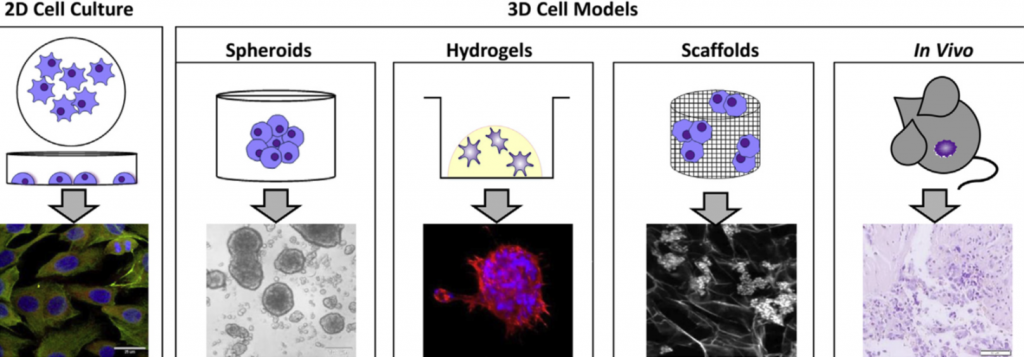
We will continue to dissect neuroblastoma biology using innovative platforms such as tumour-on-chip and 3D scaffold-based models in collaboration with our colleagues in the Tissue Engineering Research Group at RCSI and the Fraunhofer Project Centre at DCU.

This announcement is timely to celebrate Childhood Cancer Awareness Month in September.

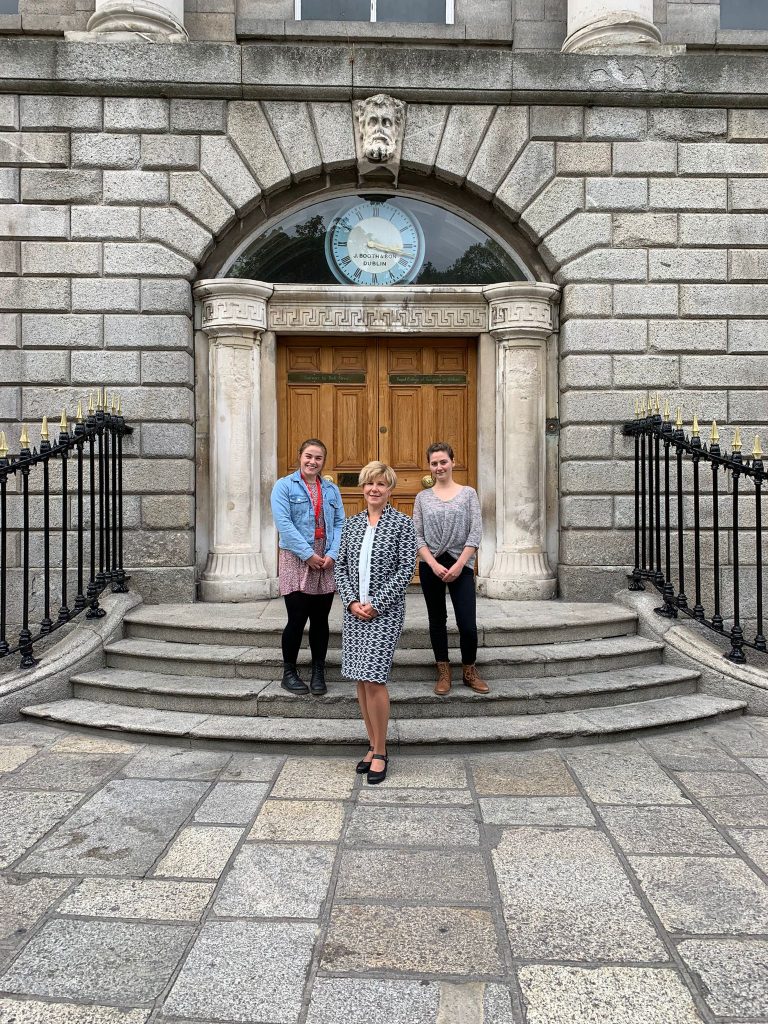
Two talented and dedicated young scientists are joining our team. In 4 years time, we will have another pic of their graduation on the same stairs.

Upwards and onwards!!

Sparkles of A Researcher Day

Once I mentioned the importance of the publication track record for a career in science. My team has been productive despite the COVID pandemic. Two review articles were published.

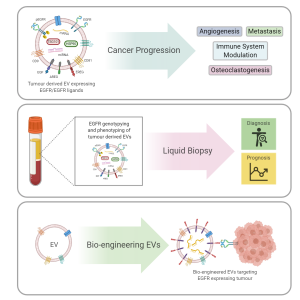
The first was a review written by Tom and published in Cancers focusing on the small extracellular vesicles produced by cancer cells that can transfer various growth signals to the tumour microenvironment aka neighbourhood and promote tumour expansion. The signal in focus was a protein called epidermal growth factor receptor (EGFR). It contributes to the healthy fitness of many different cells in the body. However, many cancer cells produce an excess of this protein giving them an advantage of growth over normal cells. Increased EGFR can be seen in breast, lung, glioblastoma and head and neck cancers.

Cancers 202012(11), 3200; https://doi.org/10.3390/cancers12113200

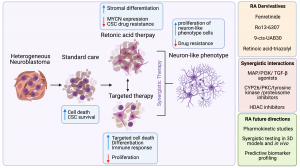
The second review has been published in Journal of Personalized Medicine on March, 16th. Originally, it was a small review project for Nadiya, a medicine student, last summer. However, it became a big one with all data systematically collected, analysed and condensed. The focus of this review was on Retinoic Acid (RA), widely known as Vitamin A and its role in neuroblastoma. RA plays a vital role in human development. The main feature of RA is to push neuroblastoma cells to become neuron-like cell stopping their aggressiveness and cancer fate. So, we wanted to know more about the ongoing research both in the labs and the clinic. We reviewed primary research articles reporting basic and translational findings as well as clinical trials. Hopefully, it would help other researchers to get a full picture of this topic and a structured resource of experimental models and drugs tested.

J. Pers. Med. 202111(3), 211; https://doi.org/10.3390/jpm11030211

Annual NCRC Symposia 2020

As the year comes to an end, you are looking back and seeing all achievements in a different light, a light of the COVID glaze. Lab research was at bay for a while, challenges to return and re-start experiments, no scientific meetings in the traditional format where you build your new collaborative net at coffee breaks. Despite all, the team has expanded and we welcomed Ellen and Erin in October.

The NCRC Winter Symposia is a lovely way to wrap the year putting together all hard work and look at the progress done so far. We have an exciting project that has two arms: a blue-sky science and a translational. Working together John and Tom were able to generate promising results on understanding how small membrane-bound vesicles or exosomes can send signals from neuroblastoma cells to cells responsible for new blood vessels formation. They developed a protocol to scale up the production of exosomes, isolate them and characterise. We have a dataset on what these exosomes carry on and now can test how they promote new blood vessels formation. Indeed, more left to do but knowing the direction makes this journey meaningful.

Hallmarks of Research

Research is a fascinating journey no doubt. Inquisitive minds try to solve burning puzzles. It takes time. Some puzzles are more complected than the others. One of the hallmarks is the conversion of the resolved puzzle into a scientific story to tell to your peers.

We write and publish these stories. The publishing is another caveat that often makes your story sharper and neater. However, while you are in the process you feel that the mission is impossible.

Delighted to see that one of the missions is completed – a great hallmark for John which coincided with his new research adventure starting in a few days. This is his first first author paper! It is not tautology! It is his first original research paper where he is the first author. This position is a success measure in a research career. His teamwork skills secured him another few original papers. Well done John! Well deserved!

This study is an excellent example of the many roles that small RNA molecules such as miR-124-3p can play in neuroblastoma pathogenesis. The ability of this miRNA to work together with standard chemo drugs can be exploited further in the development of new anticancer therapeutics targeting relapse and drug-resistant tumours.

One Day of the Life as a Researcher: PhD student

A lot has changed for me since I began my research journey in RCSI, as I transitioned from being an undergraduate placement student to a PhD candidate, however the biggest change has been adjusting to doing a lab-based PhD during a pandemic! 

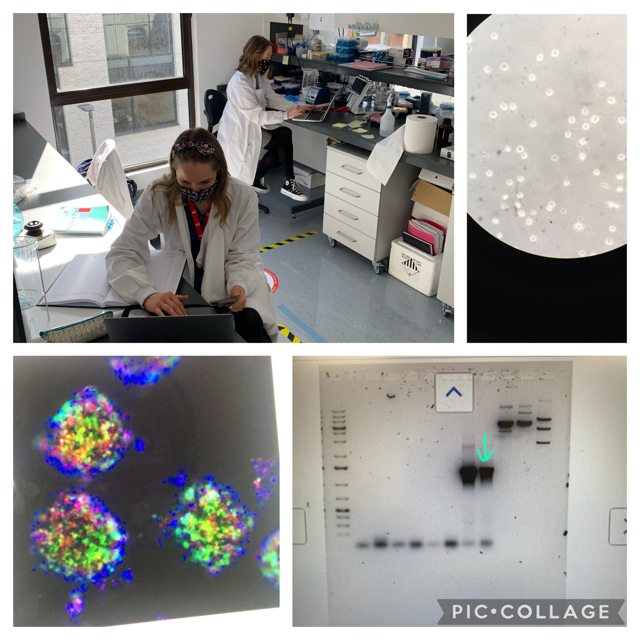
We wear red coats when looking after our rather large family of neuroblastoma cells, which happily grow inside the 37°C incubator. White coats are for most other lab work, such as analysing proteins by gel electrophoresis and Western blotting. And of course, the newest lab accessory – the facemask.

These days my work hours are shared between the labs in RCSI and my family home. While my bench space and office space used to be separated by just a few steps, there is now a 30+ minute bus journey between them. It has certainly put my planning skills to the test as now when I walk into the lab I need to be sure of what I am planning to do, and that I can complete the task in my pre-booked lab time slot. 

I appreciate my time in the labs much more now that I spend so much time at home. Whether I am culturing neuroblastoma cells, analyzing proteins or genes by Western blots or PCRs, I enjoy immersing myself in the work knowing that my time on the bench is limited. 

The main perk is that now when I am doing computer work – analyzing results, writing reviews, preparing presentations, using online software – I can do it from the comfort of my box-room-office, often very cosy in a blanket as I do it. While my work-from-home desk space is slightly more spacious than my desk in the now-closed “Write-up Room 2”, I do miss the chats and laughs that come with working in a shared office.

One thing’s for sure though, my two dogs very much enjoy the days that I work from home!

Catherine Murphy, Neuroblastoma UK funded PhD student

One Day of the Life as a Researcher: summer undergraduate student

This summer I worked under Dr Piskareva supervision in the remote research program. My original plans for a lab experience were put down by COVID. My ultimate goal was to write the review article on the potential uses of retinoic acid in neuroblastoma research.

Nadiya Bayeva

Before starting the project, I didn’t have any specific expectations. While I always had fun picking the primary articles apart and summarising the gathered data during my undergrad and med school, I didn’t believe that this experience would be the special one. And I kept thinking so as I was collecting the information from the numerous data on cell cultures. And as I was looking at the mice models studies. And clinical trials.

Then I started to write my introduction, and so researched the information on the neuroblastoma prognosis, contemporary treatment protocol and outcomes. And suddenly I saw my project in the new light. I was used to regarding the clinical trials outcomes as simple statistics, but this time no desensitization could shield me. Yes, 60% of the patients in the high-risk group die in 5 years after diagnosis, and yes, 90% of those patients are children less than 5 years old. And there is nothing that we could currently do to save those children.

On the other hand, this realisation brought meaning to my work. This time, I was not doing a PubMed search to get a good mark or CV reference. Instead, I was looking for the possible treatment of the disease. My review on the current knowledge about retinoic acid will let the other primary researchers target the most promising drug for future experiments and, eventually, create a novel and effective therapy to help those children.

And isn’t it what we are all striving for in medical research?