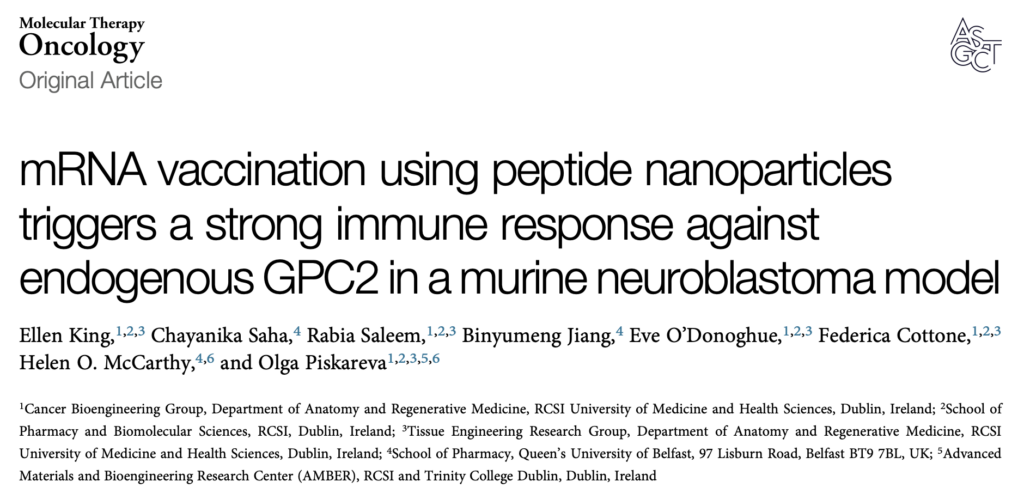
We are over the moon with our work being recognised by the American Society of Gene & Cell TherapyMolecular Therapy Family of Journals. The results are published in a Special Issue focused on the Advances in Paediatric Cancer Therapy. It is a true milestone in a challenge we undertook in collaboration with Prof Helen McCarthy at Queen’s University Belfast, with High-Risk, High-Gain funding from the Higher Education Authority North-South Research Programme. We did prove the HEA Ambition to highlight the huge potential of their initiative. Now, I can share the score for our application – it was 99/100*! Oh, my!!!! We are so happy that our idea was recognised back then. *I am still struggling to reach this threshold in other applications. 😉
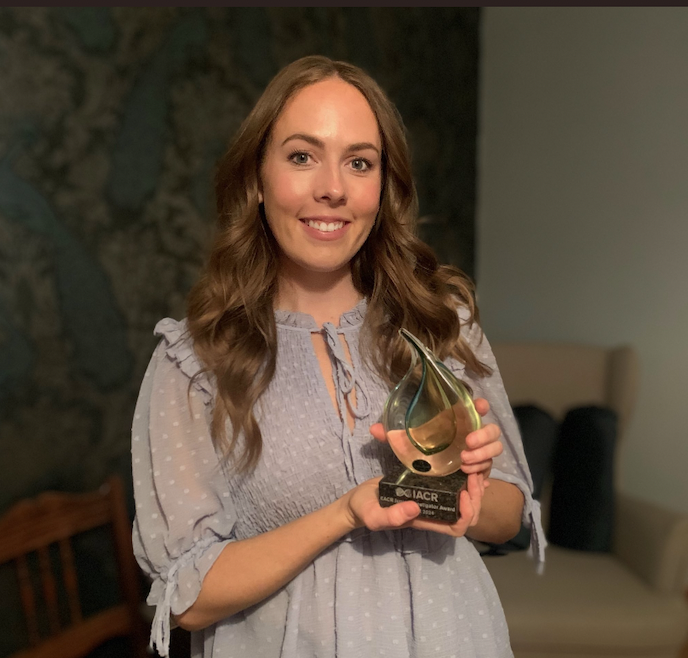
Ellen receives her IACR/EACR Junior Scientist Award 2025
However, my extreme credit goes to Ellen King, PhD, who took on my ambitious challenge (go/no-go!), trusted me, went above and beyond, and turned her PhD project into this publication with passion and diligence. Just for context, it took us 12 months with 7 rejections to receive the quality approval mark for this publication. All this time, she was on top of the reviewing and publishing game after graduating with her PhD in 2024, developing her own immuno-oncology portfolio in London. Onwards and upwards Ellen King, PhD!
We are proud to collaborate with the family of John Foley CMC, FIMCA, MIET. – the true inspiration for not giving up! Their story of the neuroblastoma battle is heartbreaking and inspiring at the same time. The Higher Education Authority funding helped us to secure follow-up funding from the Health Research Board (HRB) & the Conor Foley Neuroblastoma Cancer Research Foundation ( via HRCI – Health Research Charities Ireland) and Neuroblastoma UK. We appreciate their trust in our ambition and vision. THANK YOU!
The European Association for Cancer Research (EACR) is a registered charity and scientific community that has been holding conferences since 1968. EACR’s annual four-day congress is dedicated to basic, preclinical and translational cancer research. It brings together the cancer research community, including PhD students, postdocs, PIs, and commercial sponsors, for the opportunity to network and collaborate to progress cancer therapeutics.
I was fortunate enough to receive the Breakthrough Cancer Research Education and Travel Award, which made it possible for me to attend this year’s EACR conference held in Lisbon, Portugal. Breakthrough Cancer Research is an Irish Medical research charity focused on improving the outcomes of patients diagnosed with rare and poor prognosis cancers, like neuroblastoma.
When I first arrived at the congress center in Lisbon, I was immediately impressed by how well organized and put together the conference was. A schedule of four full days included speakers, poster presentations, industry talks, a technology exhibition, giveaways, networking rounds, and early-career talks. I checked in, received my “goodie bag” and was on my way to the first talk. For the duration of the conference, you were encouraged to move freely between all the available presentations within several auditoriums and pavilions. They even had screens and speakers set up outside the auditoriums if there was no more space inside to make sure that the research presented was accessible to everyone. The lunch breaks were the perfect time to enjoy the sunshine, walk along the Tagus River, and have a picnic with views of the Ponte 25 de Abril bridge (similar in style to the Golden Gate Bridge in San Francisco, California).
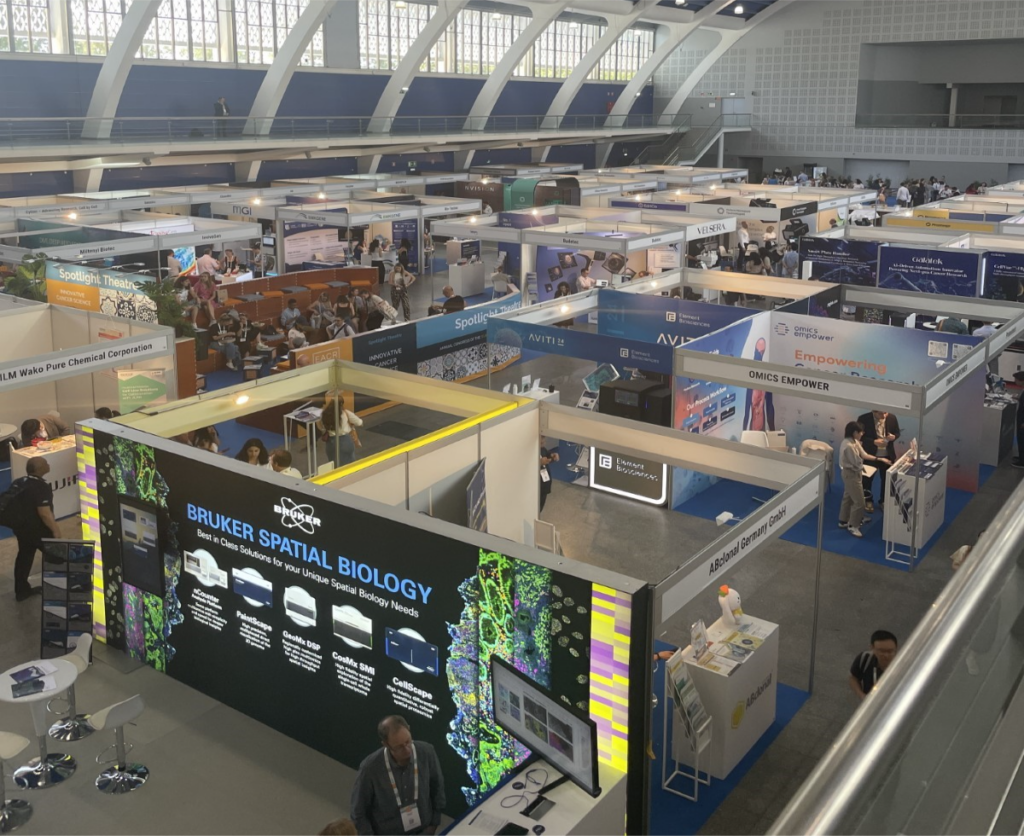
Exhibitors showcase with over 100 companies available to talk about their technology. QR codes were at each booth to scan for participants to be entered into a drawing for an iPad and free entry to next year’s conference in Budapest, Hungary.
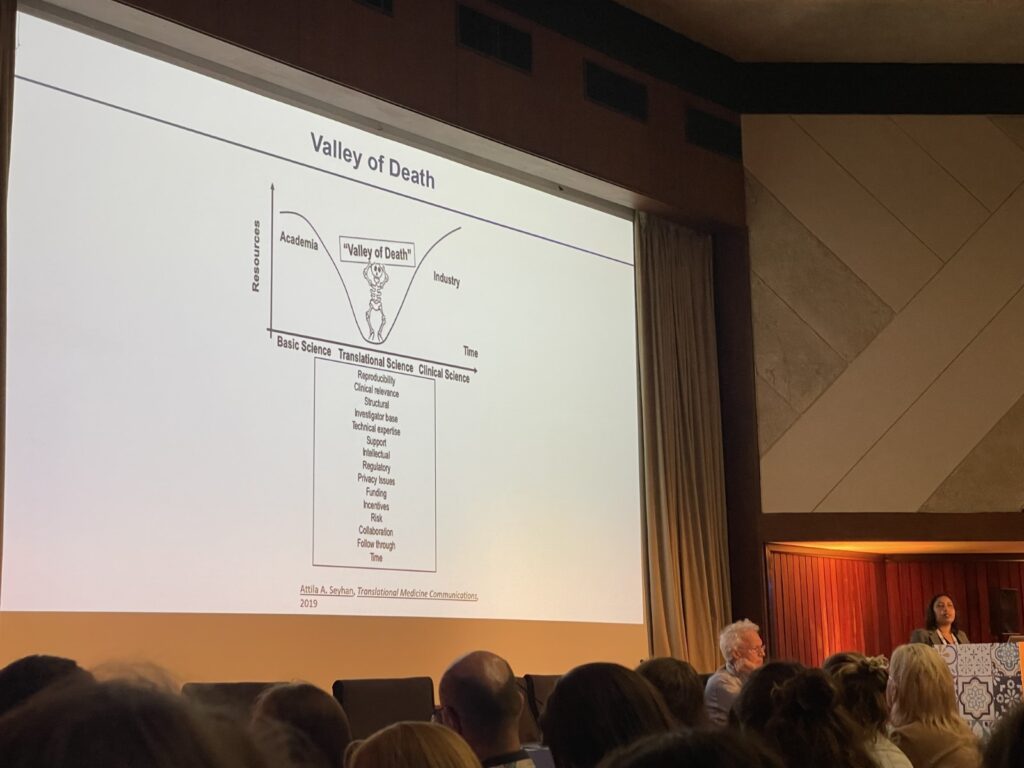
Throughout the conference, I listened to talks that ranged from how estrogen levels in breast cancer are related to the loss of bone density to how we can detect cancer in circulating cells for a diagnosis three years earlier than previous tests. One of the talks began with the necessity for physiologically relevant in vitro to 3D models and then the conclusion of the talk discussed how there’s a bridge needed between academia and industry for treatments to be more streamlined and accessible. Most importantly, I was able to read quite a few posters with research that other PhD students were doing related to small extracellular vesicles (sEVs). My work specifically looks at the relationship between sEVs shared from cancerous to non-cancerous cells and what their functional impact is. A lot of the work I saw was optimization of sEV isolation and characterization, which can be quite tricky to do but was helpful to see what complications others were running into and their troubleshooting results.
Presentation by Cindrilla Chumduri during EACR – EMBO Symposium: Advanced in vitro Models. Chumduri highlights the “valley of death” where there is a gap between academic and industry research that impedes the progression of scientific breakthroughs in cancer research.
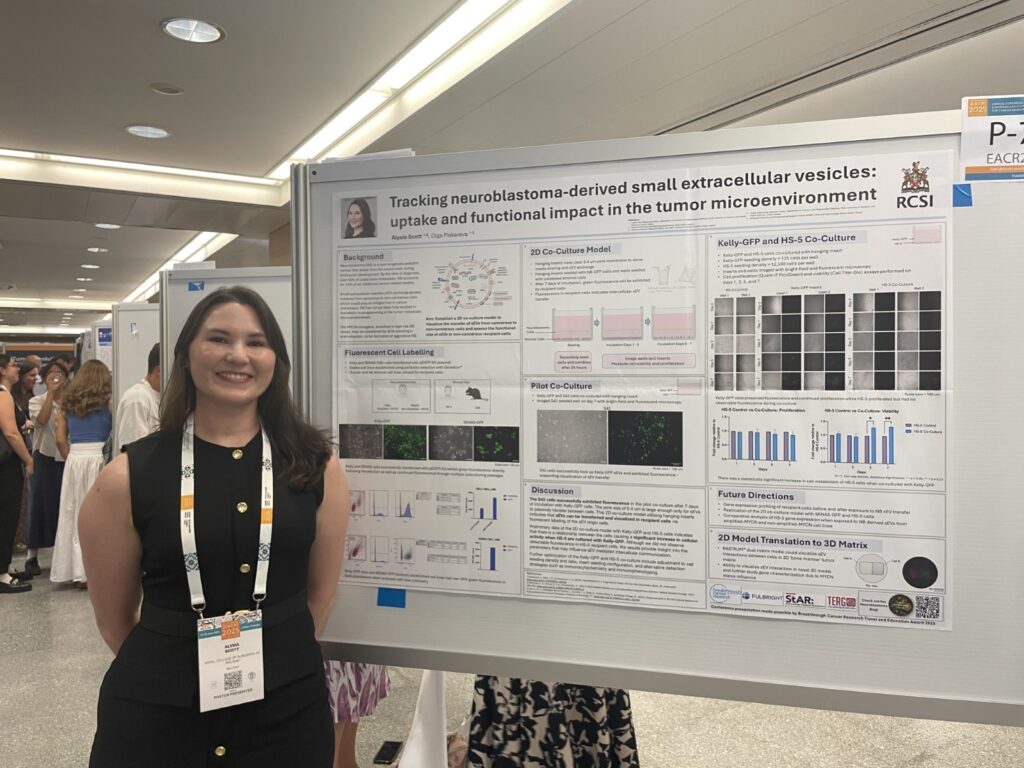
By the time it got to my poster defense, I was excited to talk about my work and looking forward to meeting others who might be doing research similar to mine. There were a handful of people that came to speak to me about my work and ask questions. One thing about the PhD journey is that sometimes you can be so deeply involved in your own work and what isn’t going right that you lose sight of how impactful your work can be. When several people approached me about the co-culture model I was using, they were so curious and wanted to implement something like that into their work. Hearing positive feedback on my efforts was a refreshing way to end the conference. At the end of the day, there was a celebration dinner where a traditional Portuguese Fado band played music while we were able to unwind and network with other PhD students. My time spent in Lisbon at EACR was one of the best conference experiences I’ve had. I’m looking forward to heading back into the lab, making progress with my project, and presenting at the next conference.
My poster defense during the Tumor Biology poster sessions.
Special thanks to Breakthrough Cancer Research for supporting my research and providing me with this fantastic opportunity.
Had you told me before I started my PhD that I’d rushedly be writing a blog post on a bus in Bergamo, and it’s all part of my project, I certainly would have laughed and figured sure, maybe as a one-time exception if I find out something fascinating. But no, this is my second conference abroad this year, out of five in the past 4 months. My view on science and what is important to conduct good science has significantly changed since then, though. I have a ton of data from my secondment to Vilnius, but it is not all analysed yet. There are a number of decisions left to be made before my project becomes fully rounded and provides useful conclusions that I could share with people. But conferences serve another purpose. If everyone was only there to present their finished project, who would they present them to? At the current stage of my research, exchanging ideas, receiving feedback and seeing what others do helps immensely to provide perspective and both motivate me to do more and do better, inspire me to find new angles and also to relax and understand the bigger picture your project is a part, rather than getting bogged down by the day-to-day issues that so easily cloud your mind in everyday routine (as far as a PhD allows for routine…). In this way, conferences can shape a project, inform analyses and provide far more than an excuse to be out of the office.
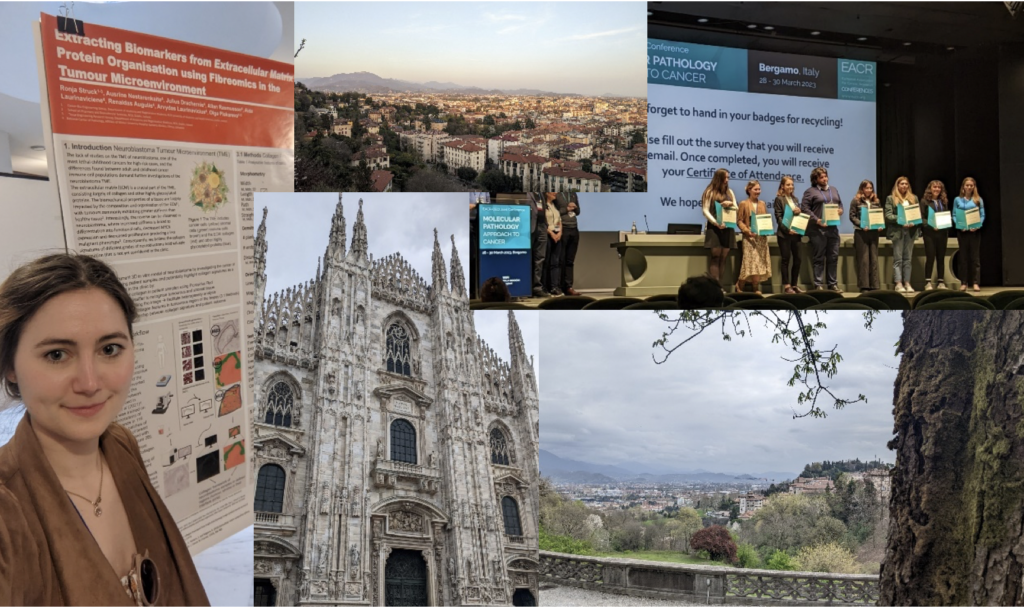
Even more enjoyable are, of course, conferences when they’re held in such beautiful places! I’d never been to Barcelona or Milan. While I have no intention of making the cultural metropolises of Athlone and Limerick pale in comparison, it does feel different when adding an afternoon of sightseeing, includes a couple of centuries-old towns that look like they fell out of a fairy tale and churches built in the 13 hundreds in 20 degrees in March rather than freezing your fingers off after just an hour outside or seeing some trees and an old pub. I never thought science would facilitate me seeing the world, but I am delighted that it does. And while I never would have expected it before, I can now appreciate the value of presenting your project halfway to ensure that it’s the best it could have been when it’s done.
Presented my project at the European Association of Cancer Research Conference on National Pathology because I was awarded the Organisation of European Cancer Institutes (OECI) travel grant. So, I could enjoy some of the stunning views in Bergamo and even visit Milan.