Hot off the Press!

We are over the moon with our work being recognised by the American Society of Gene & Cell Therapy Molecular Therapy Family of Journals. The results are published in a Special Issue focused on the Advances in Paediatric Cancer Therapy. It is a true milestone in a challenge we undertook in collaboration with Prof Helen McCarthy at Queen’s University Belfast, with High-Risk, High-Gain funding from the Higher Education Authority North-South Research Programme. We did prove the HEA Ambition to highlight the huge potential of their initiative. Now, I can share the score for our application – it was 99/100*! Oh, my!!!! We are so happy that our idea was recognised back then. *I am still struggling to reach this threshold in other applications. šŸ˜‰


Indeed, great research is teamwork, trust and collaboration – huge appreciation goes to Chayanika Saha, Federica Cottone, Eve O’Donoghue, Rabia Saleem, and Binyumeng Jiang. You are the Rising Stars!
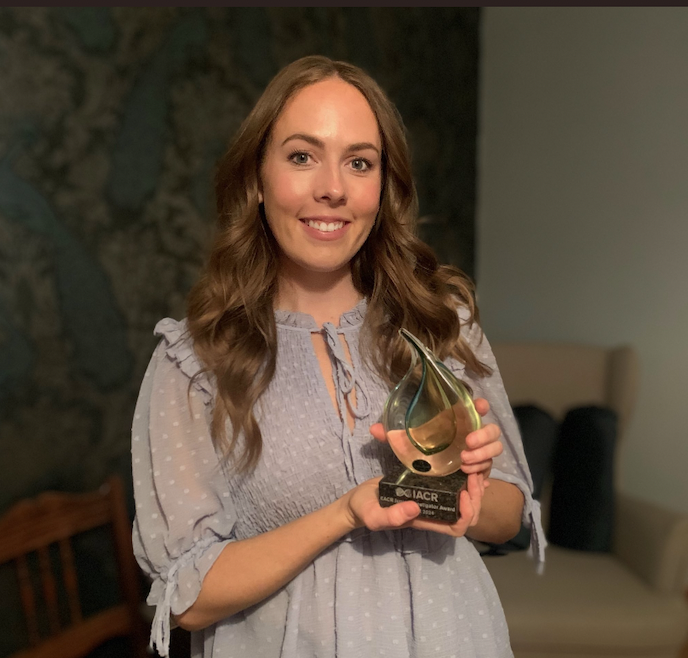
Ellen receives her IACR/EACR Junior Scientist Award 2025


However, my extreme credit goes to Ellen King, PhD, who took on my ambitious challenge (go/no-go!), trusted me, went above and beyond, and turned her PhD project into this publication with passion and diligence. Just for context, it took us 12 months with 7 rejections to receive the quality approval mark for this publication. All this time, she was on top of the reviewing and publishing game after graduating with her PhD in 2024, developing her own immuno-oncology portfolio in London. Onwards and upwards Ellen King, PhD!


We are proud to collaborate with the family of John Foley CMC, FIMCA, MIET. – the true inspiration for not giving up! Their story of the neuroblastoma battle is heartbreaking and inspiring at the same time.
The Higher Education Authority funding helped us to secure follow-up funding from the Health Research Board (HRB) & the Conor Foley Neuroblastoma Cancer Research Foundation ( via HRCI – Health Research Charities Ireland) and Neuroblastoma UK. We appreciate their trust in our ambition and vision. THANK YOU!
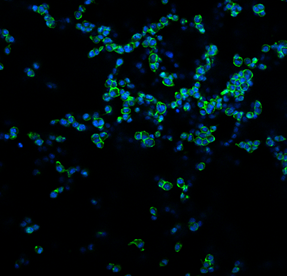
Colouring cells in research

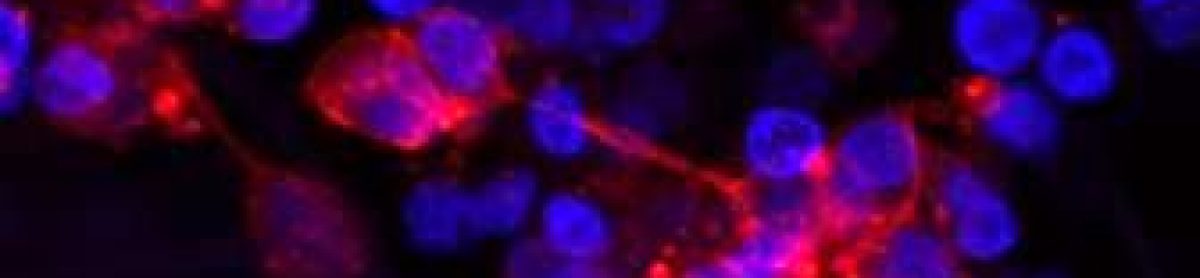
Sometimes, the most fascinating parts of science are invisible to the naked eye—like in these images captured with a confocal microscope! 

What you’re seeing here are DC 2.4 cells, a mouse dendritic cell line. These immune cells are key players in recognising foreign substances (like bacteria, viruses, or even cancer cells) and activating the body’s immune response.Ā 

In this experiment, we cultured the DC 2.4 cells on a sponge-like material composed of collagen and glycosaminoglycans (GAG), two natural components commonly found in body tissues. This material is called a scaffold, and it provides cells with a 3D surface to grow on, more closely mimicking their natural environment within the body.Ā 

To make the cells visible under the microscope, we used two fluorescent stains: 

  • DAPI (blue), which marks the nucleus—the control centre of the cell, 
  • Phalloidin (green), which highlights the actin filaments that give the cell shape and structure. 

We’re testing how well these immune cells survive, attach, and spread on the collagen-GAG scaffold over time. By utilising a 3D environment, we can gain a deeper understanding of how cells behave in more realistic conditions. This is especially important for research into cancer immunotherapy and vaccine development.Ā 

This image tells us that the DC 2.4 cells can successfully grow and interact with the scaffold!Ā 

Written by Federica Cottone

Ever wonder how scientists figure out a specific protein’s role in cancer?

Researchers use various methods, but I employ gene knockdown in my experiments. Basically, I use small RNA molecules that specifically target and degrade the mRNA of my gene of interest. This leads to a decrease in the corresponding protein levels, enabling me to observe the effects on neuroblastoma cell behaviour.

I feel a bit like Sherlock Holmes, you know? I’m selectively putting my suspect protein – the one I’m eyeing – under the spotlight to see how it’s pulling the strings on the cell’s behaviour. It’s like I’m in a cellular mystery, complete with a gene knockout magnifying glass šŸ”šŸ§¬šŸ•µ

So, what I’ve been up to these past months is knocking down my protein and trying to find answers to the following questions:

Can neuroblastoma cells survive? And if not, how do they meet their demise? Do they go on a growth spree and start proliferating? Are they capable of migration? And here’s the twist – when my protein of interest takes a dip, do other proteins decide to change their expression levels?

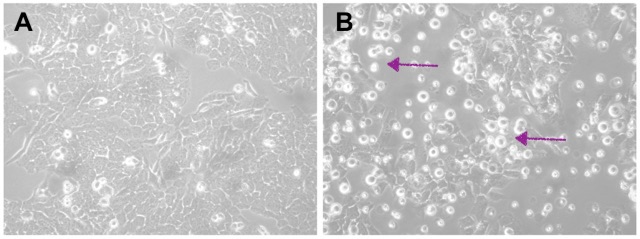
The picture below can probably help you get an idea of what I’ve done so far. Do you see those brighter spots in Pictures A and B? Those are dead cells. Their number indicates the proportion of dead cells after a treatment. Picture A has just a few; the majority are healthy and well-spread cells. This is our negative control, a condition when we show neuroblastoma cells that have been transfected, but no gene knockdown happened. Transfection is the term for introducing small RNA molecules. Now, in Picture B, when we knocked down the protein, it caused the death of the cells, and you can clearly see that from all those many little bright spots.

We have found answers to many of the previous questions, but new questions have arisen, and we can’t wait to answer them!

Written by Federica Cottone

Hello everyone! I’m Federica!

Hello everyone! I’m Federica, the new PhD student who joined the group 😃

I’m amazed that it’s been almost a month since it happened, and I couldn’t be happier!

I was born and raised in Palermo, a beautiful city in Sicily (Italy), but I always felt that it was not my place. So, I tried to combine my passion for cancer biology and my desire to live abroad by exploring the Erasmus Mobility Programme. IĀ was awarded this scholarship twice, but both times I couldn’t avail of this opportunity. In March 2022, I got my Master’s degree and said to myself, “It’s time; this is my chance to go and build the future that I want”. And here I am. šŸ˜„

New adventures

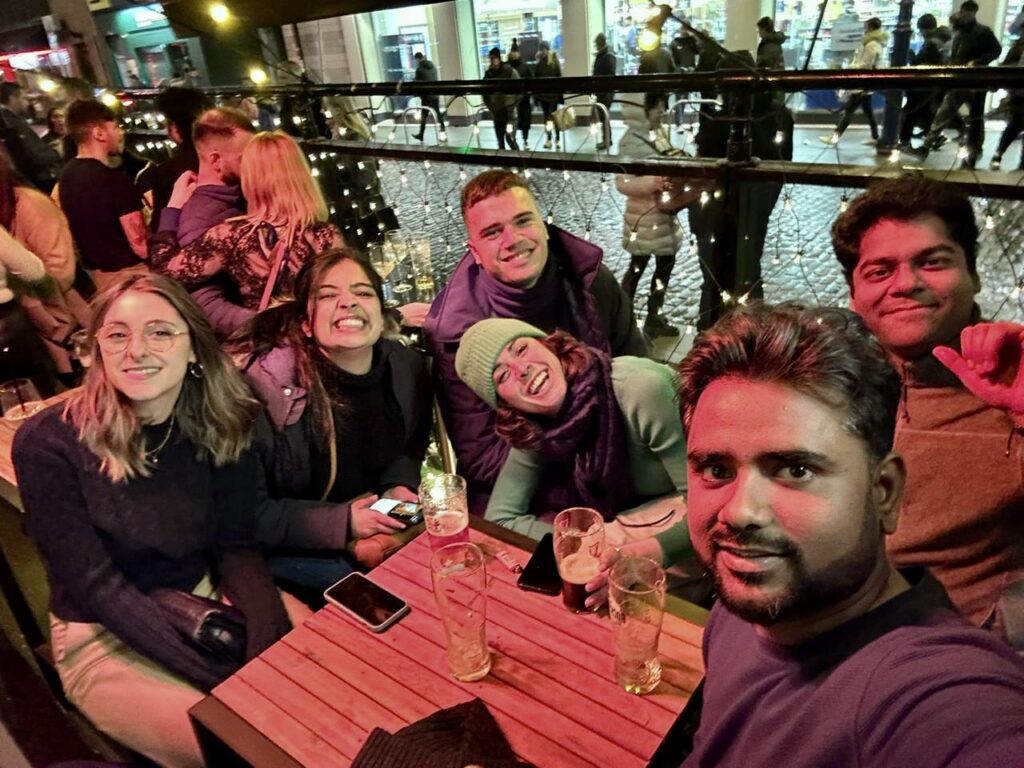
I moved to Dublin in June 2022 and loved this city’s vibes! I met wonderful people from all over the world with which I spent really fun and carefree moments. 

These are only a few of that magic moments:

– I saw a deer for the first time in my life – I was soooo happy!

Deers in the Phoenex park
New drink experience

– I tried the “mateā€, a traditional South American caffeine-richĀ infusedĀ herbal drink.Ā As you can guess, I didn’t like it šŸ˜‚ (sorry, my Argentinian friends).

– I got used to the outstanding colours of Ireland.

Obviously, I also had hard days. My English is still not perfect, but it’s getting better every day! Ā I remember the first day I arrived in Dublin when I was looking for a cup, but I asked for a cupboard in three different supermarkets šŸ˜‚. People looked at me, probably thinking: “Why is she looking for furniture in a grocery store? Should I say something to her?” I realized that I had asked for the wrong thing only during the night, when I was in bed, thinking about that first crazy day.Ā 

New colours

To be honest, I had a lot of really hard days, days when I felt that I wouldn’t be able to deal with other problems. But I never thought of giving up and returning to Italy. Every difficulty, every good or bad thing, is part of this wonderful experience, and I’m so excited and proud of myself for all the improvement I’ve been making, step by step.

I couldn’t make a better choice because I found my place in this super nice and great team in the Bioengineering Group šŸ™ƒ

 I look forward to better knowing all my new teammates and sharing with them my journey as PhD student!

Written by Federica Cottone